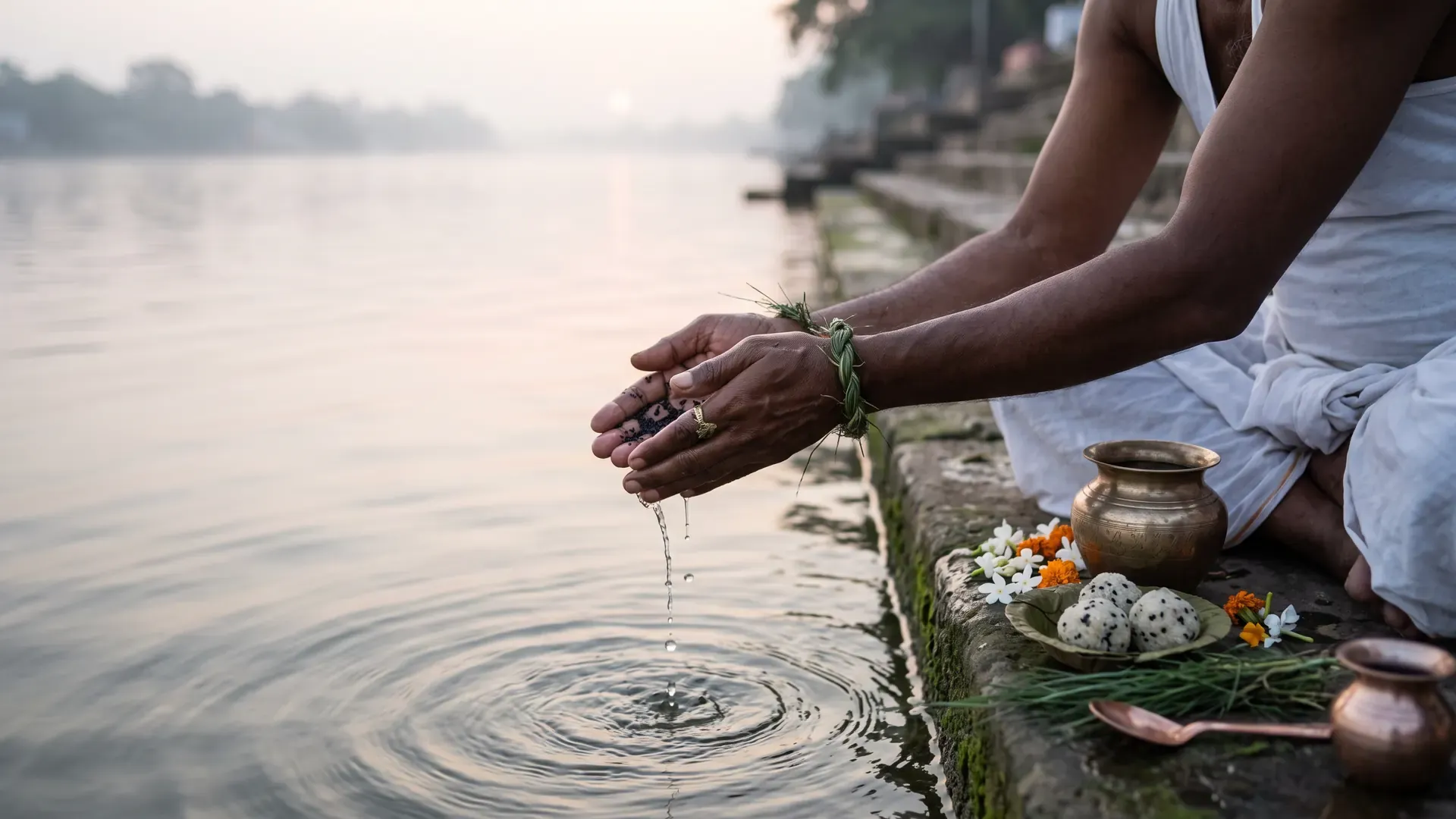
Pitru Paksha 2026 runs from 26 September (Purnima Shraddha) to 10 October (Sarva Pitru Amavasya). On each of these 15 days, shraddh and tarpan are performed for ancestors who passed away on that tithi. Shraddh is considered auspicious in the Kutup or Rohina Muhurat, or in the Aparahna Kaal; see the time for your city below.
What are shraddh and tarpan
Shraddh means the reverent remembrance of one’s departed ancestors (pitrs) and the giving done in their name; tarpan, offering water and sesame to them, is a part of it. Texts such as the Garuda Purana and Manusmriti (Chapter 3) describe this as a duty owed to one’s ancestors. The 15 days of Pitru Paksha are set aside specially for it.
By tradition it is accompanied by feeding brahmins, cows and crows, and pind daan; the exact rite varies by family and region. For the details of the rite, it is best to ask your family’s own purohit.
Pitru Paksha 2026: every day’s shraddh
Perform the shraddh on the civil day when the ancestor’s tithi of death is prevailing in the Aparahna Kaal. Find the tithi from the date of death
| Date | Weekday | Shraddh tithi | Special |
|---|---|---|---|
| 26 September | Saturday | Purnima Shraddha | — |
| 27 September | Sunday | Pratipada Shraddha | — |
| 28 September | Monday | Dwitiya Shraddha | — |
| 29 September | Tuesday | Tritiya Shraddha | Maha Bharani (Bharani Shraddha) |
| 30 September | Wednesday | Chaturthi–Panchami Shraddha | — |
| 1 October | Thursday | Shashthi Shraddha | — |
| 2 October | Friday | Saptami Shraddha | — |
| 3 October | Saturday | Ashtami Shraddha | — |
| 4 October | Sunday | Navami Shraddha | Matru Navami |
| 5 October | Monday | Dashami Shraddha | — |
| 6 October | Tuesday | Ekadashi Shraddha | — |
| 7 October | Wednesday | Dwadashi Shraddha | Magha Shraddha |
| 8 October | Thursday | Trayodashi Shraddha | — |
| 9 October | Friday | Chaturdashi Shraddha | Ghaat Chaturdashi |
| 10 October | Saturday | Sarva Pitru Amavasya | Sarva Pitru Amavasya (Mahalaya) |
The special days of Pitru Paksha
Maha Bharani (Bharani Shraddha) · 29 September
The shraddh on the day Bharani Nakshatra falls during the fortnight is called Maha Bharani, and by tradition is held to matter even more than the shraddh of other tithis.
Tradition; Drik PanchangMatru Navami · 4 October
The Navami tithi’s shraddh is set aside especially for the family’s mothers and women who predeceased their husbands.
Dharmasindhu; traditionGhaat Chaturdashi · 9 October
By tradition, the Chaturdashi tithi’s shraddh is for ancestors who died an untimely or violent death, such as by accident or weapon.
Tradition; Drik PanchangSarva Pitru Amavasya · 10 October
The last day of Pitru Paksha. The shraddh of all ancestors whose tithi of death is not known, or whose shraddh was missed on its own day, is performed on this day.
Amavasya October 2026: Kutup Muhurat in 16 citiesGaruda Purana; DharmasindhuMatters around shraddh and grief carry a family’s own customs and feelings. For the exact rite, the words of the sankalpa and how much to give, it is best to ask your family’s own purohit.
Frequently asked questions
When is Pitru Paksha 2026?
From Saturday, 26 September (Purnima Shraddha) to Saturday, 10 October (Sarva Pitru Amavasya).
On which day should a tithi’s shraddh be performed?
The shraddh is done on the tithi (not the calendar date) on which the ancestor passed away — whichever civil day that tithi is prevailing in the Aparahna Kaal.
What is the difference between Kutup, Rohina Muhurat and Aparahna Kaal?
Dividing the day (sunrise to sunset) into 15 muhurtas, the 8th is Kutup and the 9th is Rohina Muhurat; dividing the day into 5 parts, the 4th is Aparahna Kaal. Shraddh in any of the three is considered auspicious.
If the exact tithi of death is not known, when should shraddh be done?
By tradition, shraddh is then performed on Sarva Pitru Amavasya (10 October this year), the day set aside for all ancestors together.
What are Bharani Shraddha and Matru Navami?
Bharani Shraddha (29 September) falls on the day Bharani Nakshatra prevails during the fortnight; Matru Navami (4 October) is set aside for mothers and married women who predeceased their husbands, as commonly noted in panchangs and Dharmasindhu.
Sources
- Drik Panchang: Pitru Paksha Shraddha Dates 2026, New Delhi (drikpanchang.com)
- Garuda Purana (Preta Kalpa) and Manusmriti, Chapter 3 — rites for ancestors and shraddh
- Dharmasindhu and Nirnayasindhu — the rules for Kutup, Rohina Muhurat and Aparahna Kaal; the tradition of Bharani and Matru Navami
- Muhurat: SanatanBodh panchang calculation, matched against Drik Panchang (New Delhi, 2026)
Something wrong? Report a mistake