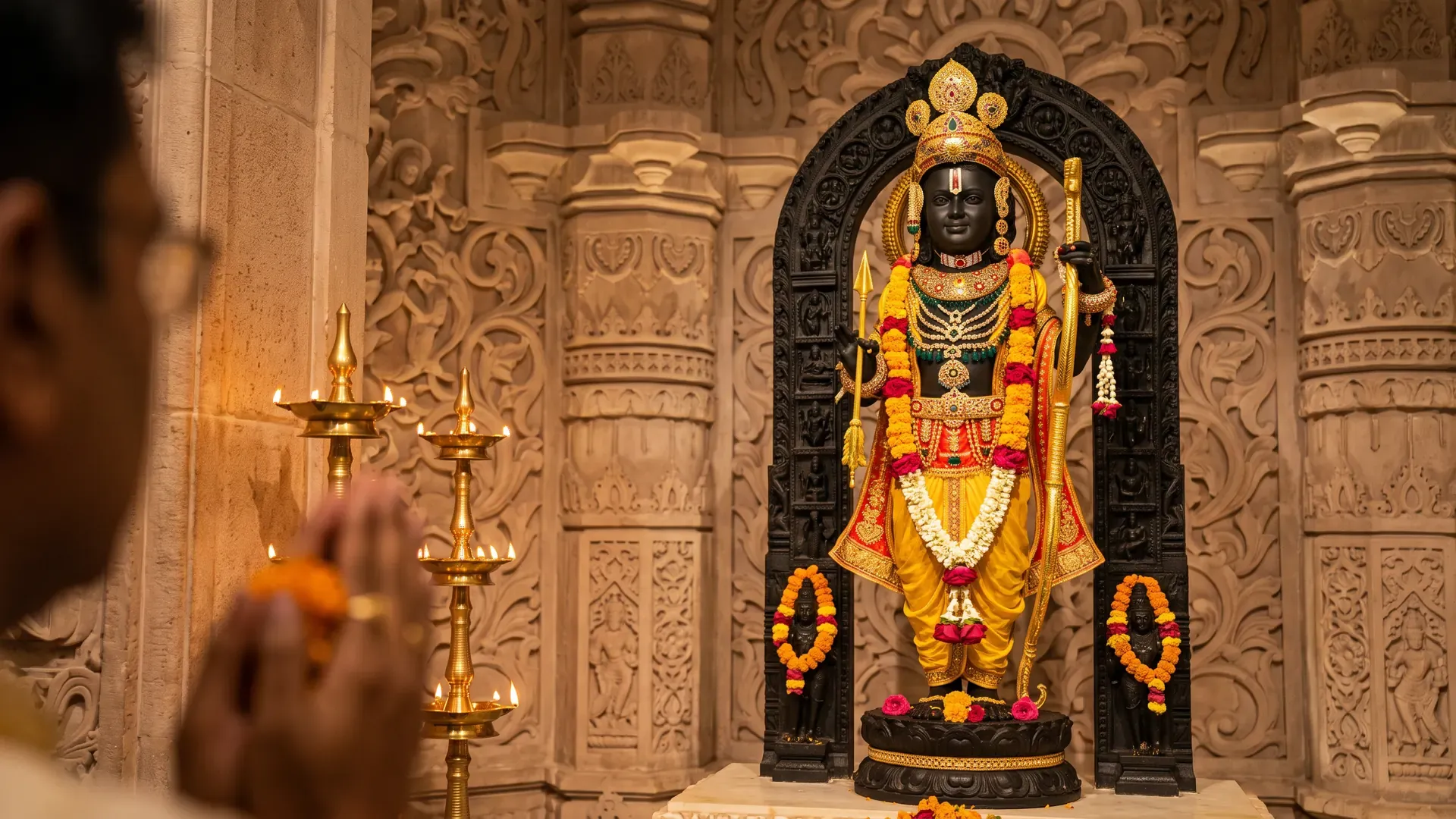
 Image: made with AI
Lord Rama
Also known as: Raghava • Raghunandan • Dasharathi • Ramachandra • Kausalyanandan
Lord Rama is the hero of the Valmiki Ramayana and the son of King Dasharatha and Queen Kausalya of Ayodhya. He is regarded as the seventh avatar of Vishnu and, for his exemplary conduct, is called "Maryada Purushottam". His wife is Sita, and the story of Ravana’s slaying is told in the Yuddha Kanda of the Ramayana.
Rama at a glance
- Father
- Dasharatha
- Mother
- Kausalya
- Brothers
- Lakshmana, Bharata, Shatrughna
- Wife
- Sita
- Birthplace
- Ayodhya
- Dynasty
- Ikshvaku (Raghuvamsha)
- Gurus
- Vasishtha, Vishvamitra
- Major festivals
- Ram Navami, Dussehra (Vijayadashami), Diwali
Rama: relations
Family, scriptures, tirthas and festivals
36 relations of Rama, each with its source in the texts or the tradition. Tap a name to open its own page, or its relations in the Sanatan tree.
See the whole knowledge graphAll 36 relations, with sources
Family
Source: Valmiki Ramayana, Bala Kanda; Valmiki Ramayana; Valmiki Ramayana, Uttara Kanda, sargas 66, 107; Valmiki Ramayana, Bala Kanda, sarga 18, verses 13–16Deities, figures and sages 23
- Hanuman · Supreme devoteeValmiki Ramayana
- Vishnu · Source of avatarsBhagavata Purana 1.3
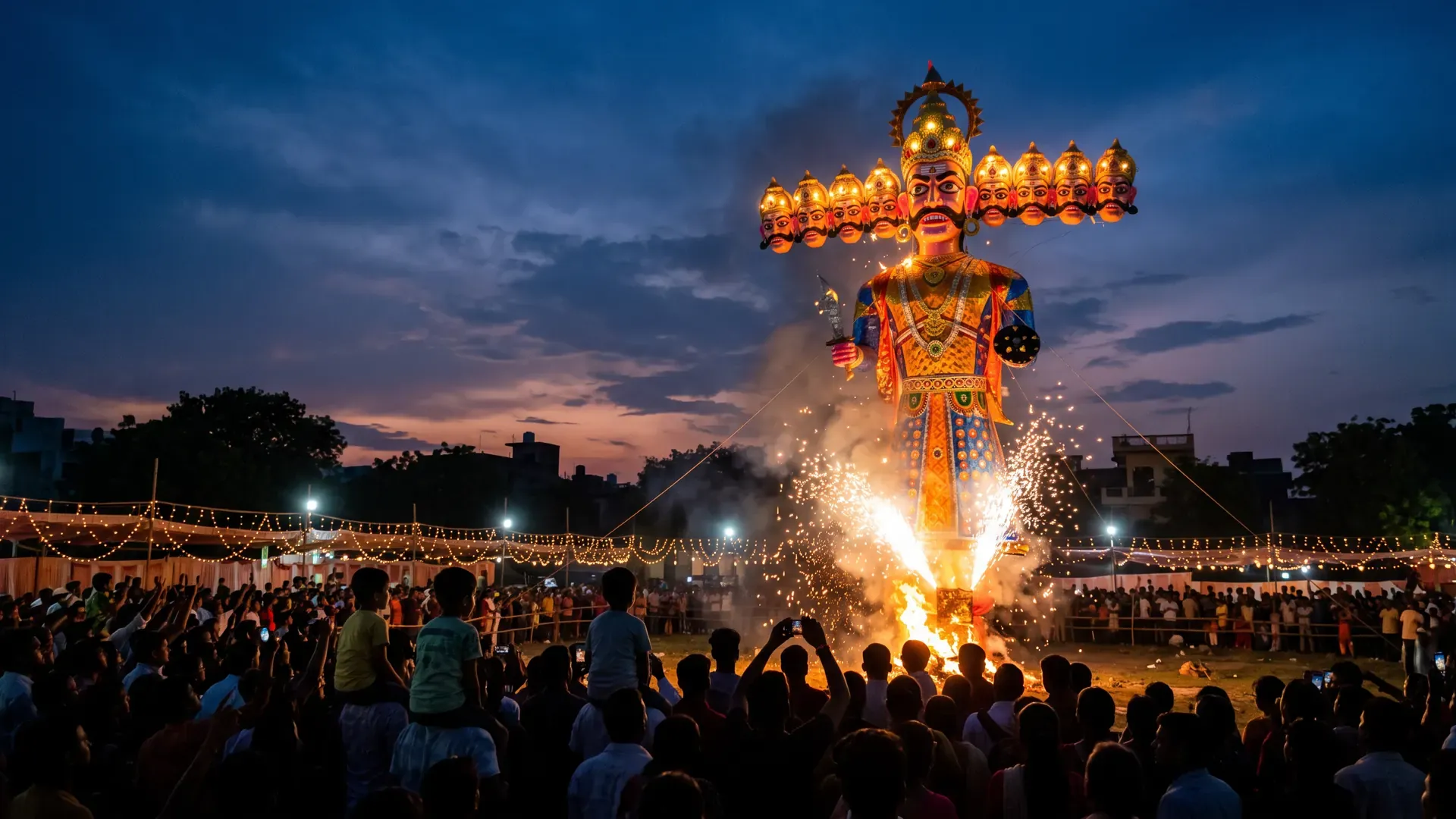
- Ravana · Enemy he slewValmiki Ramayana, Yuddha Kanda
- Vasishtha · GuruValmiki Ramayana, Ayodhya Kanda, sarga 111, verse 4
- Vishvamitra · GuruValmiki Ramayana, Bala Kanda, sargas 22, 27
- Ahalya · Freed from her curseValmiki Ramayana, Bala Kanda, sargas 48–49
- Atri · Sage who received himValmiki Ramayana, Ayodhya Kanda, sarga 117
- Bharadvaja (Prayag ashram) · Sage who received him (Prayag)Valmiki Ramayana, Ayodhya Kanda, sarga 54
- Agastya · Sage who gave him a divine bow and the Aditya HridayamValmiki Ramayana, Aranya Kanda, sarga 12, verses 32–35; Yuddha Kanda, sarga 105
- Shabari · Ascetic devotee who received himValmiki Ramayana, Aranya Kanda, sarga 74
- Sugriva · FriendValmiki Ramayana, Kishkindha Kanda, sarga 5
- Vali · KilledValmiki Ramayana, Kishkindha Kanda, sargas 16–22
- Nala (vanara) · Vanara who built the bridgeValmiki Ramayana, Yuddha Kanda, sarga 22
- Angada · Envoy (sent to Ravana)Valmiki Ramayana, Yuddha Kanda, sarga 41, verse 78
- Jatayu · Performed his last ritesValmiki Ramayana, Aranya Kanda, sarga 68
- Guha, king of the Nishadas · FriendValmiki Ramayana, Ayodhya Kanda, sarga 50, verse 33
- Vibhishana · Gave him refuge and made him king of LankaValmiki Ramayana, Yuddha Kanda, sargas 17–19; Yuddha Kanda, sarga 112
- Tataka · KilledValmiki Ramayana, Bala Kanda, sarga 26, verses 25–26
- Subahu (rakshasa) · KilledValmiki Ramayana, Bala Kanda, sarga 30, verse 22
- Dushana · KilledValmiki Ramayana, Aranya Kanda, sarga 26
- Khara · KilledValmiki Ramayana, Aranya Kanda, sarga 30
- Maricha · KilledValmiki Ramayana, Aranya Kanda, sarga 44
- Kumbhakarna · KilledValmiki Ramayana, Yuddha Kanda, sarga 67
Scriptures and mantras 2
- Valmiki Ramayana · Narrative textValmiki Ramayana
- Ramcharitmanas · Narrative textRamcharitmanas
Tirths and places 1
- Ayodhya · BirthplaceValmiki Ramayana, Bala Kanda
Festivals 2
- Dussehra · Festival (slaying of Ravana) North Indian traditionTradition
- Ram Navami · Festival (birth anniversary)Tradition (Chaitra Shukla Navami)
The seven Kandas of the Valmiki Ramayana
Bala Kanda
His birth, guarding Vishvamitra’s yajna, breaking Shiva’s bow and his marriage to Sita.
Valmiki Ramayana, Bala KandaAyodhya Kanda
Preparations for his coronation, Kaikeyi’s two boons, 14 years of exile, Dasharatha’s death, and Bharata’s return carrying Rama’s padukas.
Valmiki Ramayana, Ayodhya KandaAranya Kanda
Life at Panchavati, the Shurpanakha episode, Ravana’s abduction of Sita and Jatayu’s sacrifice.
Valmiki Ramayana, Aranya KandaKishkindha Kanda
Friendship with Hanuman and Sugriva, the slaying of Vali, and the start of the search for Sita.
Valmiki Ramayana, Kishkindha KandaSundara Kanda
Hanuman’s journey to Lanka, his meeting with Sita in the Ashoka Vatika, and the burning of Lanka.
Valmiki Ramayana, Sundara KandaYuddha Kanda
Building the bridge, the war in Lanka, the slaying of Ravana, the return to Ayodhya and the coronation.
Valmiki Ramayana, Yuddha KandaUttara Kanda
Rama Rajya, Sita’s departure to the forest and the birth of Lava and Kusha. Many scholars consider this Kanda a later addition.
Valmiki Ramayana, Uttara Kanda
Why he is called Maryada Purushottam
At the opening of the Ramayana (1.1), Valmiki asks Narada who in the world at that time is virtuous, valiant, knowing in dharma, grateful, truthful and firm in his vows; in reply, Narada tells the story of Rama. Giving up the kingdom to keep his father’s word, loyalty to his brothers and friends, and protecting those who come to him for refuge: for conduct like this, tradition calls him Maryada Purushottam, the best of men who keeps within the bounds of dharma.
Rama in the scriptures
रामो विग्रहवान् धर्मः साधुः सत्यपराक्रमः ।पवनः पवतामस्मि रामः शस्त्रभृतामहम् ।रामाय रामभद्राय रामचन्द्राय वेधसे ।रघुनाथाय नाथाय सीतायाः पतये नमः ॥- Valmiki Ramayana (all seven Kandas)
- Valmiki Ramayana 1.1
- Valmiki Ramayana, Aranya Kanda 37.13
- Bhagavad Gita 10.31
- Ramcharitmanas
- Rama Raksha Stotram
- Bhagavata Purana 1.3
Festivals of Rama
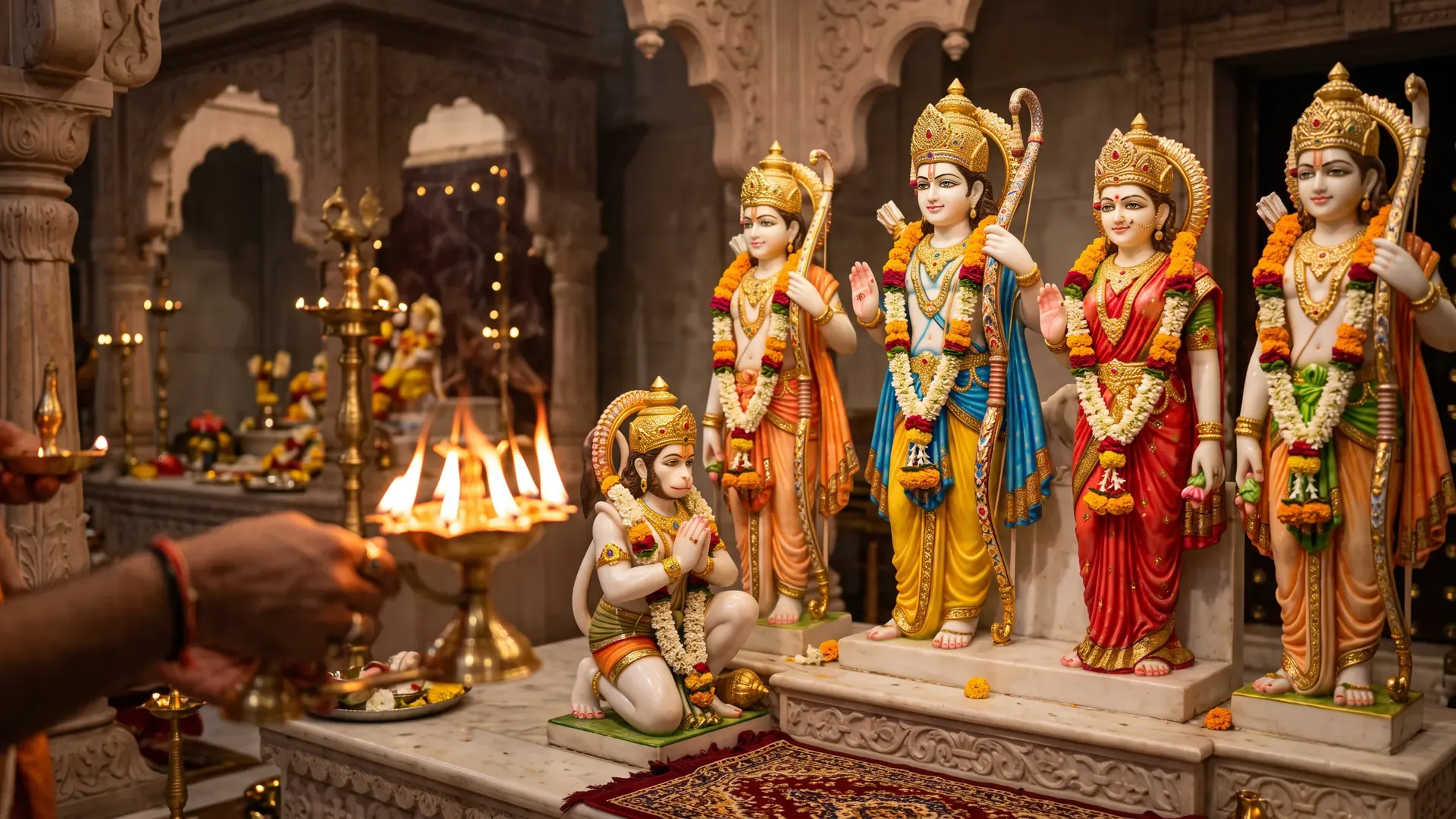
Worship of Rama
Rama: Chalisa, Stuti and Namavali, each on its own page
Frequently asked questions
Who were Lord Rama’s parents?
King Dasharatha and Queen Kausalya of Ayodhya (Valmiki Ramayana, Bala Kanda).
How many brothers did Lord Rama have?
Three: Bharata (mother Kaikeyi), and Lakshmana and Shatrughna (mother Sumitra).
How long was Rama’s exile?
14 years, because of the boon Kaikeyi asked for (Valmiki Ramayana, Ayodhya Kanda).
Where is Rama mentioned in the Gita?
In Bhagavad Gita 10.31, Lord Krishna says: "रामः शस्त्रभृतामहम्", meaning "among wielders of weapons, I am Rama".
When is Ram Navami celebrated?
On Chaitra Shukla Navami, which is regarded as Lord Rama’s birthday.
Sources
Checked against sources- Valmiki Ramayana (all seven Kandas)
- Valmiki Ramayana 1.1
- Valmiki Ramayana, Aranya Kanda 37.13
- Bhagavad Gita 10.31
- Ramcharitmanas
- Rama Raksha Stotram
- Bhagavata Purana 1.3