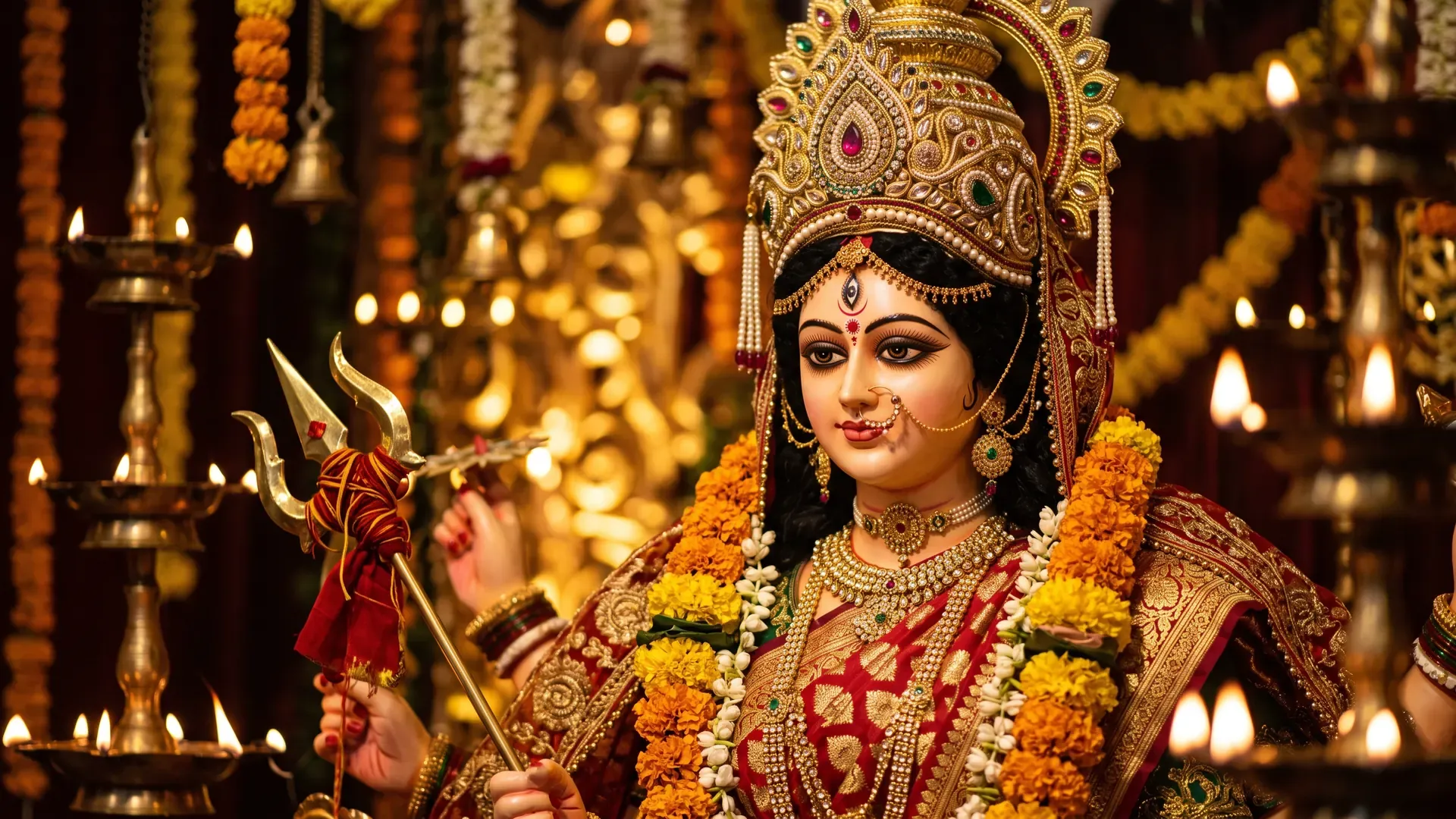
 Image: made with AI
Goddess Durga
Also known as: Amba • Bhavani • Chandika • Jagadamba • Mahishasuramardini
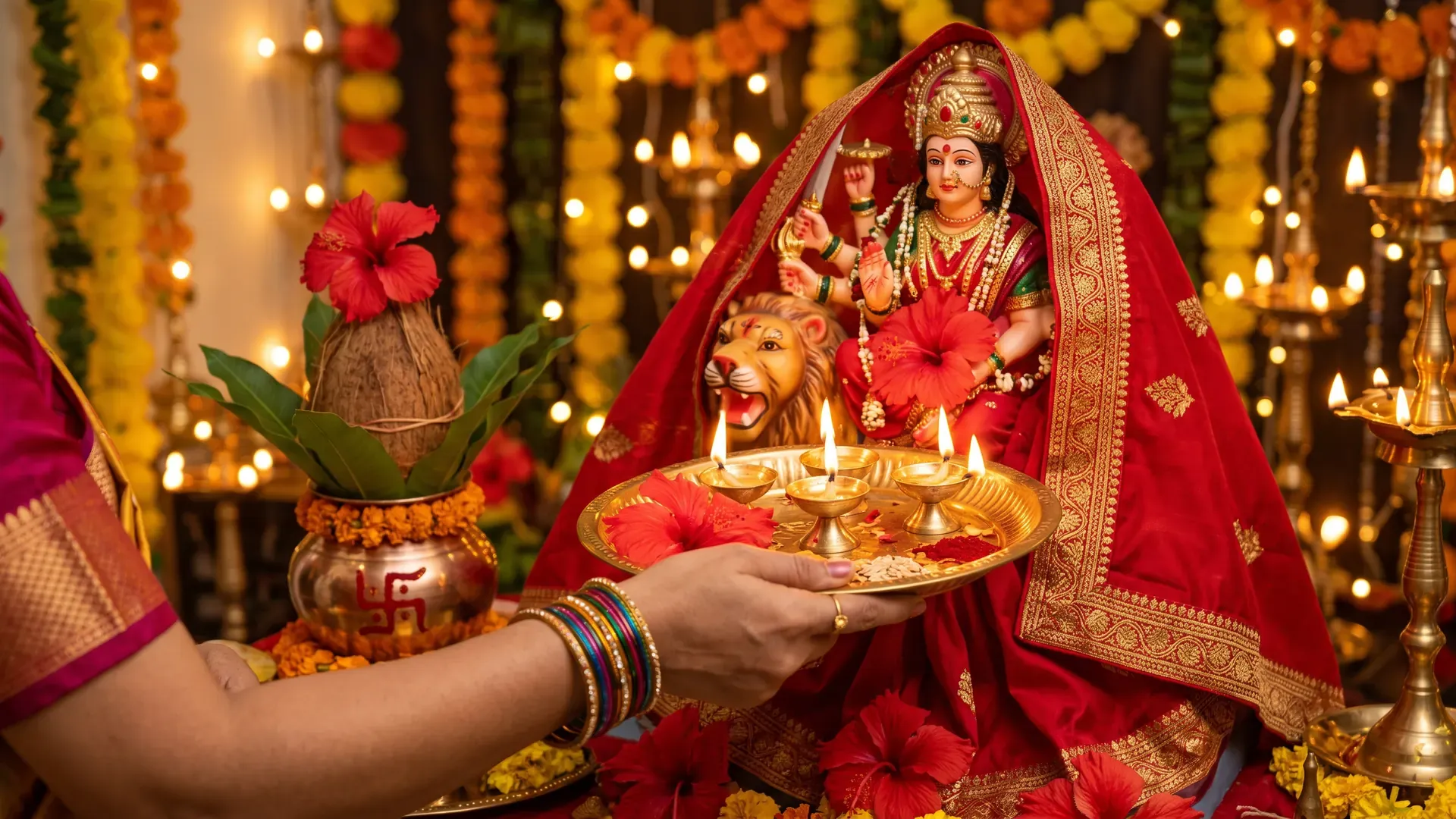
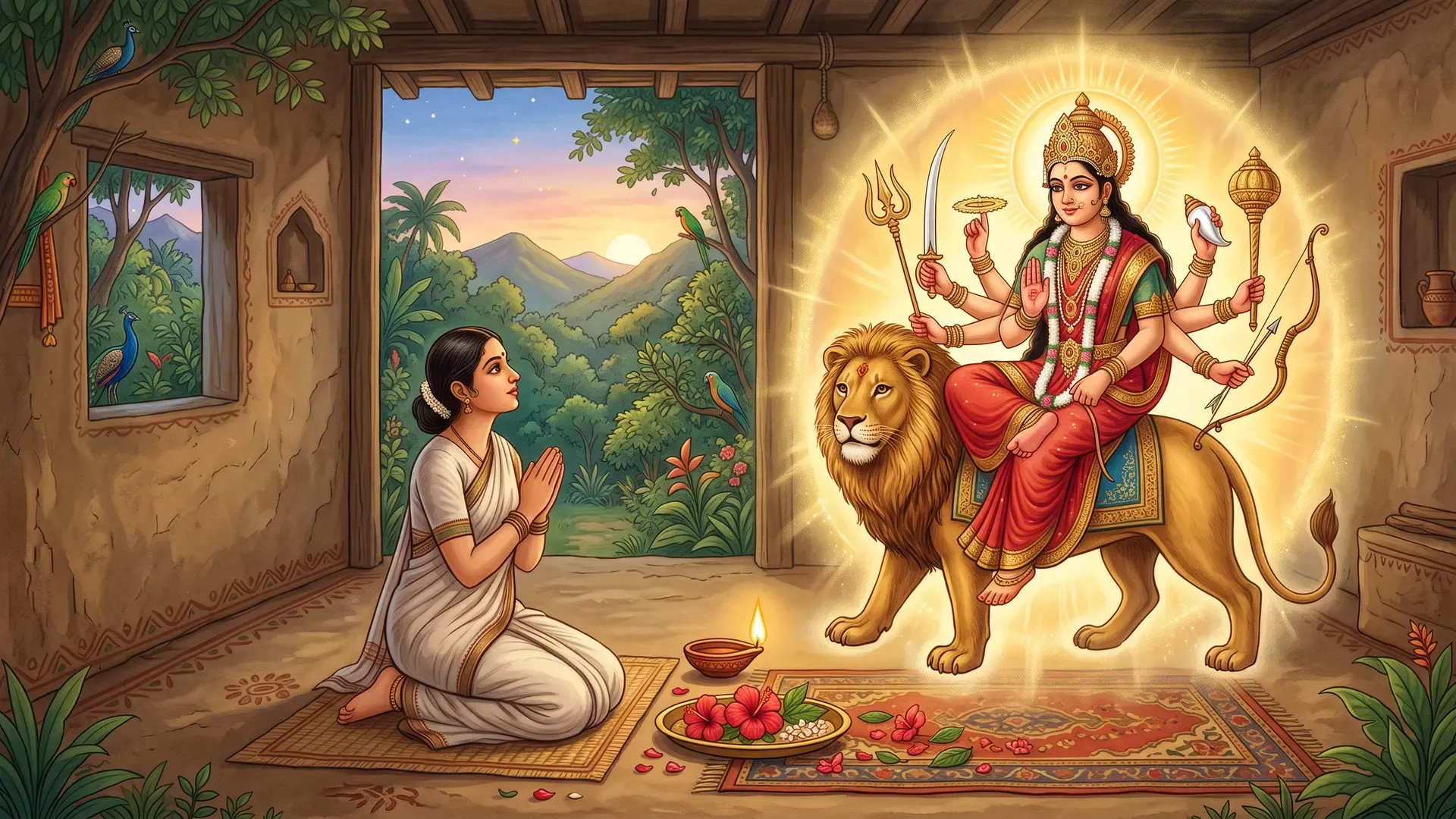
Durga is a form of Adi Shakti, regarded in the Shakta tradition as the supreme power. According to the Durga Saptashati (Markandeya Purana), she arose from the combined radiance of the gods and slew Mahishasura. Her mount is the lion, and her nine forms are worshipped during Navratri.
Durga at a glance
- Nature
- Adi Shakti
- Mount
- Lion
- Weapons
- Trishula, chakra, sword, bow and arrows, vajra (given by the gods)
- Nine forms
- Shailaputri to Siddhidatri (Navadurga)
- Demons slain
- Mahishasura, Shumbha-Nishumbha, Raktabija, Chanda-Munda
- Key texts
- Durga Saptashati, Devi Bhagavata Purana
- Major festivals
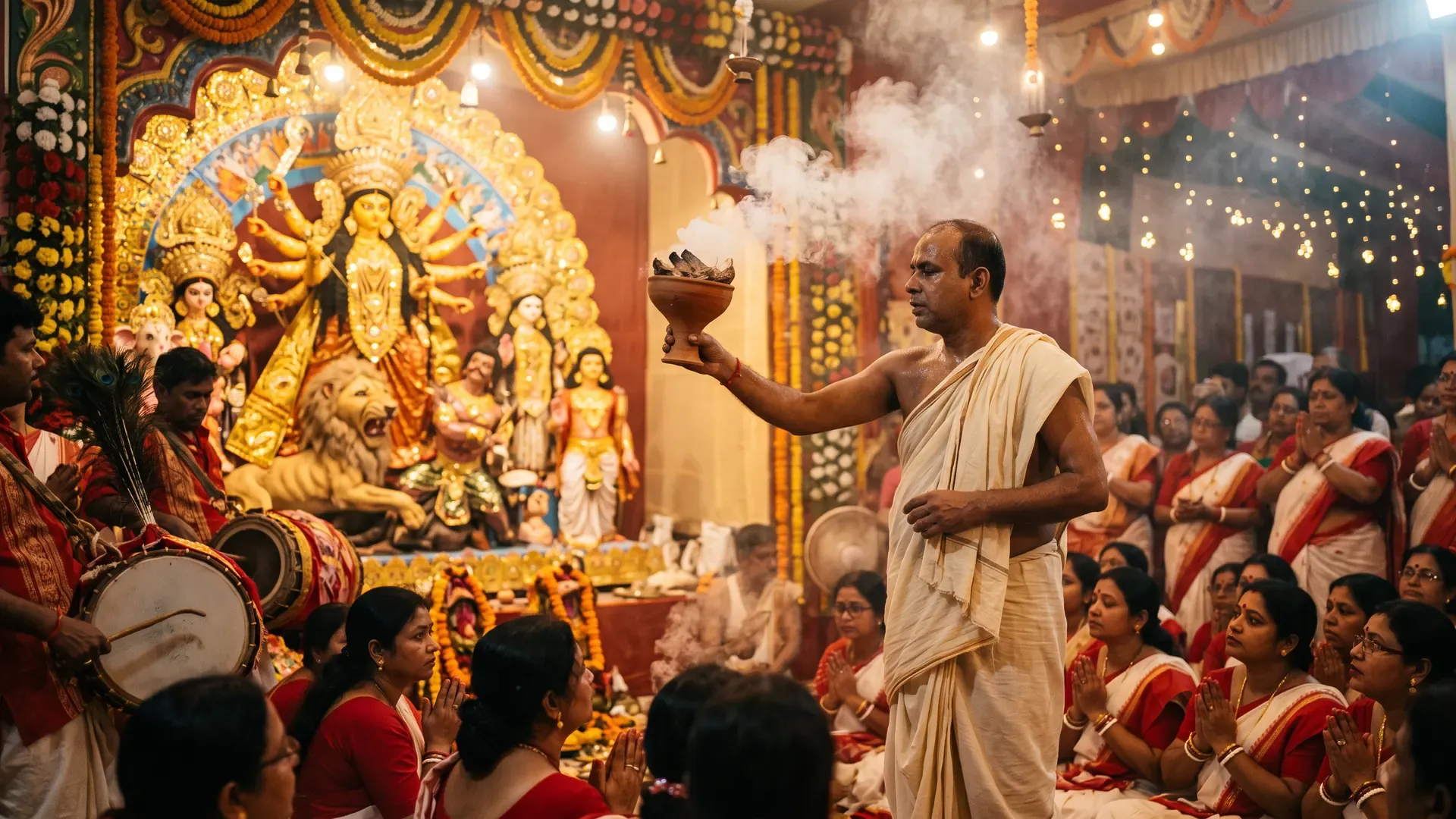
- Sharad Navratri, Chaitra Navratri, Dussehra (Vijayadashami)
- Tradition
- Shakta
Durga: relations
Family, scriptures, tirthas and festivals
15 relations of Durga, each with its source in the texts or the tradition. Tap a name to open its own page, or its relations in the Sanatan tree.
See the whole knowledge graphAll 15 relations, with sources
Deities, figures and sages 12
- Mahishasura · Asura she slewDurga Saptashati, Chapters 2–3
- Parvati · Original formDurga Saptashati 5.84-88 (Ambika came forth from the sheath of Parvati’s body and was called Kaushiki). In the second chapter of the Saptashati the Devi arises from the combined radiance of all the gods.
- Kali · FormDurga Saptashati 7.5-6 (from Ambika’s brow), 7.27 (the name Chamunda)
- Shailputri · FormDevi Kavacha, verses 3-5 (read before the Durga Saptashati, Gita Press)
- Brahmacharini · FormDevi Kavacha, verses 3-5 (read before the Durga Saptashati, Gita Press)
- Chandraghanta · FormDevi Kavacha, verses 3-5 (read before the Durga Saptashati, Gita Press)
- Kushmanda · FormDevi Kavacha, verses 3-5 (read before the Durga Saptashati, Gita Press)
- Skandamata · FormDevi Kavacha, verses 3-5 (read before the Durga Saptashati, Gita Press)
- Katyayani · FormDevi Kavacha, verses 3-5 (read before the Durga Saptashati, Gita Press)
- Kalaratri · FormDevi Kavacha, verses 3-5 (read before the Durga Saptashati, Gita Press)
- Mahagauri · FormDevi Kavacha, verses 3-5 (read before the Durga Saptashati, Gita Press)
- Siddhidatri · FormDevi Kavacha, verses 3-5 (read before the Durga Saptashati, Gita Press)
Scriptures and mantras 1
- Durga Saptashati · Narrative textMarkandeya Purana, Chapters 81–93
Festivals 2
- Sharad Navratri · FestivalDevi Bhagavata Purana, Skandha 3
- Dussehra · Festival (end of Navratri)Tradition
The three episodes of the Durga Saptashati
Thirteen chapters of the Markandeya Purana (about 700 verses) are known as the Durga Saptashati or Devi Mahatmya. Its story is told in three parts (charitras):
First episode (Chapter 1)
The episode of Mahakali: Vishnu wakes from his yogic sleep (yoganidra) and slays the asuras Madhu and Kaitabha.
Durga Saptashati, Chapter 1Middle episode (Chapters 2–4)
The episode of Mahalakshmi: the Goddess arises from the radiance of the gods and slays Mahishasura.
Durga Saptashati, Chapters 2–4Final episode (Chapters 5–13)
The episode of Mahasaraswati: the slaying of Dhumralochana, Chanda and Munda, Raktabija, and Shumbha and Nishumbha.
Durga Saptashati, Chapters 5–13
The slaying of Mahishasura
Mahishasura defeated the gods and seized heaven. Then the radiance that arose from the anger of Brahma, Vishnu, Shiva and the other gods took form as a Goddess. The gods gave her their weapons: Shiva his trishula, Vishnu his chakra, Indra his vajra, and Himalaya gave her a lion as her mount. In a fierce battle, the Goddess slew Mahishasura (Durga Saptashati, Chapters 2–3).
Navadurga: the nine forms of Navratri
Over the nine days of Navratri, these forms are worshipped in order. The order comes from the verse "प्रथमं शैलपुत्री च" in the Devi Kavacham.
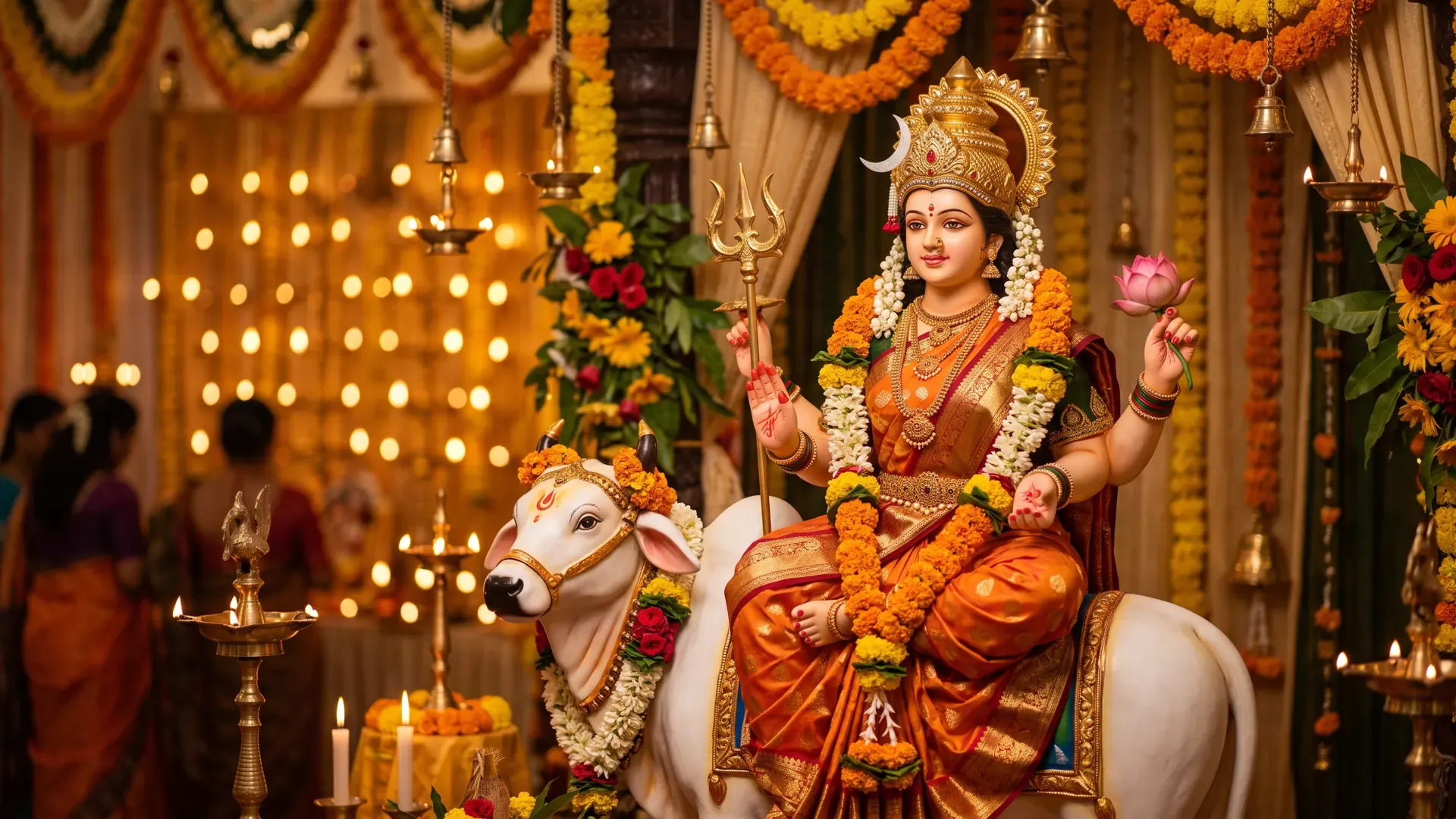
Shailaputri
Daughter of Himalaya, king of the mountains.
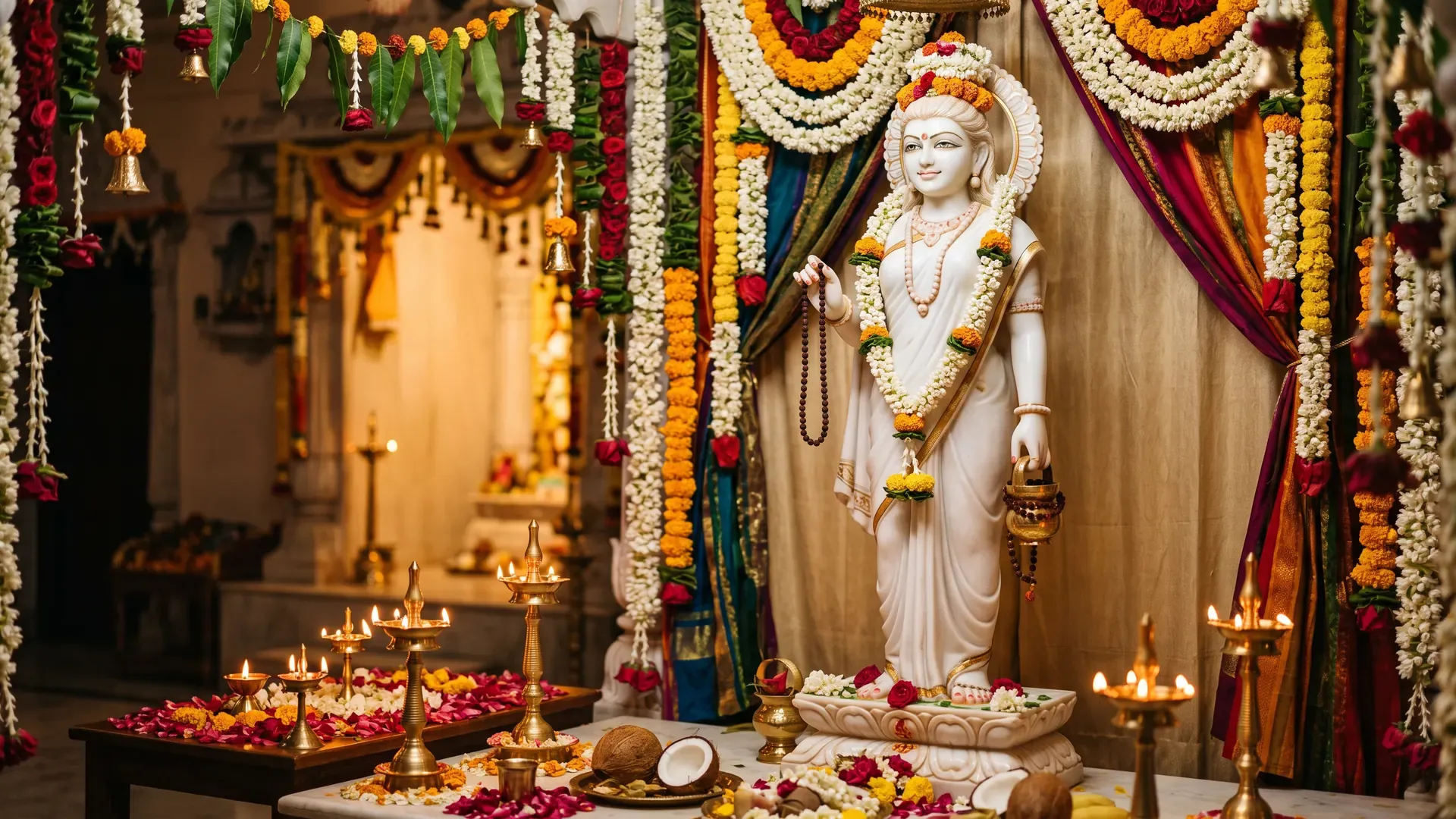
Brahmacharini
The form of austerity and self-discipline.
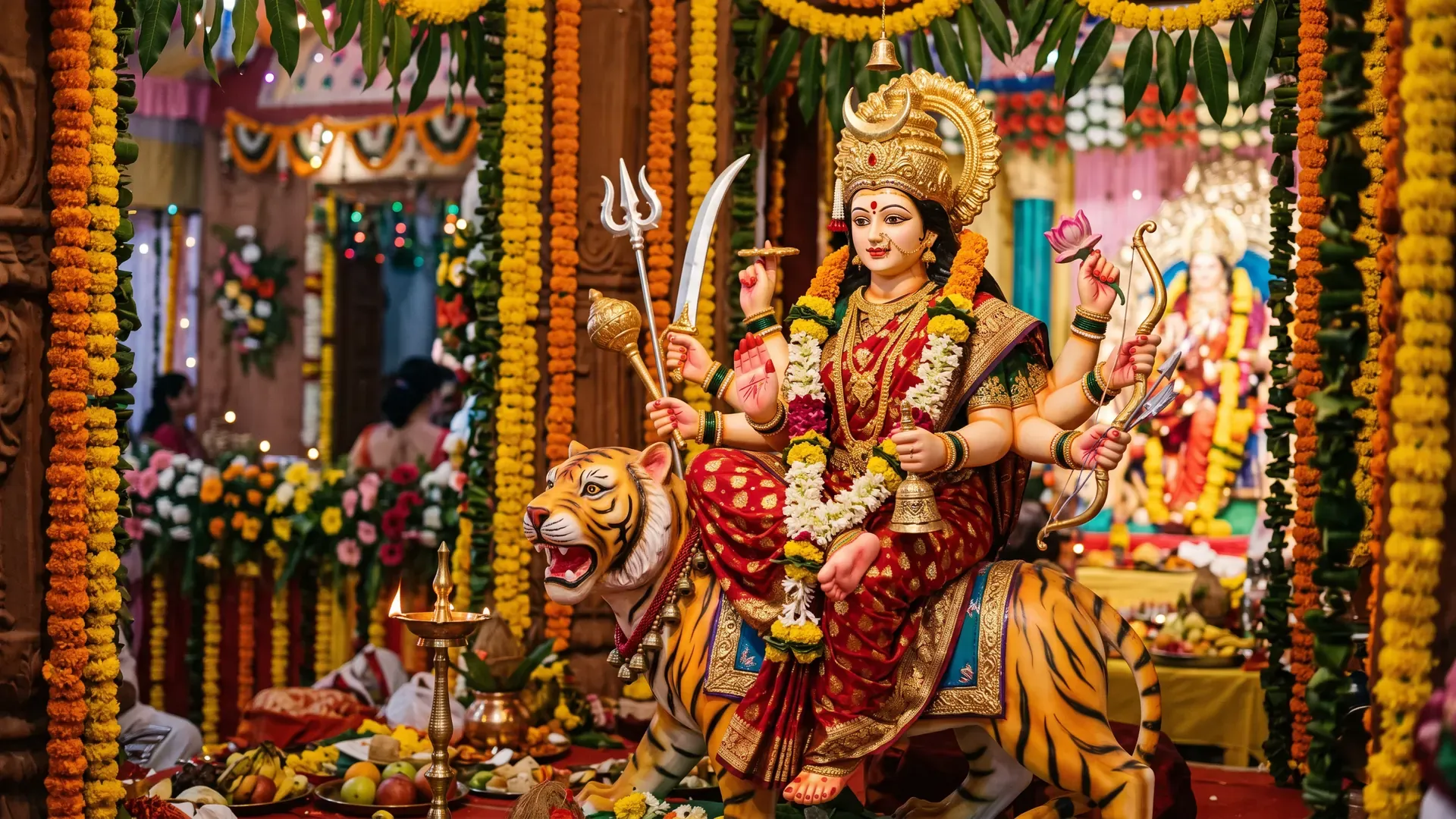
Chandraghanta
A bell-shaped crescent moon on her forehead.
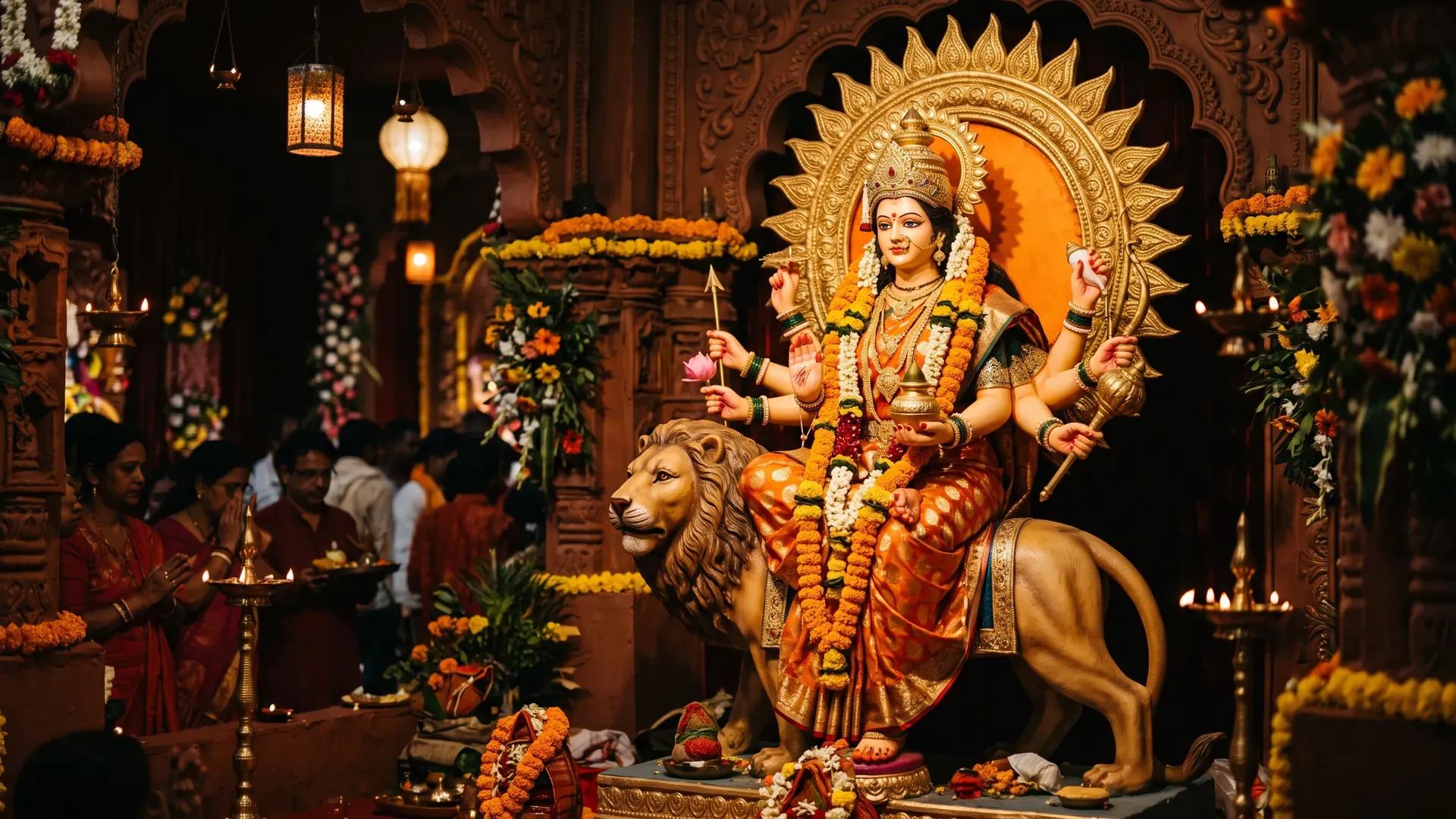
Kushmanda
In tradition, the creator of the universe.
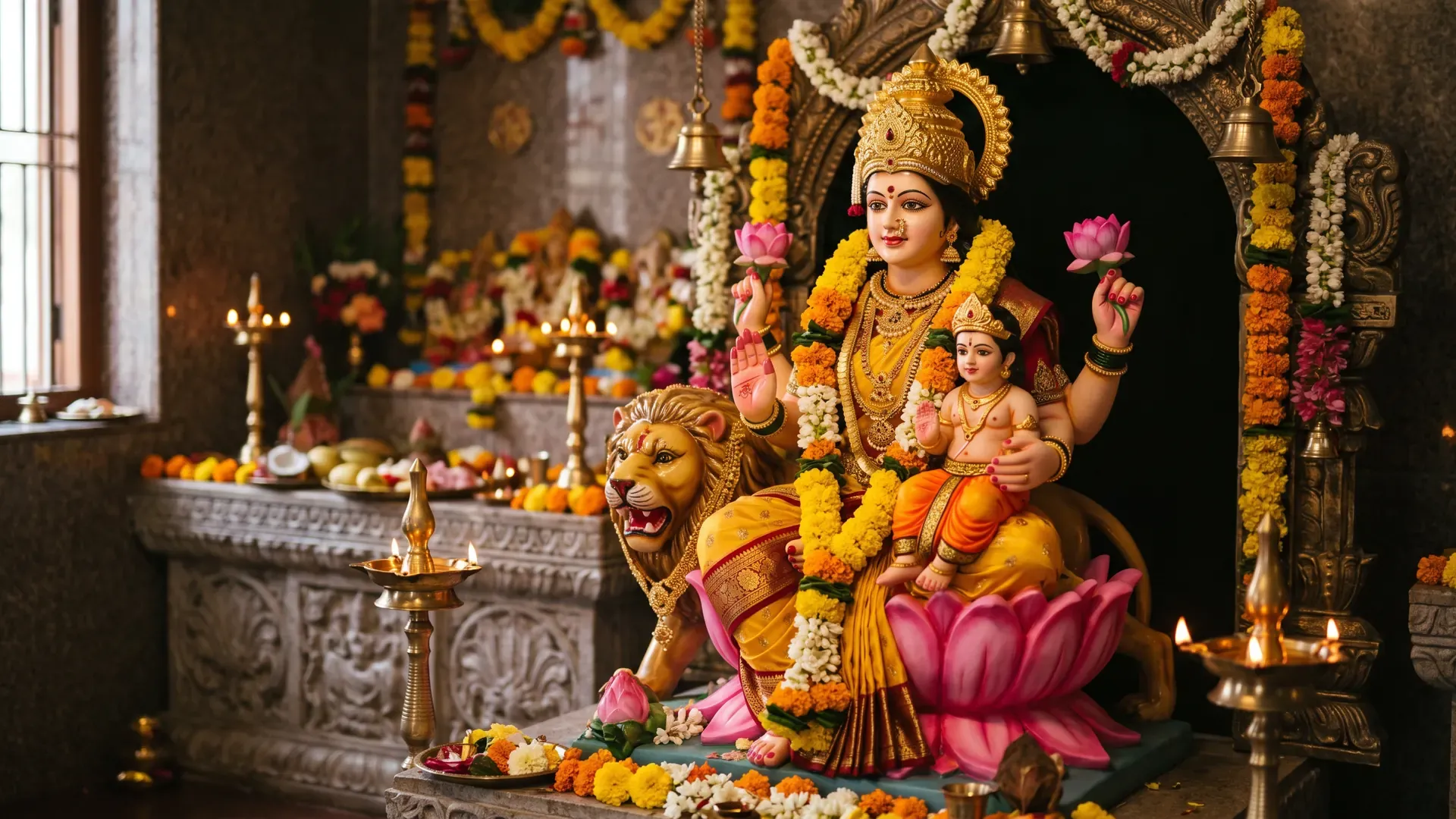
Skandamata
Mother of Skanda (Kartikeya).
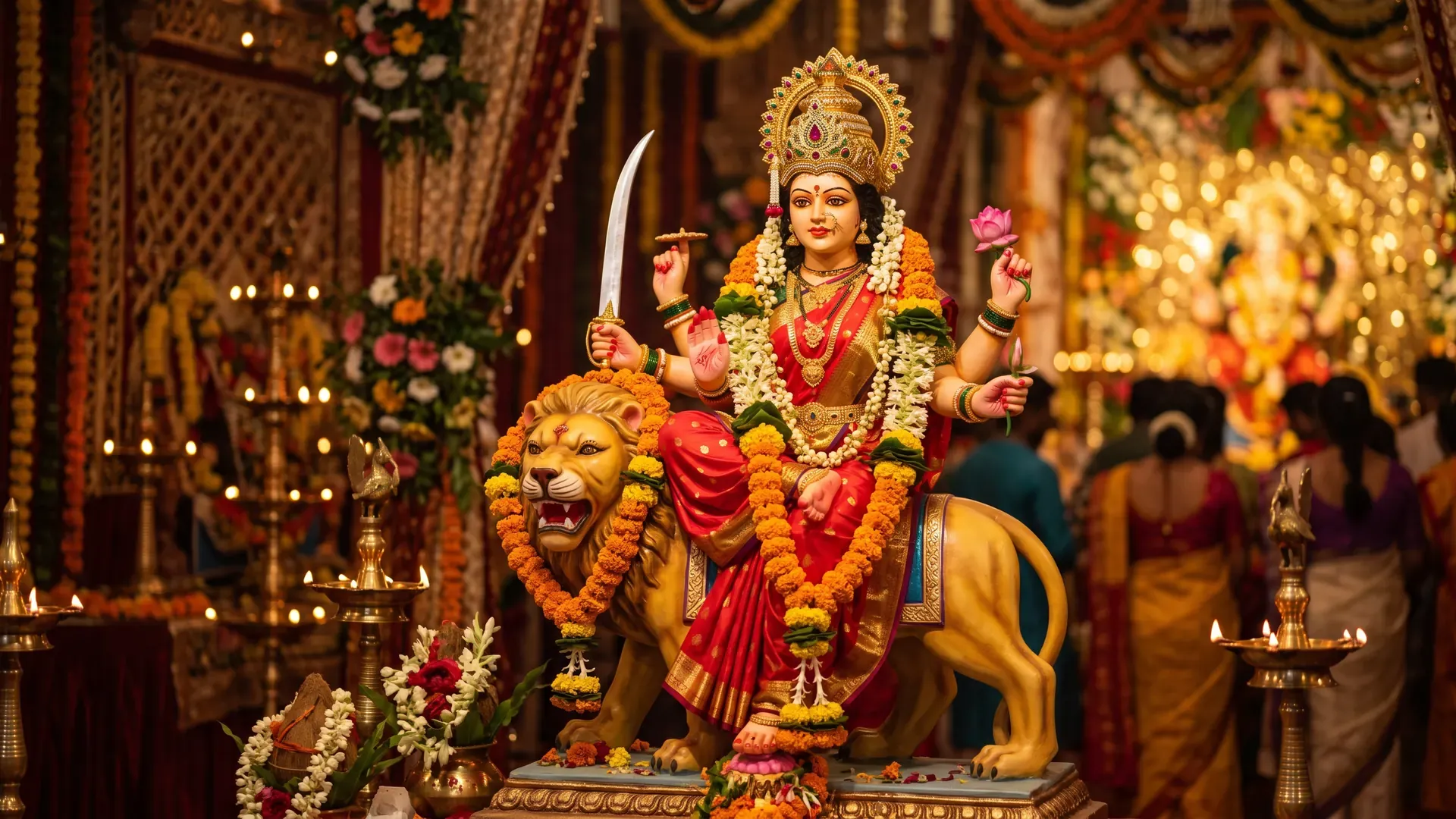
Katyayani
The form that appeared in the ashram of the sage Katyayana.
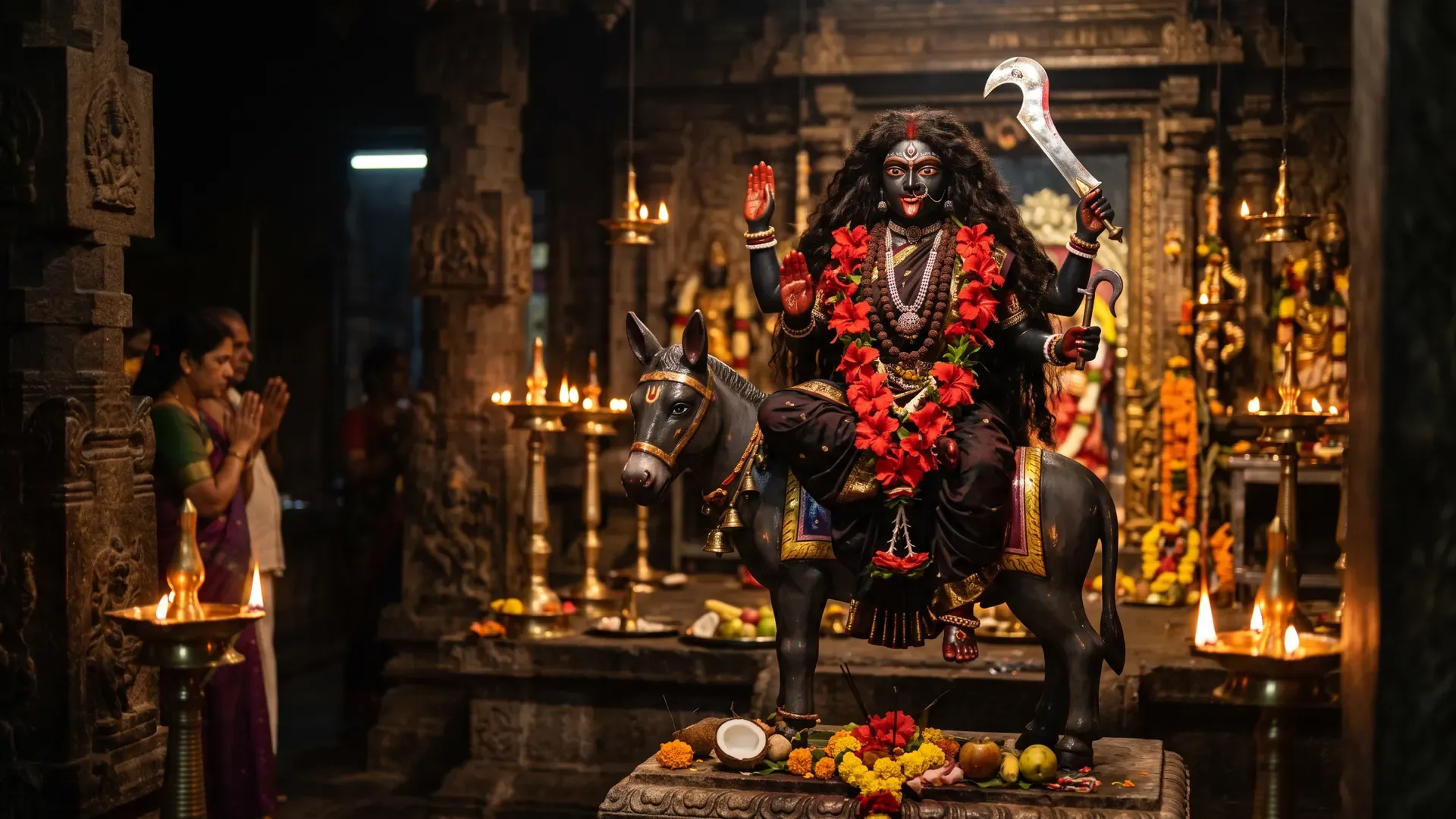
Kalaratri
The fierce form that destroys darkness and fear.
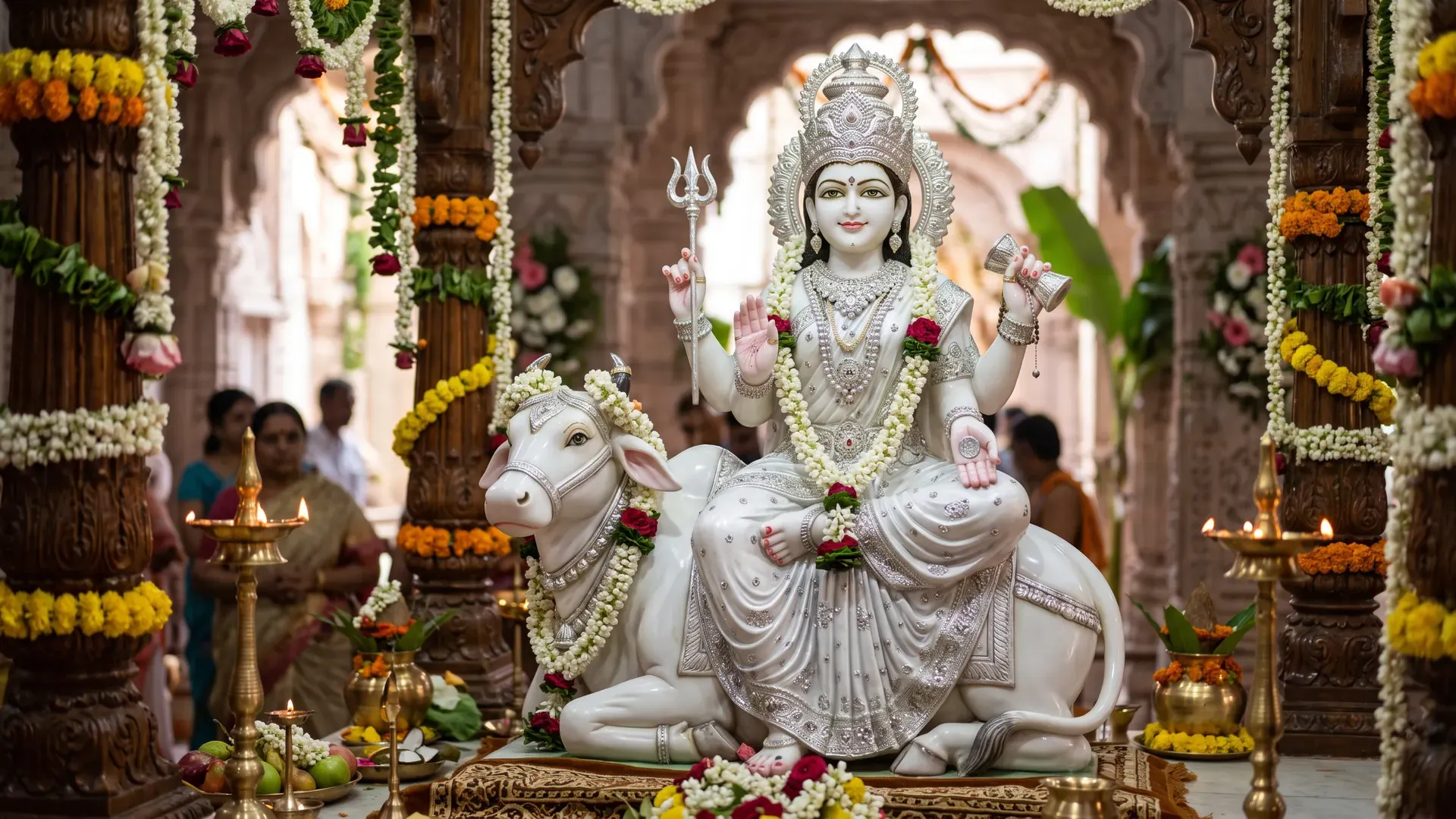
Mahagauri
The serene form with a fair complexion.
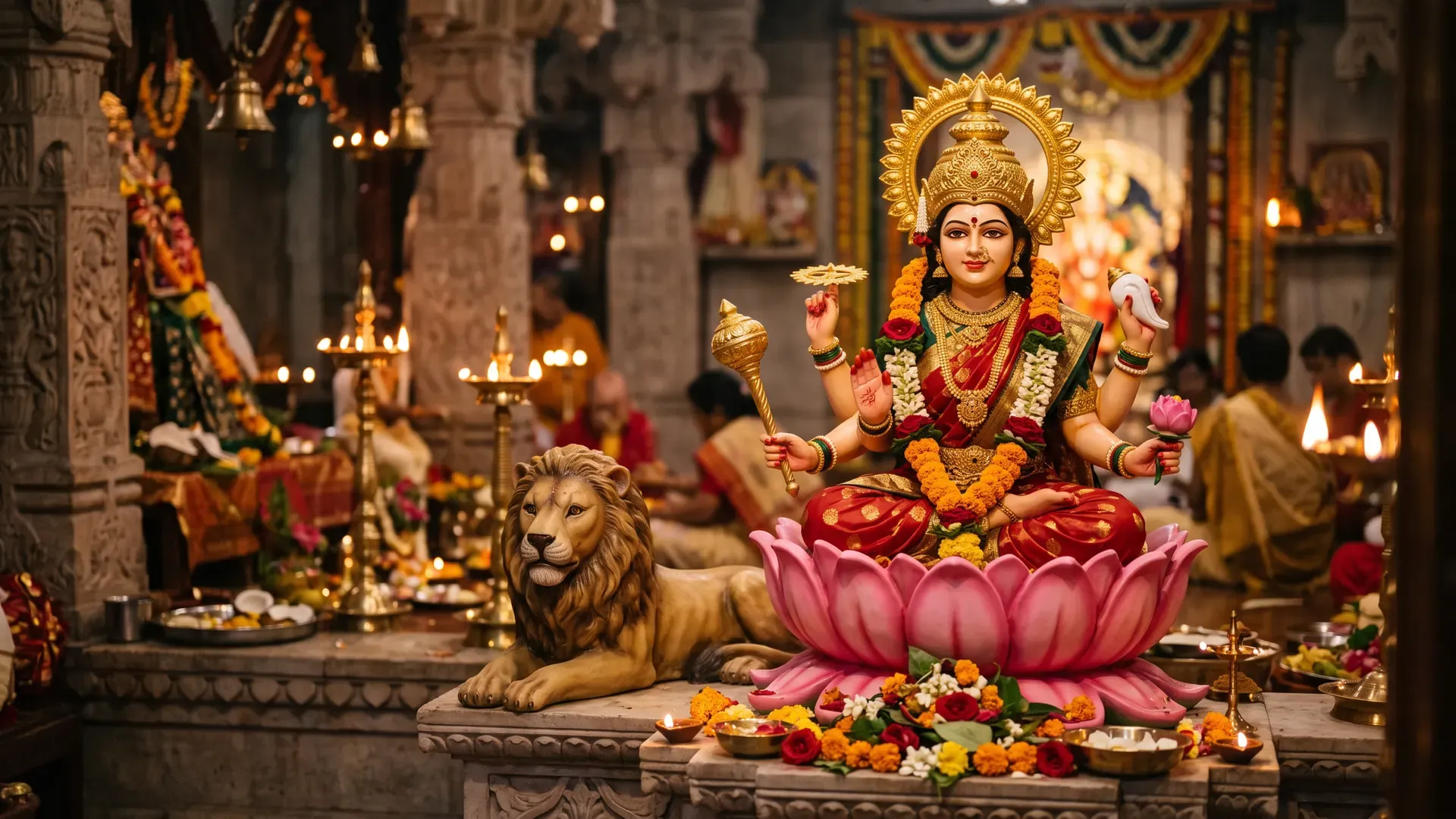
Siddhidatri
The giver of siddhis (spiritual powers).
Images: made with AI
Durga in the scriptures
या देवी सर्वभूतेषु शक्तिरूपेण संस्थिता ।नमस्तस्यै नमस्तस्यै नमस्तस्यै नमो नमः ॥सर्वमङ्गलमाङ्गल्ये शिवे सर्वार्थसाधिके ।शरण्ये त्र्यम्बके गौरि नारायणि नमोऽस्तु ते ॥प्रथमं शैलपुत्री च द्वितीयं ब्रह्मचारिणी ।- Markandeya Purana, Chapters 81–93 (Durga Saptashati)
- Durga Saptashati, Chapters 2–3
- Durga Saptashati, Chapters 5 and 11
- Devi Kavacham
- Devi Bhagavata Purana
Festivals of Durga
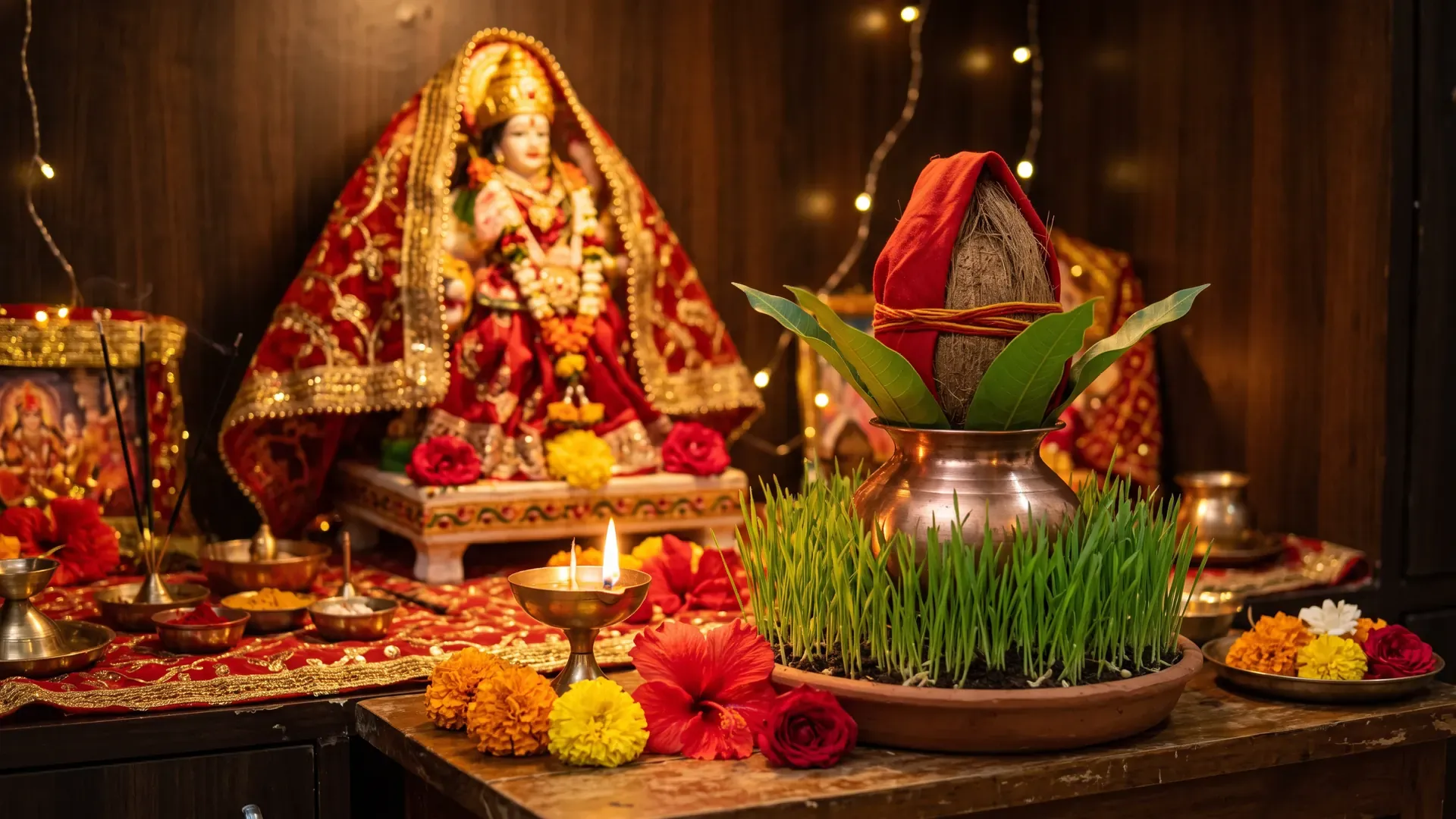
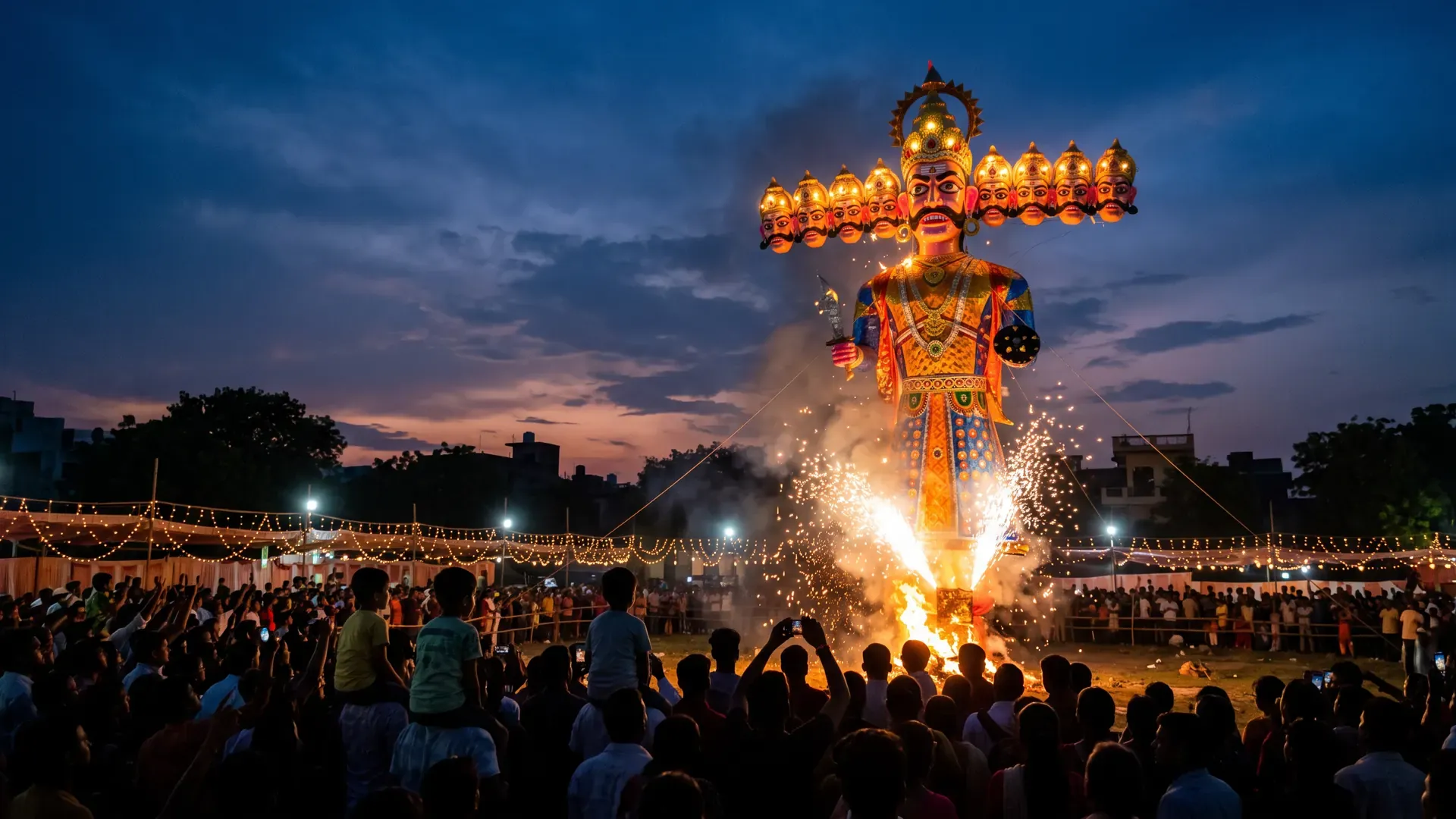
Worship of Durga
Durga: Aarti, Chalisa, Stuti and Namavali, each on its own page
 Durga Aarti: Jai Ambe GauriAarti
 Durga Kali Aarti: Ambe Tu Hai Jagdambe KaliAarti
 Vindhyeshwari Aarti: Sun Meri Devi Parvat VasiniAarti
 Durga ChalisaChalisa
- Durga Kavach (Devi Kavacham)Stuti
- Durge Durghat Bhari: Marathi Durga AartiAarti
- Jay Adya Shakti: Gujarati Amba AartiAarti
- Santoshi Mata ChalisaChalisa
- Kali ChalisaChalisa
- Vindhyeshwari ChalisaChalisa
- Vaishno Devi ChalisaChalisa
- Sheetala Mata ChalisaChalisa
- Shakambhari ChalisaChalisa
- Mahakali ChalisaChalisa
- Shri Durga Ashtottara Shatanamavali: 108 NamesNamavali
Vrat kathas
Frequently asked questions
What are the nine forms of Durga?
Shailaputri, Brahmacharini, Chandraghanta, Kushmanda, Skandamata, Katyayani, Kalaratri, Mahagauri and Siddhidatri (Devi Kavacham).
How did Durga slay Mahishasura?
According to the Durga Saptashati (Chapters 2–3), the Goddess, who arose from the radiance of the gods, slew Mahishasura in battle with the weapons the gods had given her.
How many chapters are in the Durga Saptashati?
13 chapters and, by tradition, 700 verses, which is why it is called "Saptashati" (seven hundred). They are chapters 81–93 of the Markandeya Purana.
What is Durga’s mount?
The lion. According to the Durga Saptashati (Chapter 2), Himalaya gave the Goddess a lion as her mount.
Sources
Checked against sources- Markandeya Purana, Chapters 81–93 (Durga Saptashati)
- Durga Saptashati, Chapters 2–3
- Durga Saptashati, Chapters 5 and 11
- Devi Kavacham
- Devi Bhagavata Purana