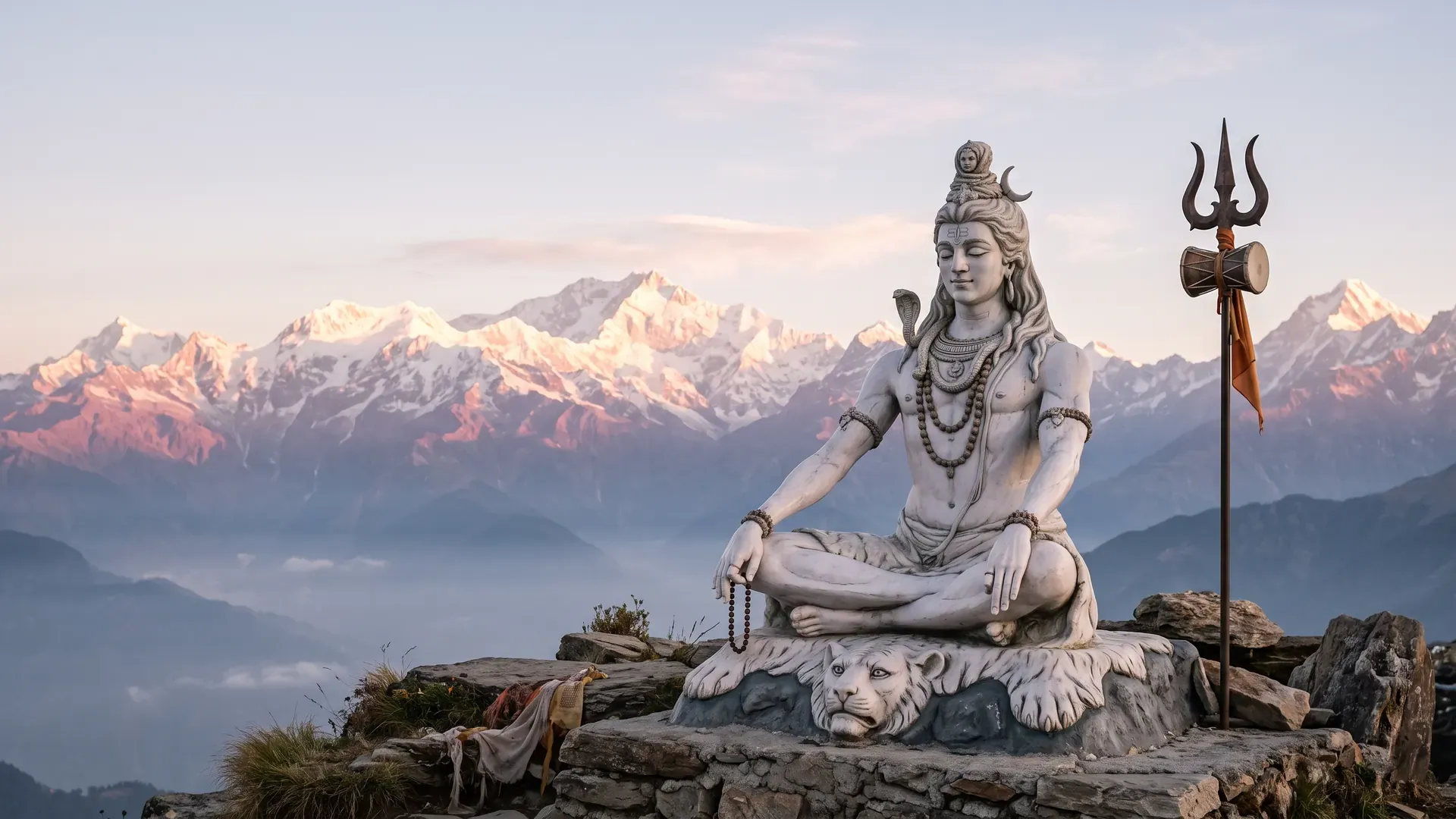
 Image: made with AI
Lord Shiva
Also known as: Mahadeva • Shankara • Bholenath • Neelkantha • Rudra
Among the Trimurti, Shiva is regarded as the god of dissolution and renewal, and in the Shaiva tradition he is the Supreme Brahman himself. His consort is Parvati and his sons are Ganesha and Kartikeya. His mount is Nandi and his abode is Mount Kailash.
Shiva at a glance
- Mount
- Nandi
- Abode
- Mount Kailash
- Weapons
- Trishula, Pinaka bow
- Mantra
- ॐ नमः शिवाय (Om Namah Shivaya)
- Major festivals
- Maha Shivratri, Sawan Mondays
- Key texts
- Shiva Purana, Linga Purana
- Tradition
- Shaiva
Shiva: relations
Family, scriptures, tirthas and festivals
35 relations of Shiva, each with its source in the texts or the tradition. Tap a name to open its own page, or its relations in the Sanatan tree.
See the whole knowledge graphAll 35 relations, with sources
Family
Source: Shiva PuranaDeities, figures and sages 9
- Hanuman · Avatar Shaiva viewShiva Purana, Shatarudra Samhita
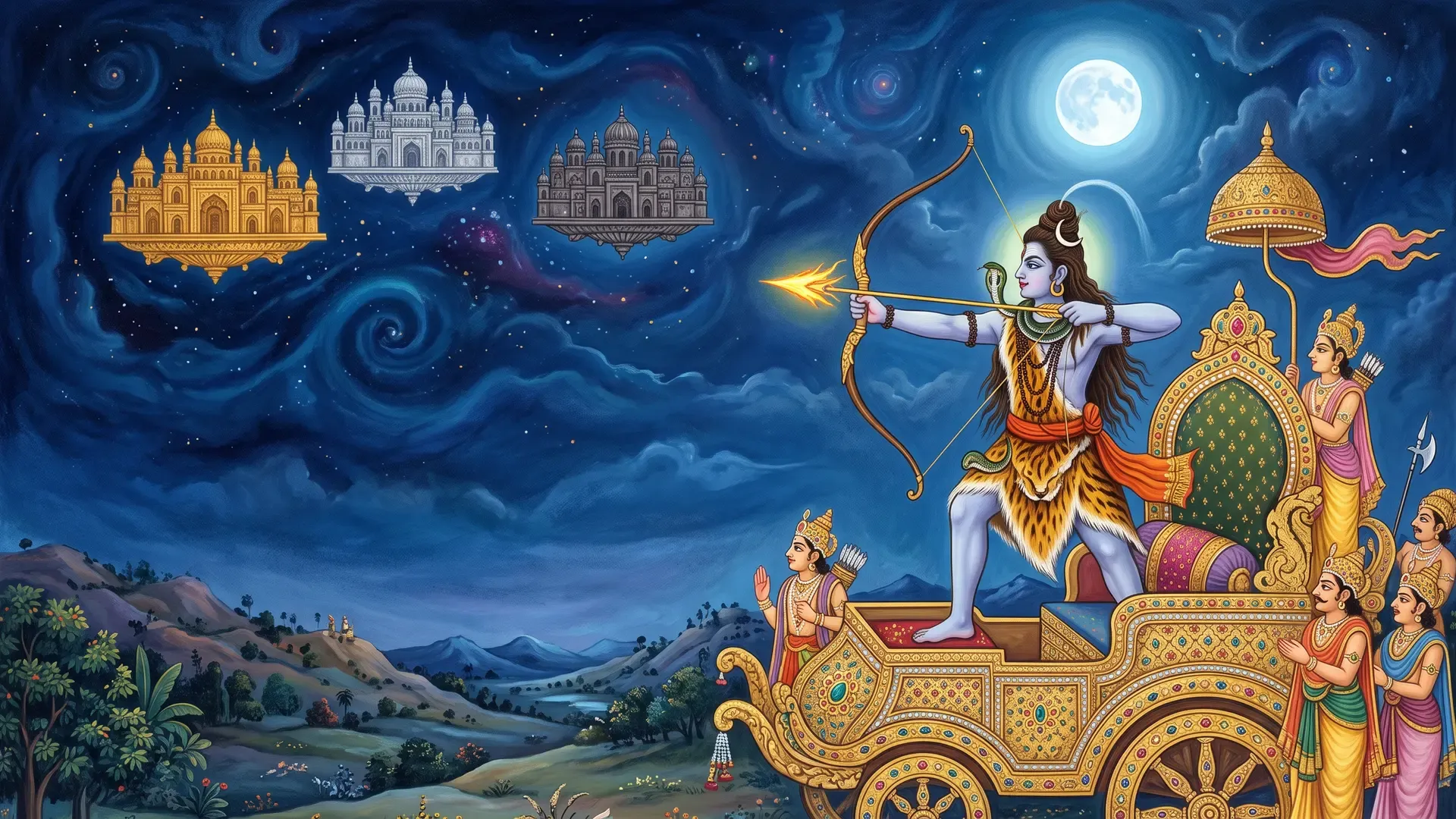
- Tripurasura · Asuras he destroyedShiva Purana, Rudra Samhita, Yuddha Khanda
- Kubera · Friend and devoteeValmiki Ramayana, Uttara Kanda; Amarakosha (‘Tryambakasakha’)
- Durvasa · AvatarShiva Purana, Shatarudra Samhita 19.27; Bhagavata 4.1.33 (of Shankara’s portion)
- Virabhadra · AvatarShiva Purana, Rudra Samhita, Sati Khanda 32.20-22 (born of his matted hair), Shatarudra Samhita 10.1-2; Bhagavata 4.5.2-3
- Kala Bhairava · AvatarShiva Purana, Shatarudra Samhita 8.44-53
- Bhringi · Gana (attendant)Shiva Purana, Rudra Samhita, Sati Khanda 37.15, Yuddha Khanda 9.33
- Kamadeva · Whom he burnt with his third eyeShiva Purana, Rudra Samhita, Parvati Khanda 19.14-15
- Banasura · DevoteeBhagavata 10.62.2-3
Scriptures and mantras 4
- Om Namah Shivaya · MantraSri Rudram, Taittiriya Samhita 4.5
- Shiva Purana · Narrative textShiva Purana
- Shvetashvatara Upanishad · Mentioned inShvetashvatara Upanishad 3.2
- Bhagavad Gita · Mentioned inBhagavad Gita 10.23
Tirths and places 2
- Mount Kailash · AbodeShiva Purana
- Kshira Sagara (the Ocean of Milk) · Whose poison he drankBhagavata 8.7.18, 8.7.42-43. In the Vishnu Purana (1.9.95) the nagas took the poison.
Festivals 3
- Maha Shivratri · FestivalShiva Purana
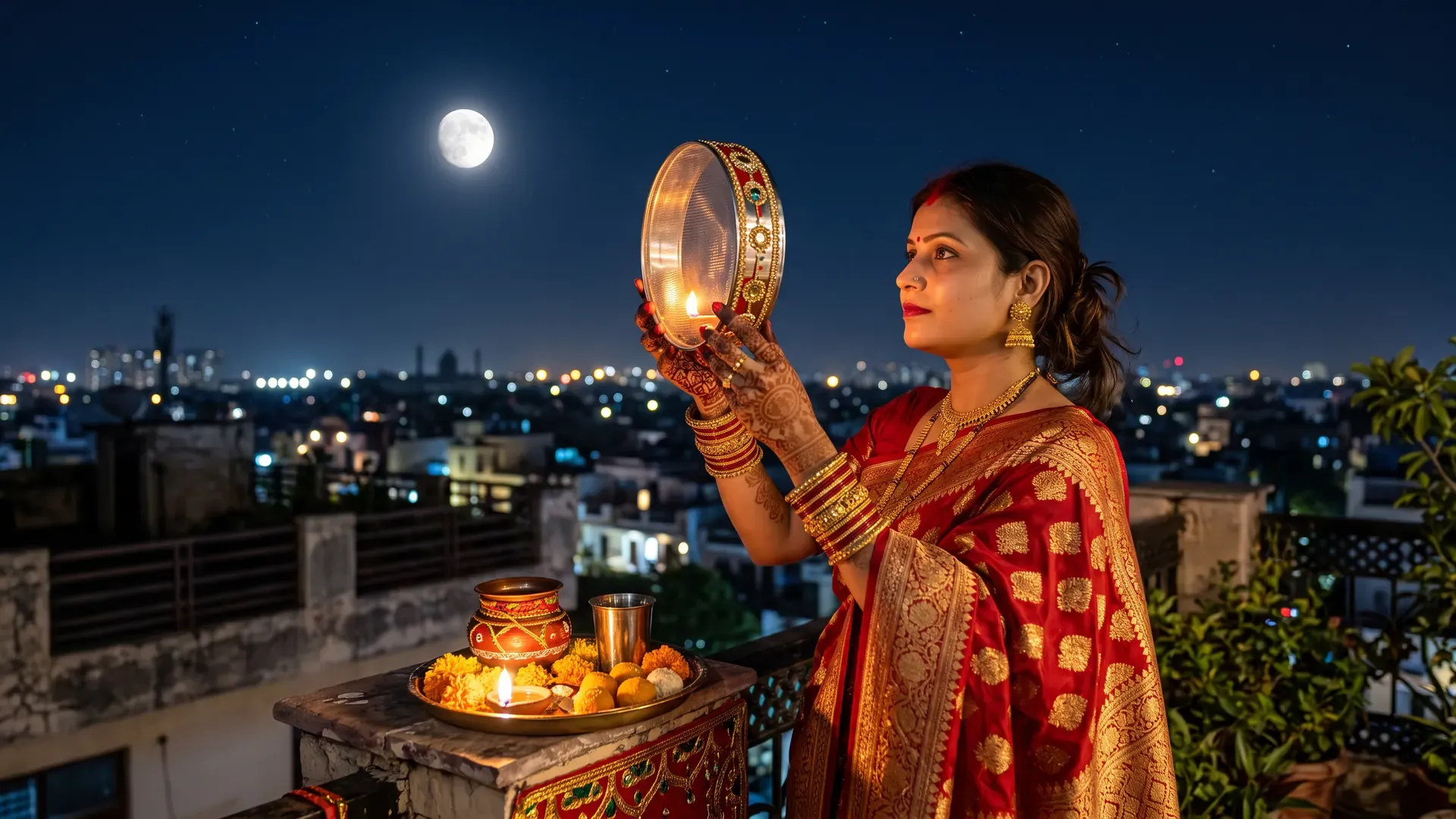
- Karva Chauth · FestivalFolk tradition
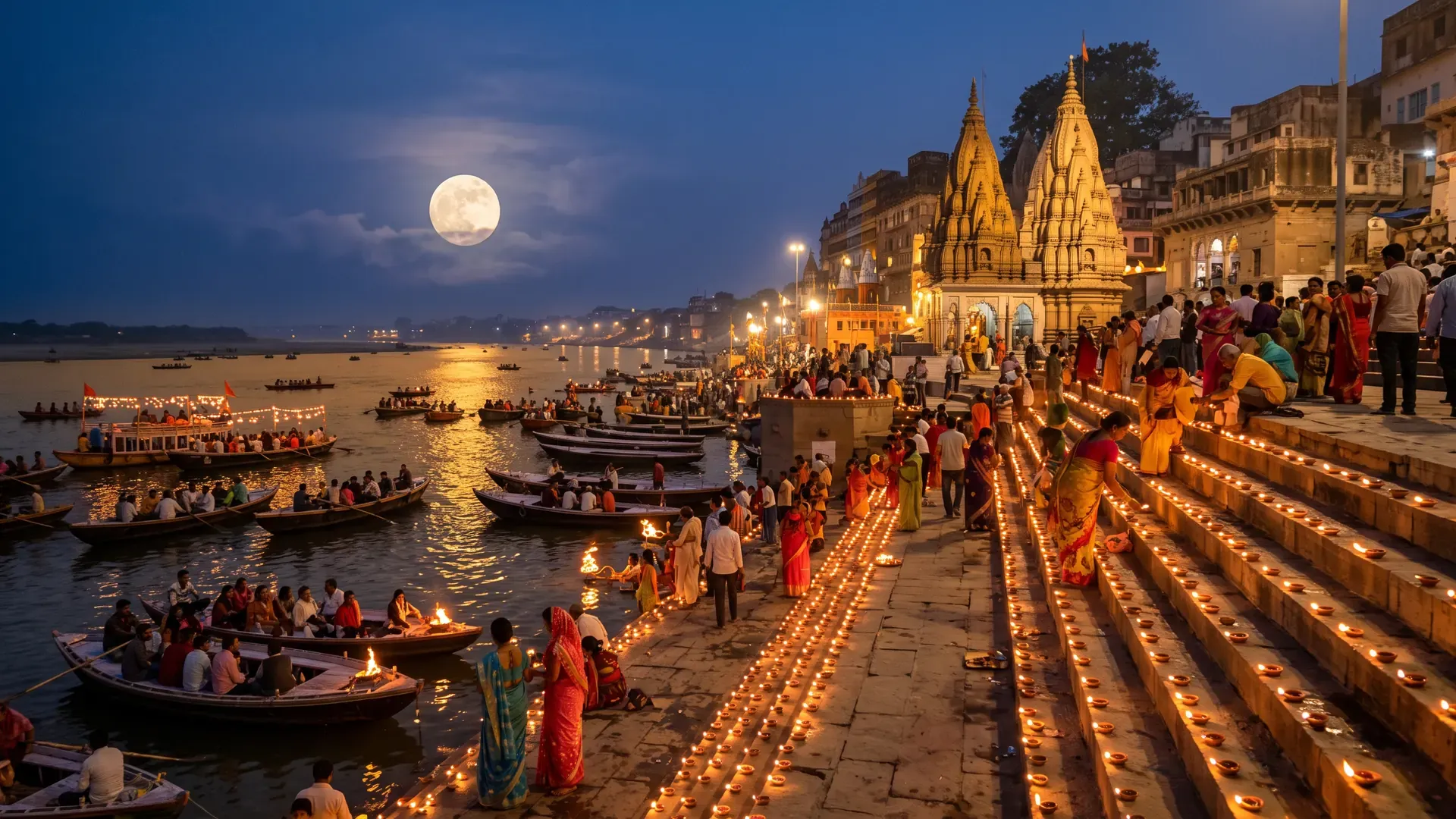
- Kartik Purnima · Festival (Tripurari Purnima)Tradition
Form and symbols
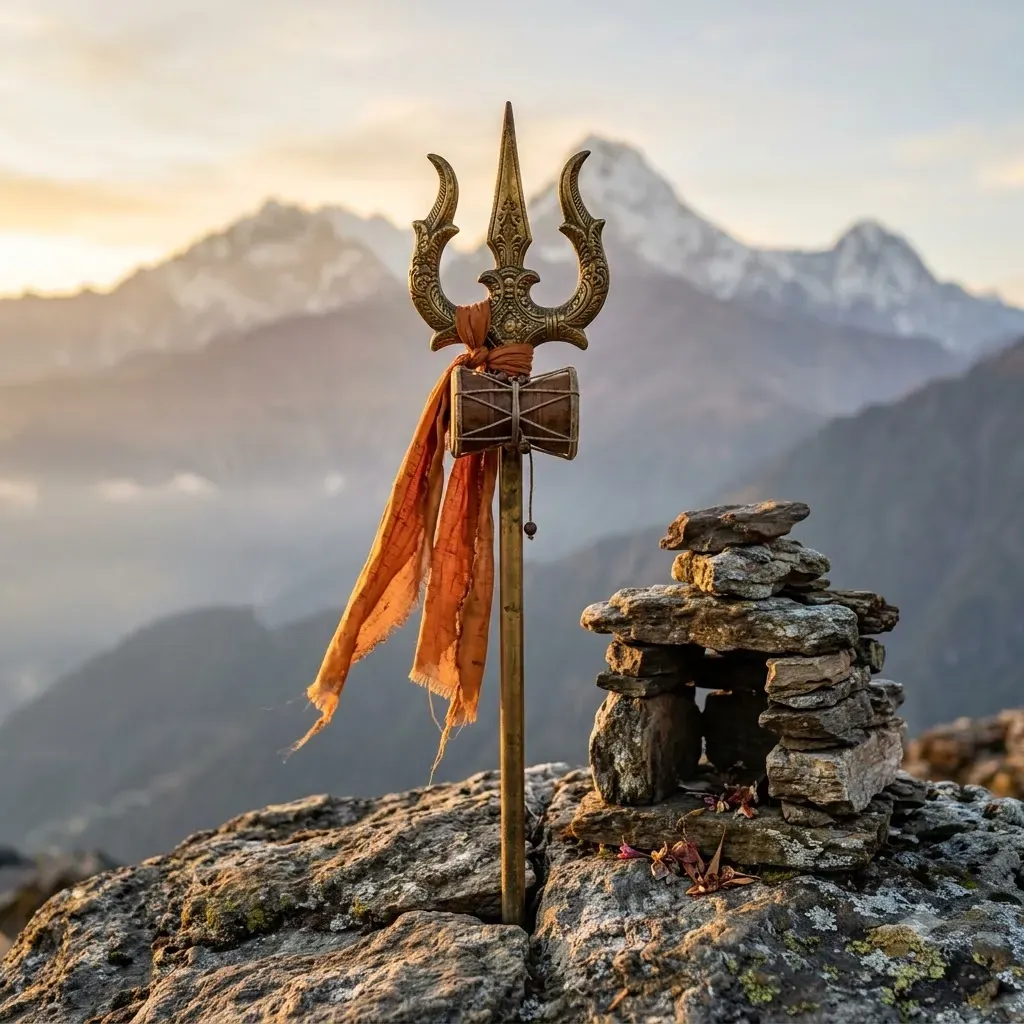
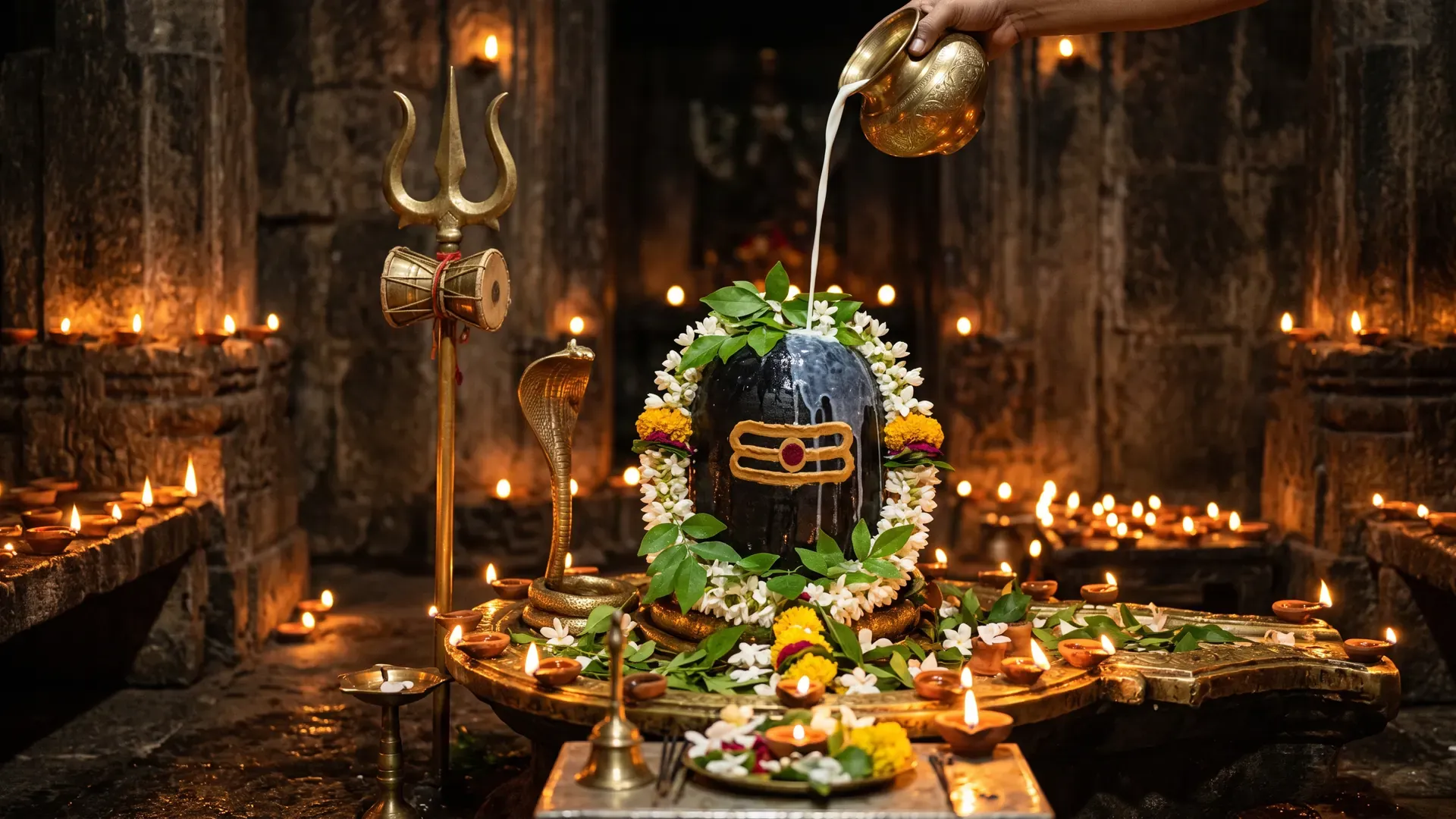
Trishula
His principal weapon; regarded as a symbol of mastery over the three gunas.
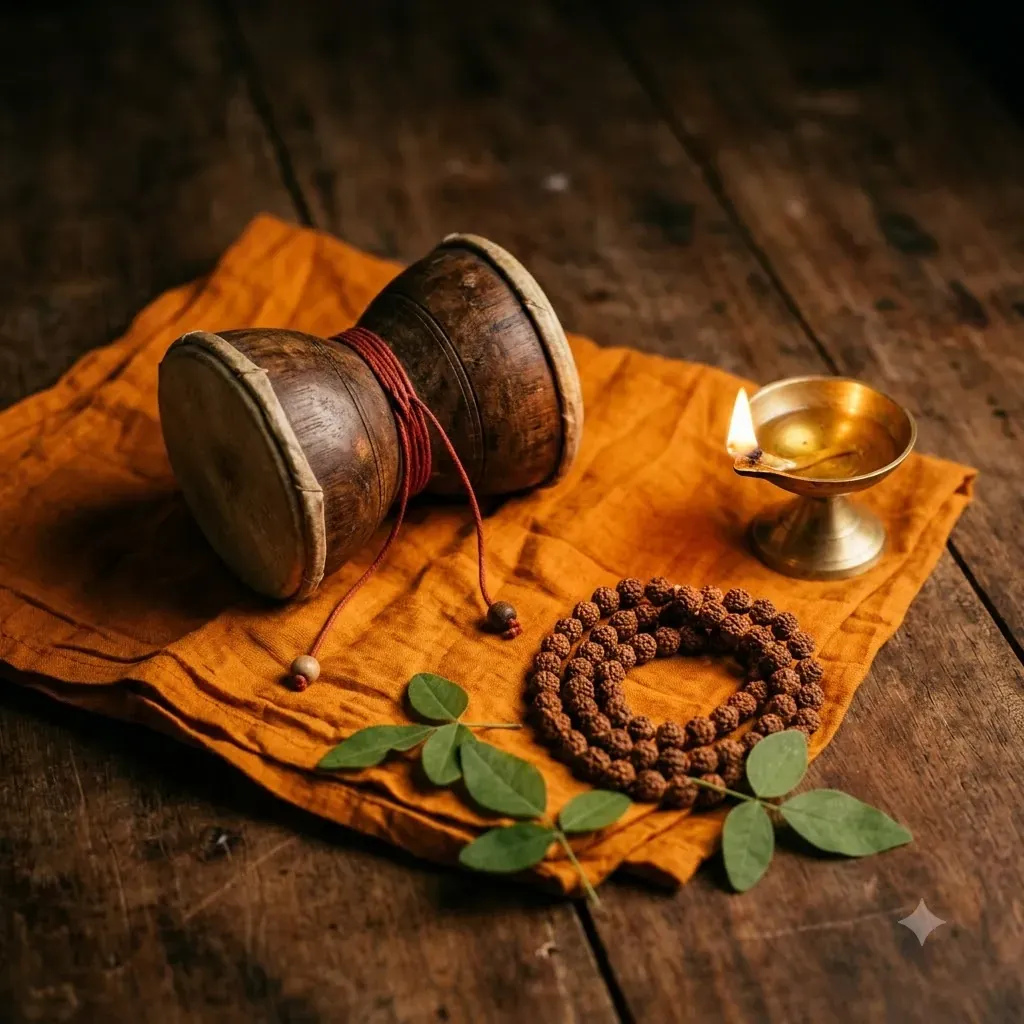
Damaru
A symbol of primordial sound (nada) and the rhythm of creation.
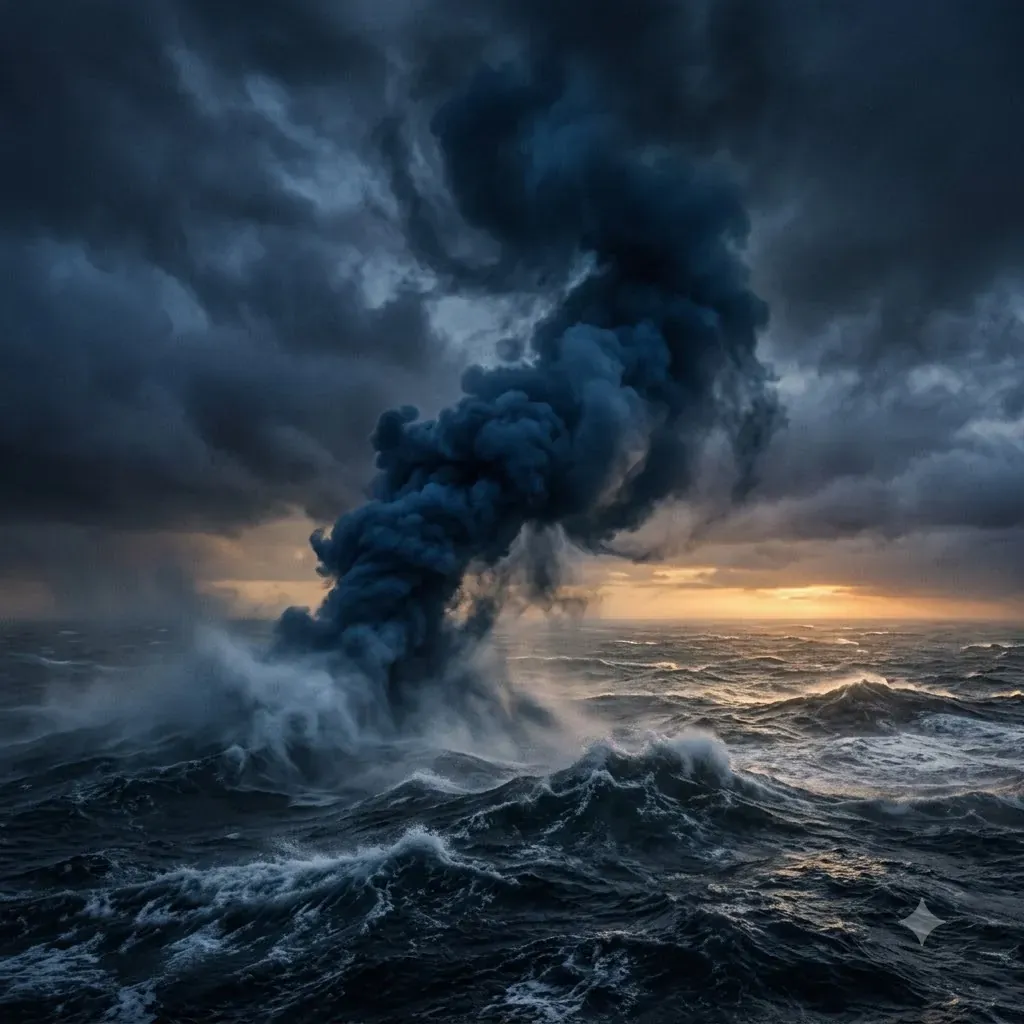
Neelkantha
He held the halahala poison from the churning of the ocean in his throat, which turned his throat blue.
Bhagavata Purana 8.7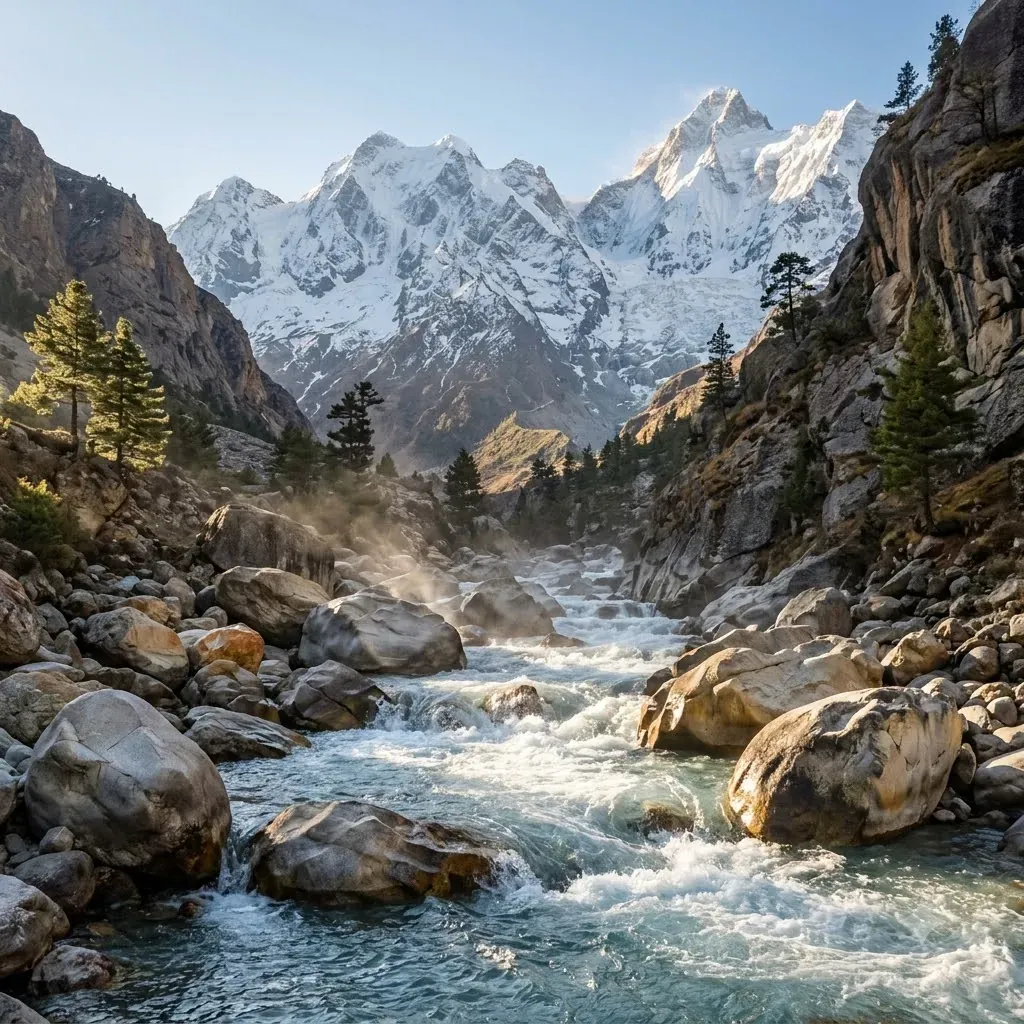
Gangadhara
He caught the Ganga in his matted locks as she descended from heaven.
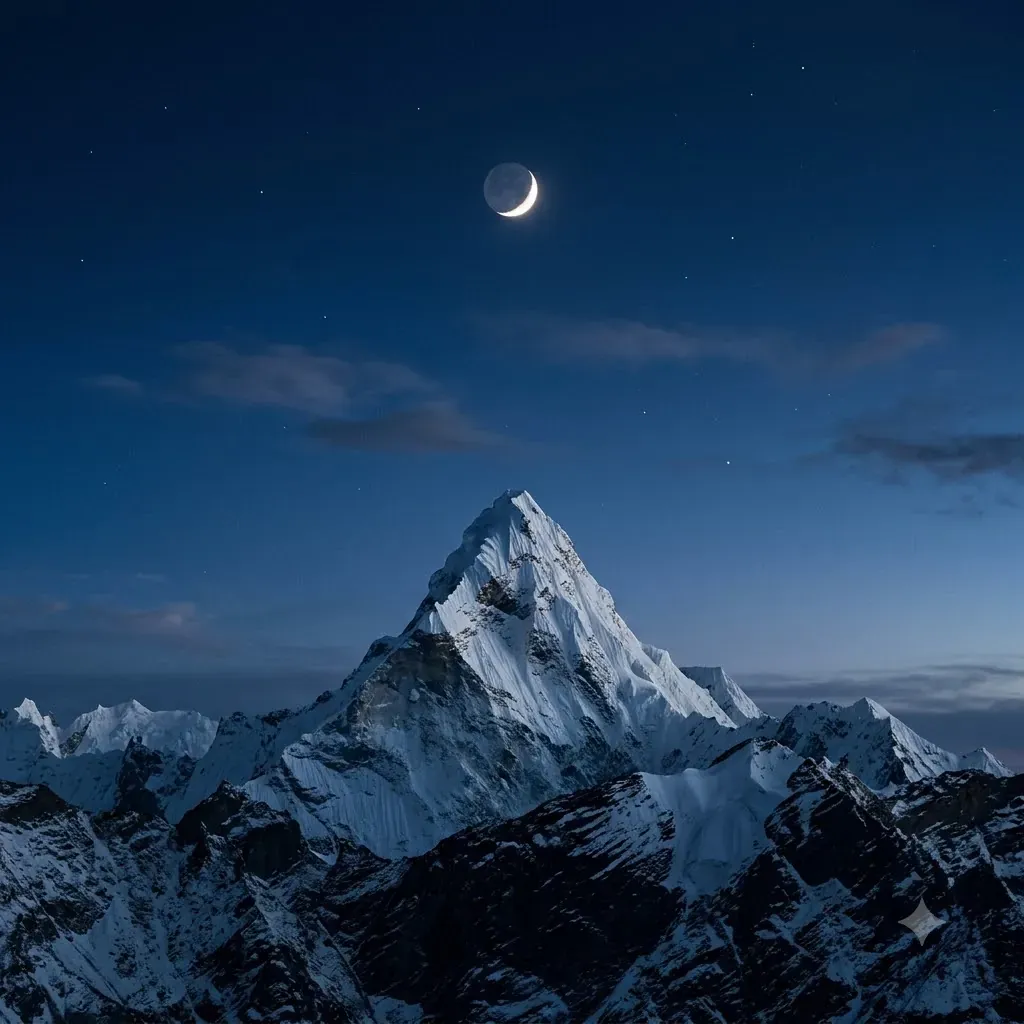
Chandrashekhara
The one who wears the crescent moon on his head.
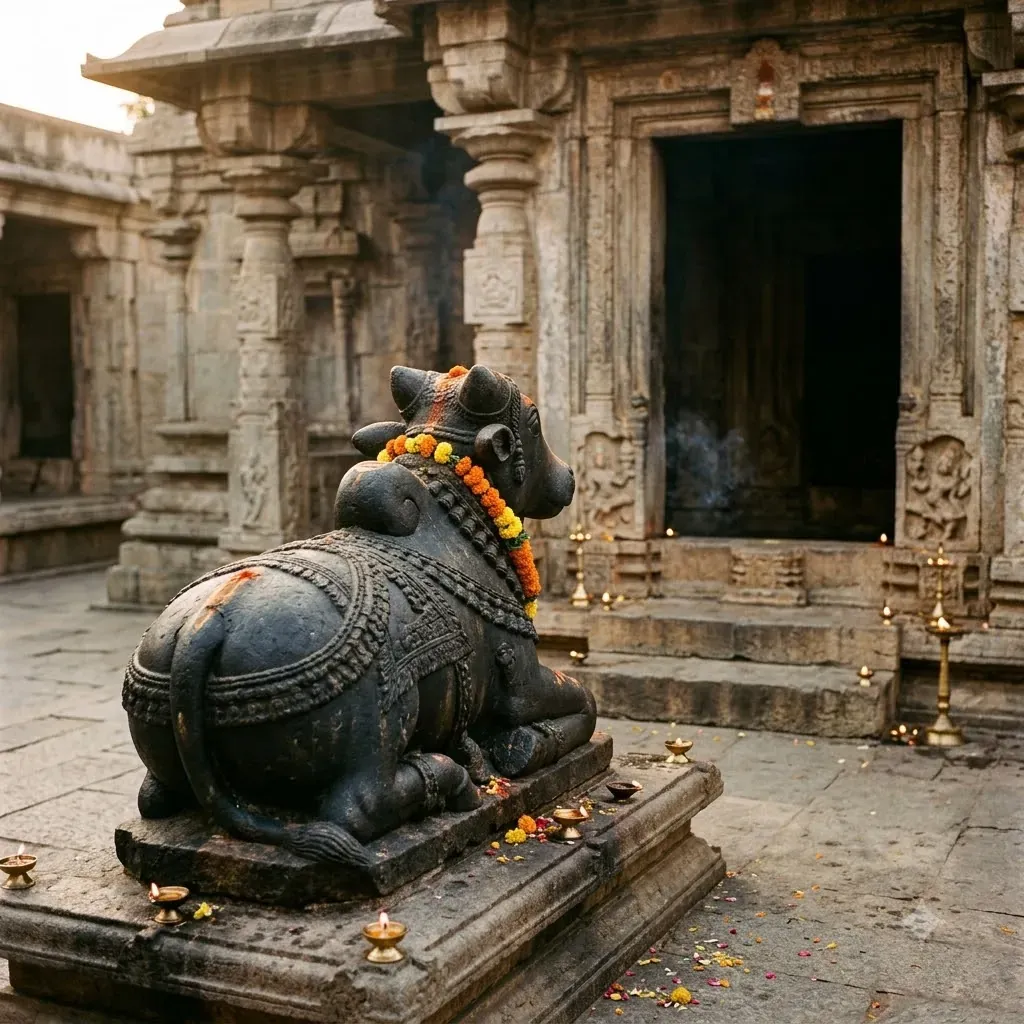
Nandi
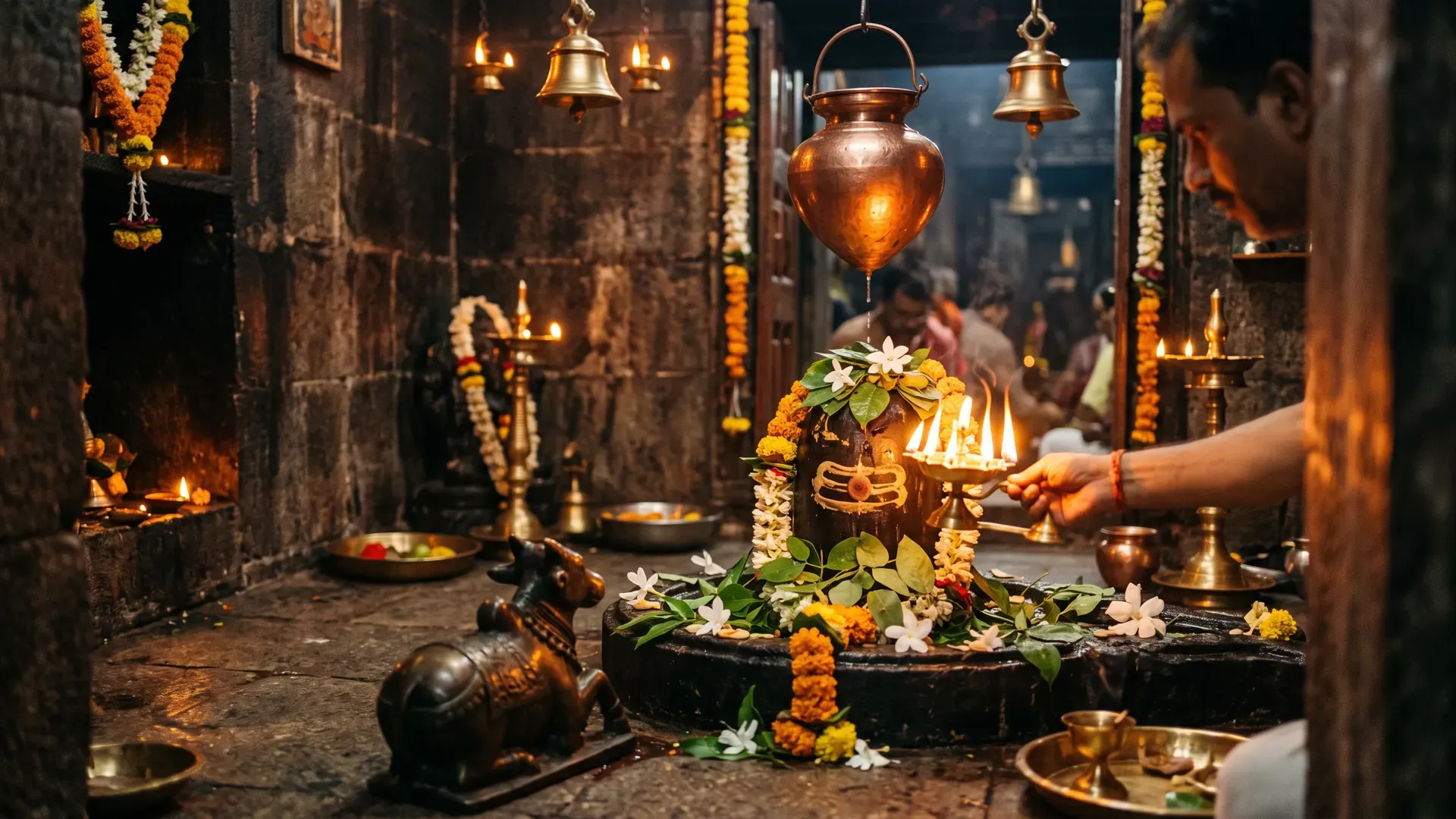
His mount and chief attendant (gana); seated facing the shrine in every Shiva temple.
Images: symbolic pictures made with AI
Shiva in the scriptures
रुद्राणां शङ्करश्चास्मिएको हि रुद्रो न द्वितीयाय तस्थुःनमः शिवाय च शिवतराय च- Bhagavad Gita 10.23
- Shvetashvatara Upanishad 3.2
- Krishna Yajurveda, Taittiriya Samhita 4.5 (Shri Rudram)
- Rigveda 2.33 (Rudra Sukta)
- Bhagavata Purana 8.7
- Dvadasha Jyotirlinga Stotram
- Shiva Purana
The 12 Jyotirlingas
In the order of the Dvadasha Jyotirlinga Stotra, each with its own page
- 1SomnathGujarat
- 2MallikarjunaAndhra Pradesh
- 3MahakaleshwarMadhya Pradesh
- 4OmkareshwarMadhya Pradesh
- 5VaidyanathJharkhand or Maharashtra
- 6BhimashankarMaharashtra or Assam
- 7RameshwaramTamil Nadu
- 8NageshwarGujarat, Maharashtra or Uttarakhand
- 9Kashi VishwanathUttar Pradesh
- 10TrimbakeshwarMaharashtra
- 11KedarnathUttarakhand
- 12GrishneshwarMaharashtra
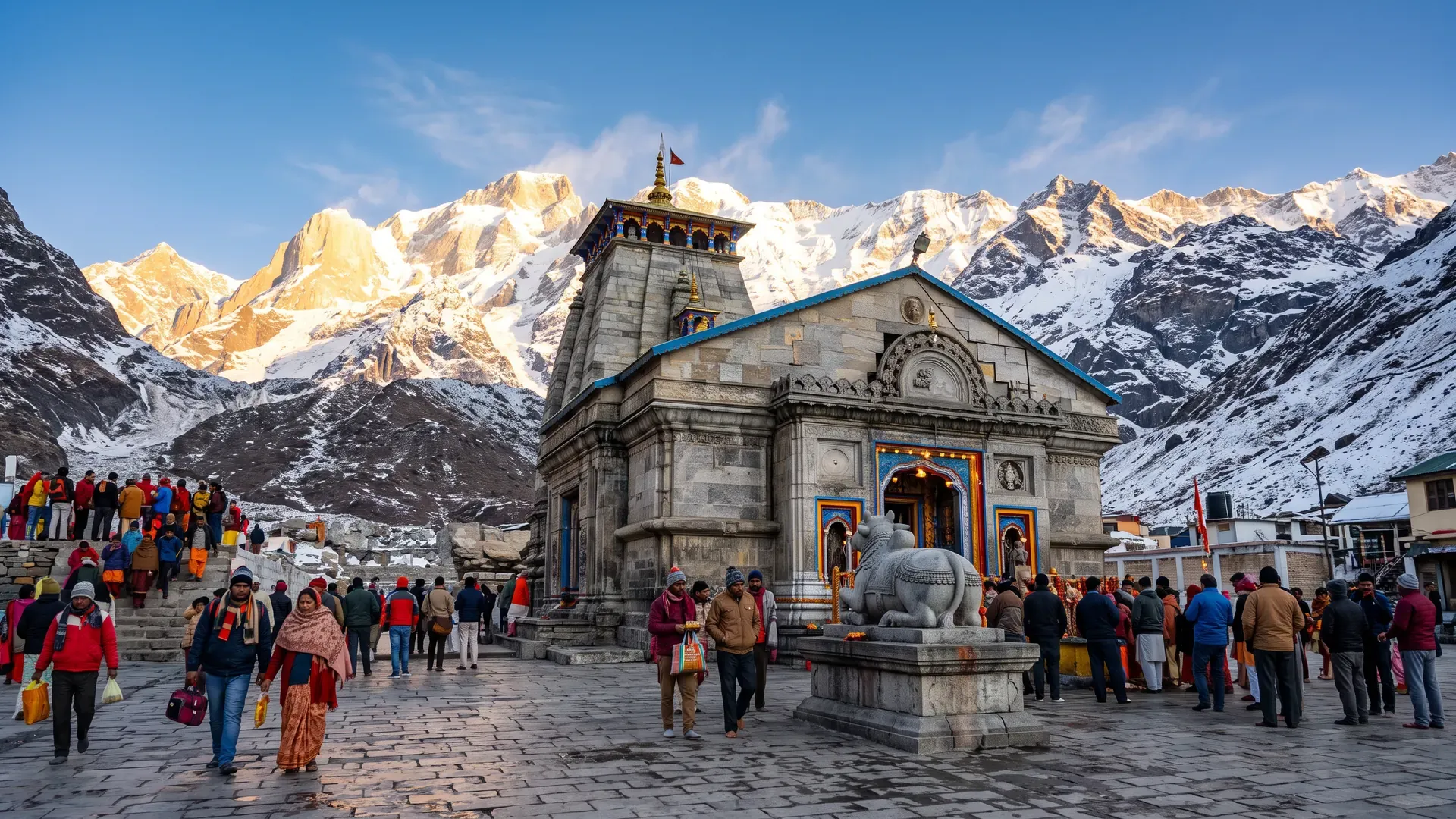
Source: Dvadasha Jyotirlinga Stotra
Festivals of Shiva
Worship of Shiva
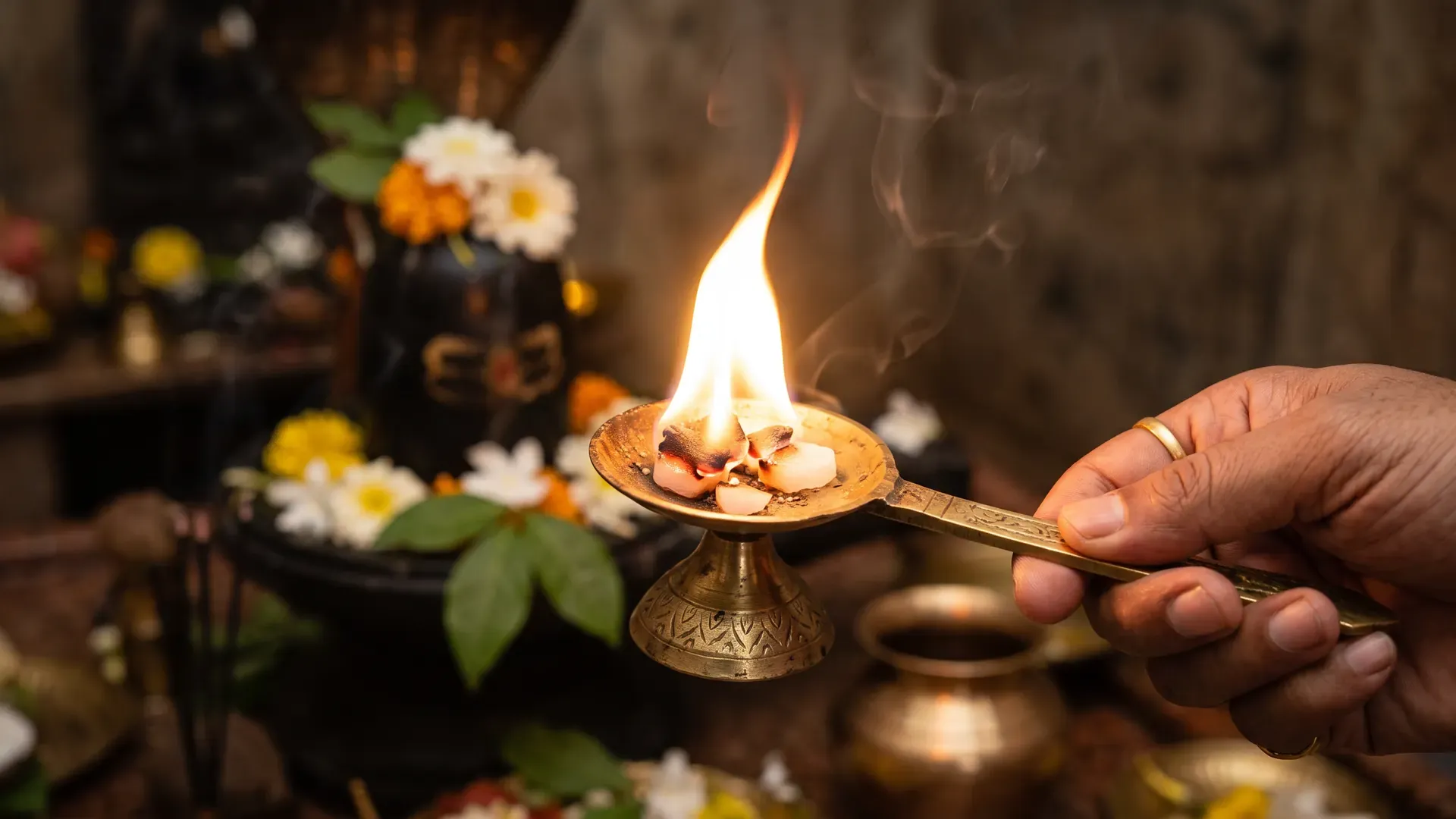
Shiva: Aarti, Chalisa, Stuti, Mantra and Namavali, each on its own page
Vrat kathas
Frequently asked questions
How many sons does Lord Shiva have?
Mainly two: Ganesha and Kartikeya (Skanda). Some Puranas also mention other children.
Why is Shiva called Neelkantha?
He held the halahala poison that emerged from the churning of the ocean in his throat, which turned his throat blue (Bhagavata Purana 8.7).
What is Shiva’s mount?
Nandi, who is also his chief attendant (gana).
When is Maha Shivratri 2027?
On 6 March 2027, Saturday.
Sources
Checked against sources- Bhagavad Gita 10.23
- Shvetashvatara Upanishad 3.2
- Krishna Yajurveda, Taittiriya Samhita 4.5 (Shri Rudram)
- Rigveda 2.33 (Rudra Sukta)
- Bhagavata Purana 8.7
- Dvadasha Jyotirlinga Stotram
- Shiva Purana