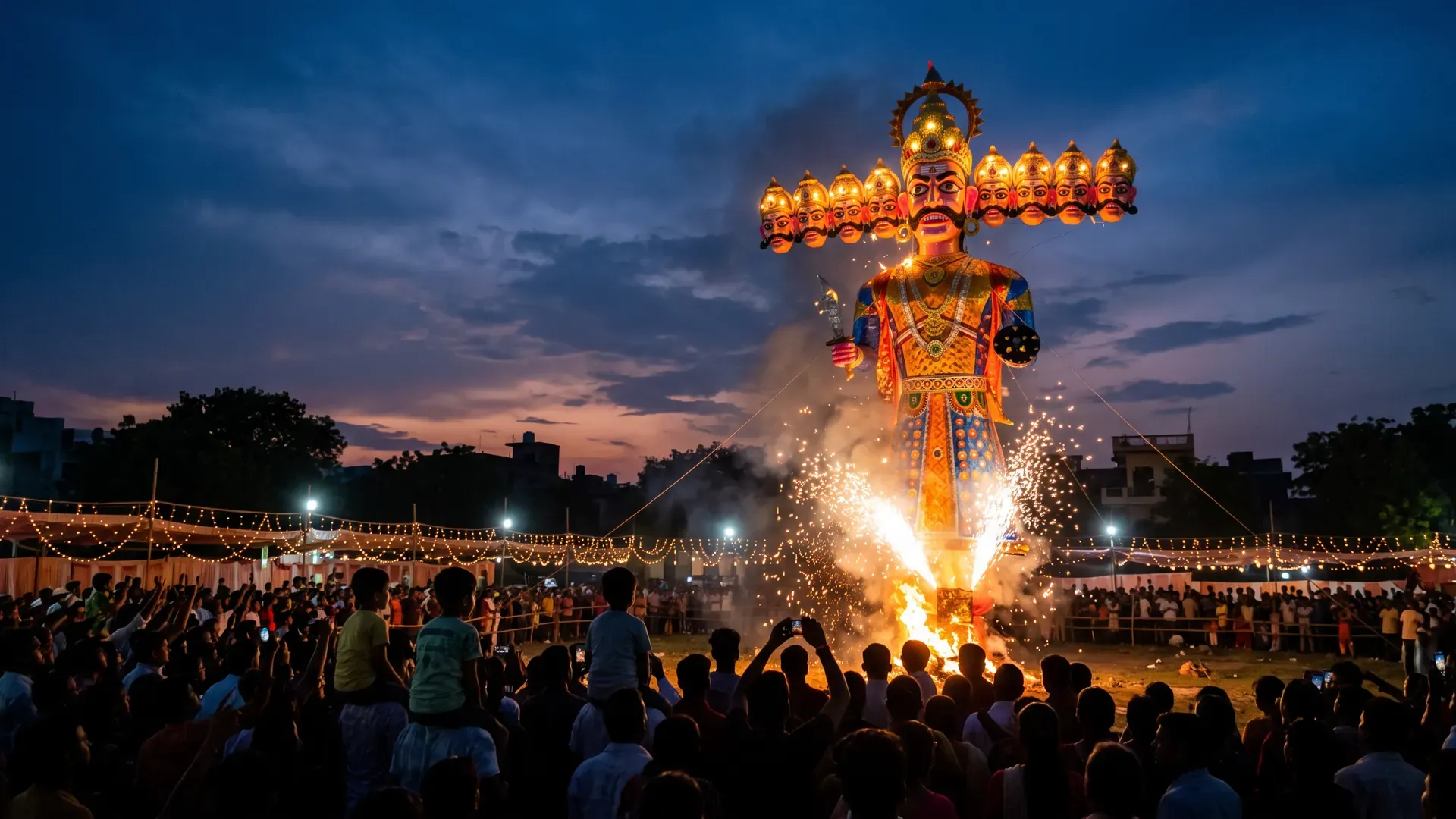
Dussehra (Vijayadashami) 2027 is on Saturday, 9 October. Ravan Dahan is by tradition held in the evening after sunset (sunset in New Delhi: 5:59 PM); each city’s Ramlila or Dussehra committee sets the time of the burning. It is celebrated on Ashwin Shukla Dashami, after Navratri. In tradition, it is the day of Shri Rama’s victory over Ravana and Goddess Durga’s victory over Mahishasura. Shami Puja, Aparajita Puja and Seemollanghan are performed in the Aparahna Kaal.
Each morning the tithi, Rahu Kaal and coming festivals, in one short WhatsApp message.Follow the channel
Sharad Navratri: Thursday, 30 September to Friday, 8 October, and Dussehra after it on Saturday, 9 October.
City-wise times: Vijay muhurat
Pick your city for its full timings, nearby cities and common questions.
| City | Vijay muhurat |
|---|---|
| New Delhi | 2:05–2:52 PM |
| Varanasi | 1:43–2:30 PM |
| Mumbai | 2:24–3:11 PM |
| Kolkata | 1:22–2:09 PM |
| Chennai | 1:55–2:43 PM |
| Bengaluru | 2:06–2:54 PM |
| Hyderabad | 2:02–2:49 PM |
| Ahmedabad | 2:25–3:12 PM |
| Jaipur | 2:11–2:58 PM |
| Lucknow | 1:50–2:37 PM |
| Patna | 1:34–2:21 PM |
| Bhopal | 2:05–2:52 PM |
| Ujjain | 2:12–2:59 PM |
| Haridwar | 2:01–2:48 PM |
| Pune | 2:20–3:08 PM |
| Guwahati | 1:07–1:54 PM |
| Noida | 2:04–2:51 PM |
| Gurugram | 2:06–2:53 PM |
| Ghaziabad | 2:04–2:51 PM |
| Faridabad | 2:05–2:51 PM |
| Chandigarh | 2:06–2:53 PM |
| Ludhiana | 2:10–2:57 PM |
| Amritsar | 2:14–3:00 PM |
| Jammu | 2:14–3:00 PM |
| Dehradun | 2:01–2:48 PM |
| Rishikesh | 2:01–2:47 PM |
| Shimla | 2:05–2:51 PM |
| Agra | 2:02–2:49 PM |
| Mathura | 2:03–2:50 PM |
| Prayagraj | 1:47–2:34 PM |
| Kanpur | 1:53–2:40 PM |
| Ayodhya | 1:45–2:32 PM |
| Gorakhpur | 1:41–2:28 PM |
| Meerut | 2:03–2:50 PM |
| Bareilly | 1:56–2:43 PM |
| Jodhpur | 2:22–3:09 PM |
| Udaipur | 2:20–3:07 PM |
| Kota | 2:11–2:58 PM |
| Ajmer | 2:16–3:03 PM |
| Indore | 2:12–2:59 PM |
| Gwalior | 2:02–2:48 PM |
| Jabalpur | 1:55–2:42 PM |
| Raipur | 1:49–2:36 PM |
| Gaya | 1:35–2:22 PM |
| Muzaffarpur | 1:33–2:20 PM |
| Bhagalpur | 1:27–2:14 PM |
| Darbhanga | 1:31–2:18 PM |
| Ranchi | 1:34–2:21 PM |
| Jamshedpur | 1:30–2:17 PM |
| Dhanbad | 1:29–2:16 PM |
| Bhubaneswar | 1:32–2:19 PM |
| Puri | 1:32–2:19 PM |
| Siliguri | 1:21–2:08 PM |
| Surat | 2:24–3:11 PM |
| Vadodara | 2:22–3:09 PM |
| Rajkot | 2:32–3:19 PM |
| Nagpur | 1:59–2:46 PM |
| Nashik | 2:20–3:07 PM |
| Panaji | 2:21–3:08 PM |
| Visakhapatnam | 1:43–2:30 PM |
| Tirupati | 1:59–2:46 PM |
| Mysuru | 2:10–2:58 PM |
| Kochi | 2:12–3:00 PM |
| Thiruvananthapuram | 2:09–2:57 PM |
| Coimbatore | 2:09–2:57 PM |
| Madurai | 2:05–2:52 PM |
At a glance
- Tithi
- Ashwin Shukla Dashami
- Also called
- Vijayadashami, Dussehra, Dasara
- Puja time
- Aparahna Kaal; the Vijay Muhurat is considered the most auspicious
- Main rites
- Shami Puja, Aparajita Puja, Seemollanghan, Shastra Puja
- Stories
- Shri Rama’s victory over Ravana and the Goddess’s victory over Mahishasura
- North India
- The Ramlila ends and Ravana’s effigy is burned (Ravana Dahan)
- Bengal
- Immersion of the Durga idol
A festival of two victories
Shri Rama’s victory over Ravana
In the Yuddha Kanda of the Valmiki Ramayana, Shri Rama fights the war in Lanka and slays Ravana. North Indian tradition links this victory to Dashami; this is where the customs of Ramlila and Ravana Dahan come from.
Valmiki Ramayana, Yuddha Kanda; folk traditionThe Goddess’s victory over Mahishasura
In the middle episode (Madhyama Charitra) of the Durga Saptashati, the Goddess slays Mahishasura. After the nine days of worship in Navratri, Dashami is regarded as the day of victory; in Bengal, the Durga idol is immersed on this day.
Durga Saptashati, chapters 2–3Aparahna Kaal and Vijay Muhurat
In Hindu timekeeping, the day from sunrise to sunset has five parts; the fourth is called Aparahna. Dussehra’s Shami Puja, Aparajita Puja and Seemollanghan are performed at this time, and Dussehra is celebrated on the day when Dashami tithi prevails during Aparahna. Popular panchangs mark the eleventh of the day’s 15 muhurats as the Vijay Muhurat; it is considered auspicious for starting new work.
Shami and Aparajita
On Dussehra there is a tradition of worshipping the Shami tree, linked to a story from the Mahabharata (see below). Goddess Aparajita is worshipped with a prayer for victory, and in many regions it is the custom to cross the village or town boundary and come back (Seemollanghan).
How to perform the puja
- Step 1
Morning preparation
After bathing, clean the house, vehicles and tools.
- Step 2
Aparajita Puja
In the Aparahna, worship Goddess Aparajita, praying for victory and protection.
- Step 3
Shami Puja
Worship the Shami tree and walk around it (parikrama).
- Step 4
Weapon and vehicle puja
In many regions, weapons, tools and vehicles are worshipped on this day.
- Step 5
Ravana Dahan
In North India, in the evening, at the close of the Ramlila, effigies of Ravana, Meghnad and Kumbhakarna are burned.
The Shami tree and the Pandavas’ weapons
According to the Virata Parva of the Mahabharata, after completing twelve years of exile in the forest and before beginning their year in hiding, the Pandavas hid their bows and weapons in a Shami tree near the city of Virata. A year later, when the Kaurava army rounded up Virata’s cattle, Arjuna took the Gandiva down from that same Shami tree and drove the Kauravas back. The tradition of Shami Puja on Dussehra is linked to this story.
Mahabharata, Virata ParvaDussehra: relations
See in the knowledge graphDeities, figures and sages 2
Festivals 1
- Sharad Navratri · Preceding nine daysTradition
Frequently asked questions
When is Dussehra 2027?
On Saturday, 9 October.
From which date does Dussehra begin?
Dussehra is a single day, this time on Saturday, 9 October. The nine days before it are Sharad Navratri, which begins on Ashwin Shukla Pratipada. In many places the Ramlila also begins with Navratri and ends on Dussehra with the burning of Ravana.
When is the Dussehra mela 2027?
Dussehra fairs and the burning of Ravana are mostly held on Dussehra itself, Saturday, 9 October; in some places the fair runs for several days. The local Ramlila or fair committee sets the time and place. In Maharashtra, Karnataka, Telangana and Andhra Pradesh the festival is called Dasara; each state sets its holiday in its own list.
What is the Vijay Muhurat?
In popular panchangs, when the day (sunrise to sunset) is divided into 15 muhurats, it is the eleventh. It lasts about 45 minutes and is given above for your city.
What is the difference between Dussehra and Vijayadashami?
There is none. They are two names for the same festival, on Ashwin Shukla Dashami.
On which day is Dussehra celebrated if Dashami falls on two days?
On the day when Dashami tithi prevails during the Aparahna Kaal. This is why Vijayadashami in Bengal sometimes falls on the next day.
What time is Ravan Dahan on 9 October?
The time of Ravan Dahan is set by each city’s Ramlila or Dussehra committee, so no dahan muhurat is given here; ask your local organisers for the time. By tradition the effigies are burnt in the evening, after sunset. Sunset on Saturday, 9 October 2027: New Delhi 5:59 PM, Lucknow 5:45 PM, Jaipur 6:05 PM, Patna 5:28 PM, Chandigarh 5:59 PM, Indore 6:07 PM, Mumbai 6:21 PM, Kolkata 5:17 PM, Bengaluru 6:05 PM. For other cities, open the city’s page from the list above.
Sources
- Valmiki Ramayana, Yuddha Kanda
- Durga Saptashati (Markandeya Purana, chapters 81–93)
- Mahabharata, Virata Parva
- Dharmasindhu (ruling on Vijayadashami)
- Muhurat and moonrise: SanatanBodh panchang calculation, checked against Drik Panchang (New Delhi, 2026–27)
Something wrong? Report a mistake
