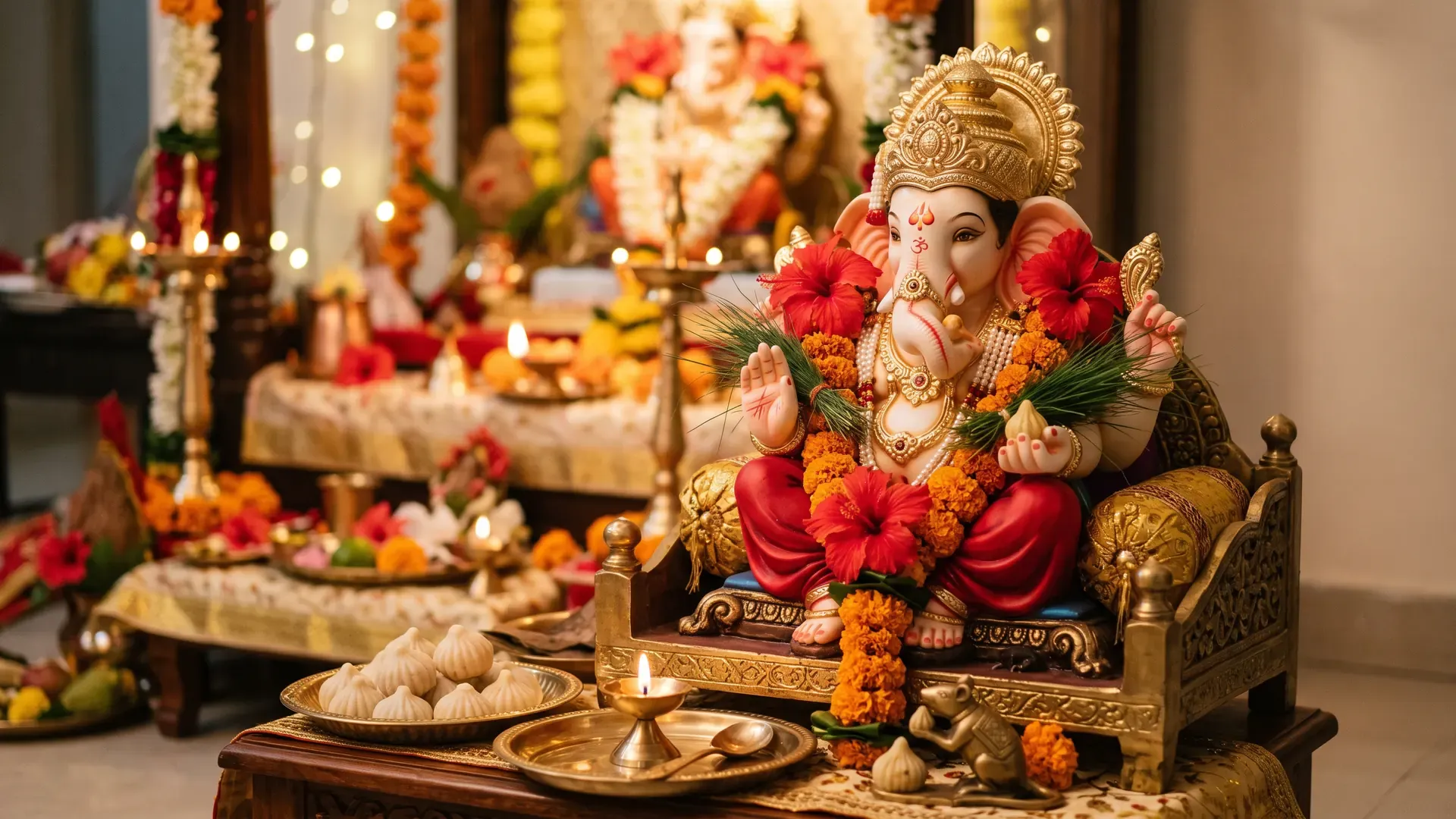
 Image: made with AI
Lord Ganesha
Also known as: Ganapati • Vinayaka • Gajanana • Ekadanta • Lambodara • Vighneshvara
Ganesha is the son of Shiva and Parvati. As the remover of obstacles and the god of wisdom, he is worshipped first at the start of every auspicious undertaking. His mount is the mouse (Mushaka) and his favourite offering is the modak. Ganesh Chaturthi, on Bhadrapada Shukla Chaturthi, is his main festival.
Ganesha at a glance
- Brother
- Kartikeya
- Wives
- Siddhi and Buddhi (Shiva Purana); in North India, Riddhi-Siddhi
- Sons
- Kshema and Labha (Shiva Purana); in popular tradition, Shubh-Labh
- Mount
- Mushaka (mouse)
- Favourite offerings
- Modak, durva grass
- Mantra
- ॐ गं गणपतये नमः (Om Gam Ganapataye Namah)
- Major festivals
- Ganesh Chaturthi, Sankashti Chaturthi
- Key texts
- Ganesha Purana, Ganapati Atharvashirsha
Ganesha: relations
Family, scriptures, tirthas and festivals
15 relations of Ganesha, each with its source in the texts or the tradition. Tap a name to open its own page, or its relations in the Sanatan tree.
See the whole knowledge graphAll 15 relations, with sources
Family
Source: Shiva Purana; Shiva Purana, Rudra Samhita, Kumara Khanda 20.1-3 (daughters of Prajapati Vishvarupa); Shiva Purana, Rudra Samhita, Kumara Khanda 20.1-3; Folk tradition (North India); the Shiva Purana has Buddhi in this place; Folk tradition (popularised by the 1975 film ‘Jai Santoshi Maa’; the vrat katha does not make this link); Shiva Purana, Rudra Samhita, Kumara Khanda 20.7-8; Folk tradition (‘Shubh-Labh’); the Shiva Purana has Kshema in this place; Ganesha PuranaScriptures and mantras 3
- Ganapati Atharvashirsha · Hymn of praiseGanapati Atharvashirsha
- Ganesha Purana · Narrative textGanesha Purana
- Mahabharata · Wrote it down (for Vyasa) According to traditionMahabharata, Adi Parva 1 (in some recensions)
Festivals 2
- Ganesh Chaturthi · FestivalTradition (Bhadrapada Shukla Chaturthi)
- Diwali · Festival (Lakshmi-Ganesha puja)Tradition
His birth and the story of the elephant head
There are two main stories of Ganesha’s birth. In both, the boy is the son of Shiva and Parvati; they differ in how his head came to be severed.
Created by Parvati
Parvati made a boy from her ubtan (bathing paste) and set him at the door as a guard.
Shiva Purana, Rudra Samhita, Kumara KhandaThe fight with Shiva and the elephant head
The boy stopped Shiva from going in, and in the fight that followed his head was cut off. Moved by Parvati’s grief, Shiva restored him to life by joining an elephant’s head to his body and made him lord of the ganas.
Shiva Purana, Rudra Samhita, Kumara KhandaAnother story: the gaze of Shani
In the Brahmavaivarta Purana, the boy’s head is severed when Shani’s gaze falls on him, and Vishnu brings an elephant’s head and joins it to the body.
Brahmavaivarta Purana, Ganapati Khanda
Why he is worshipped first
Shiva’s boon
After bringing him back to life, Shiva made Ganesha the leader of the ganas and granted the boon that he would be worshipped first in every puja.
Shiva Purana, Rudra Samhita, Kumara KhandaCircling his parents
To decide whose wedding would come first, Kartikeya set out to circle the earth; Ganesha walked around his parents and said that this was equal to circling the earth.
Shiva Purana, Rudra Samhita, Kumara KhandaThe "Ganapati" of the Rigveda
The mantra "गणानां त्वा गणपतिं हवामहे" is recited today at the start of Ganesha worship, although in the Rigveda this hymn is addressed to Brahmanaspati.
Rigveda 2.23.1
Form and symbols
The meanings of these symbols are interpretations from tradition and commentators; the scriptures also give other meanings for them.
Elephant head
Regarded as a symbol of wisdom and discernment.
Ekadanta
One tusk. According to one tradition, he used it to write the Mahabharata at Vyasa’s request.
Mahabharata, Adi Parva 1 (in some recensions)Lambodara
A large belly; regarded as a symbol of digesting everything, that is, of forbearance.
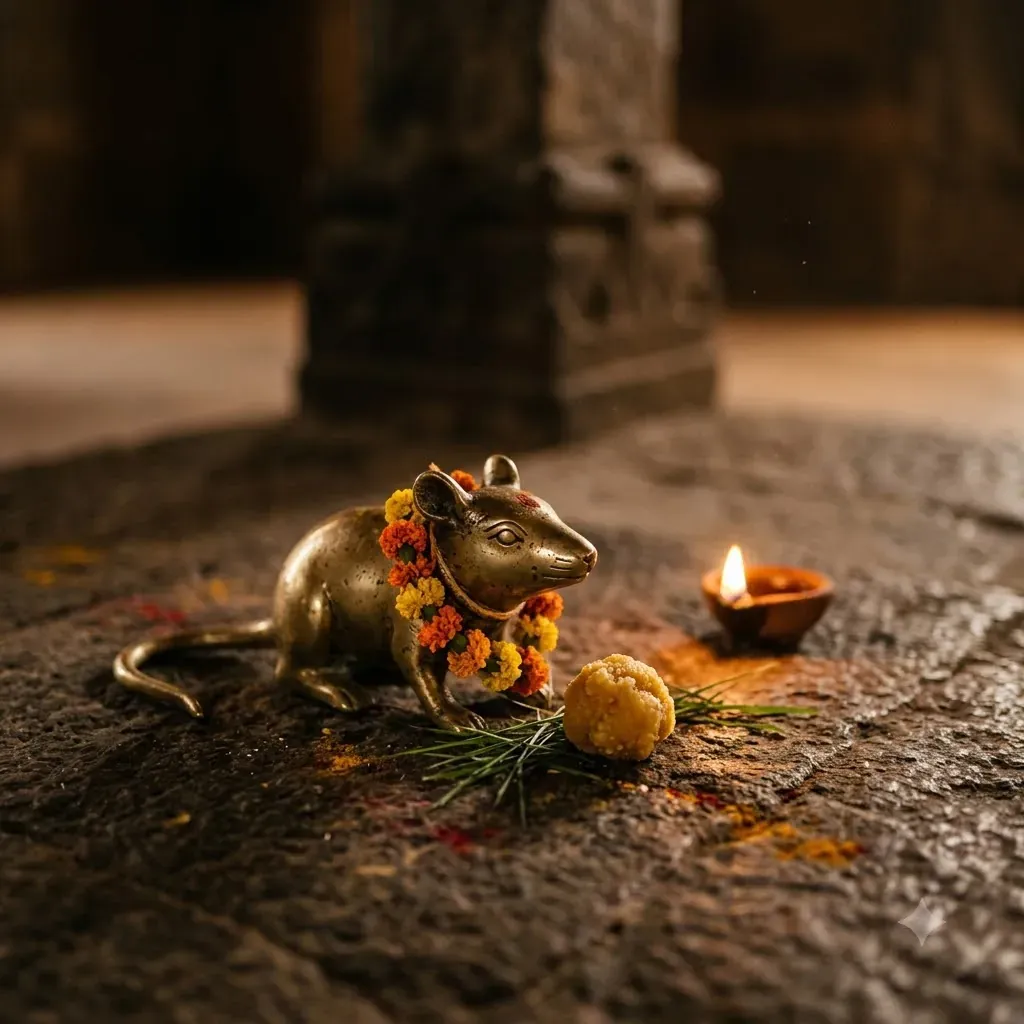
Mushaka
His mount, the mouse; regarded as a symbol of control over the restless mind and its desires.
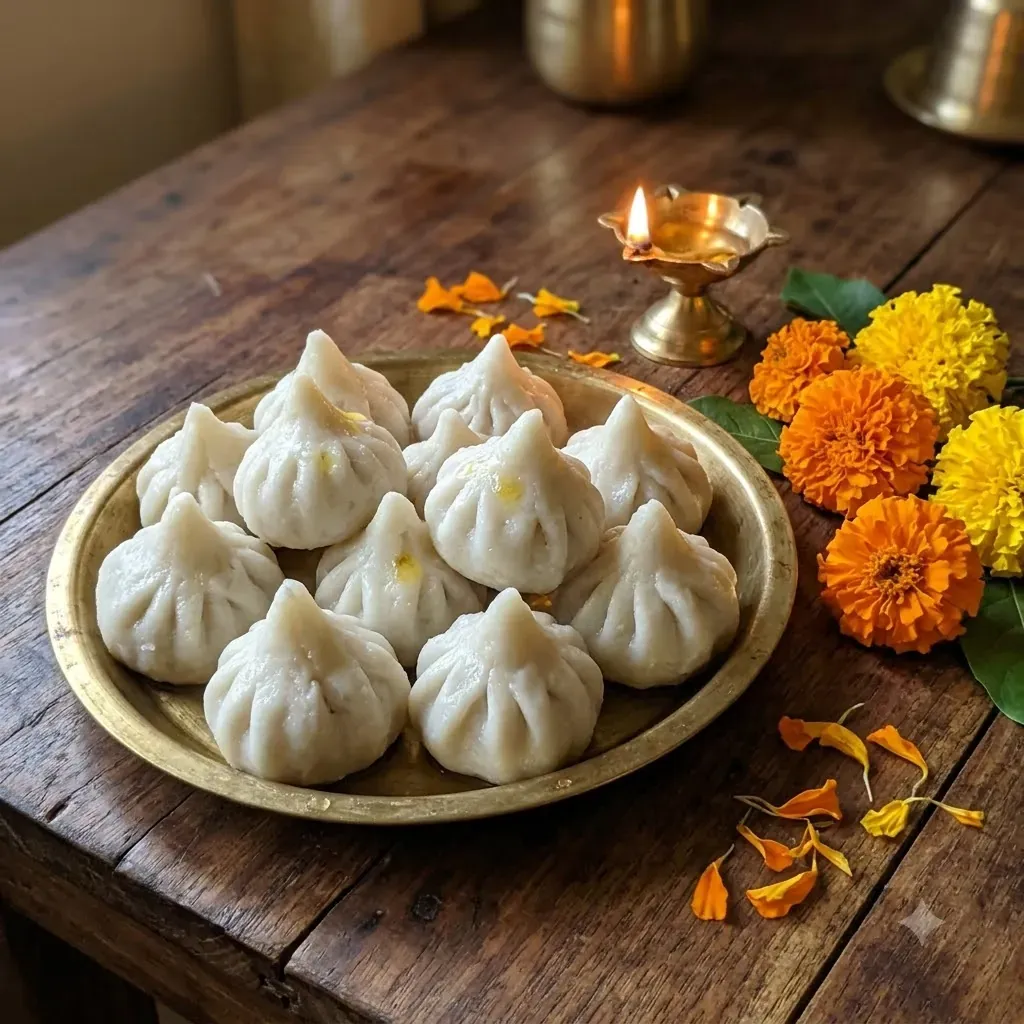
Modak
His favourite offering; a symbol of "moda", meaning joy.
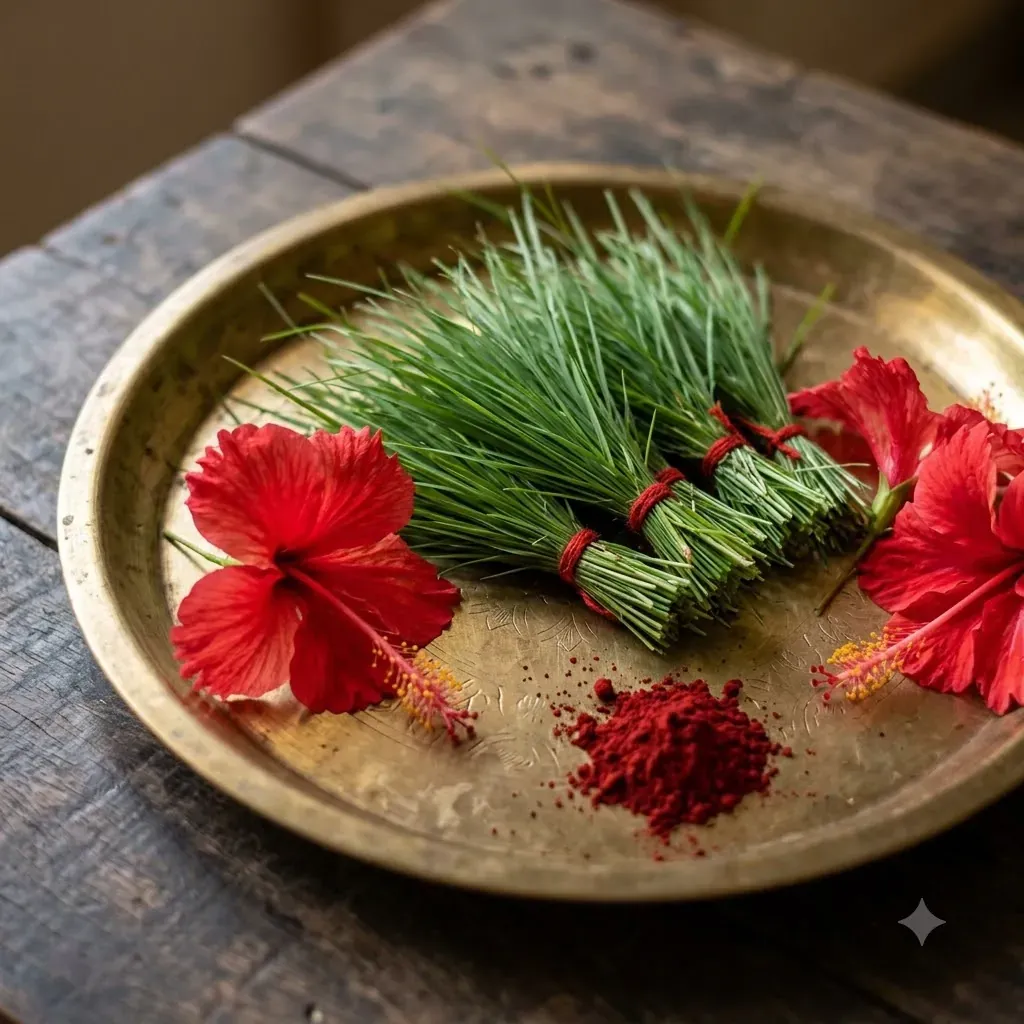
Durva
Durva grass with three or five blades, offered especially in Ganesha worship.
Images: symbolic pictures made with AI
Ganesha in the scriptures
वक्रतुण्ड महाकाय सूर्यकोटिसमप्रभ ।निर्विघ्नं कुरु मे देव सर्वकार्येषु सर्वदा ॥गणानां त्वा गणपतिं हवामहेत्वमेव प्रत्यक्षं तत्त्वमसि- Shiva Purana, Rudra Samhita, Kumara Khanda
- Brahmavaivarta Purana, Ganapati Khanda
- Rigveda 2.23.1
- Ganapati Atharvashirsha
- Ganesha Purana
- Mahabharata, Adi Parva 1
Festivals of Ganesha
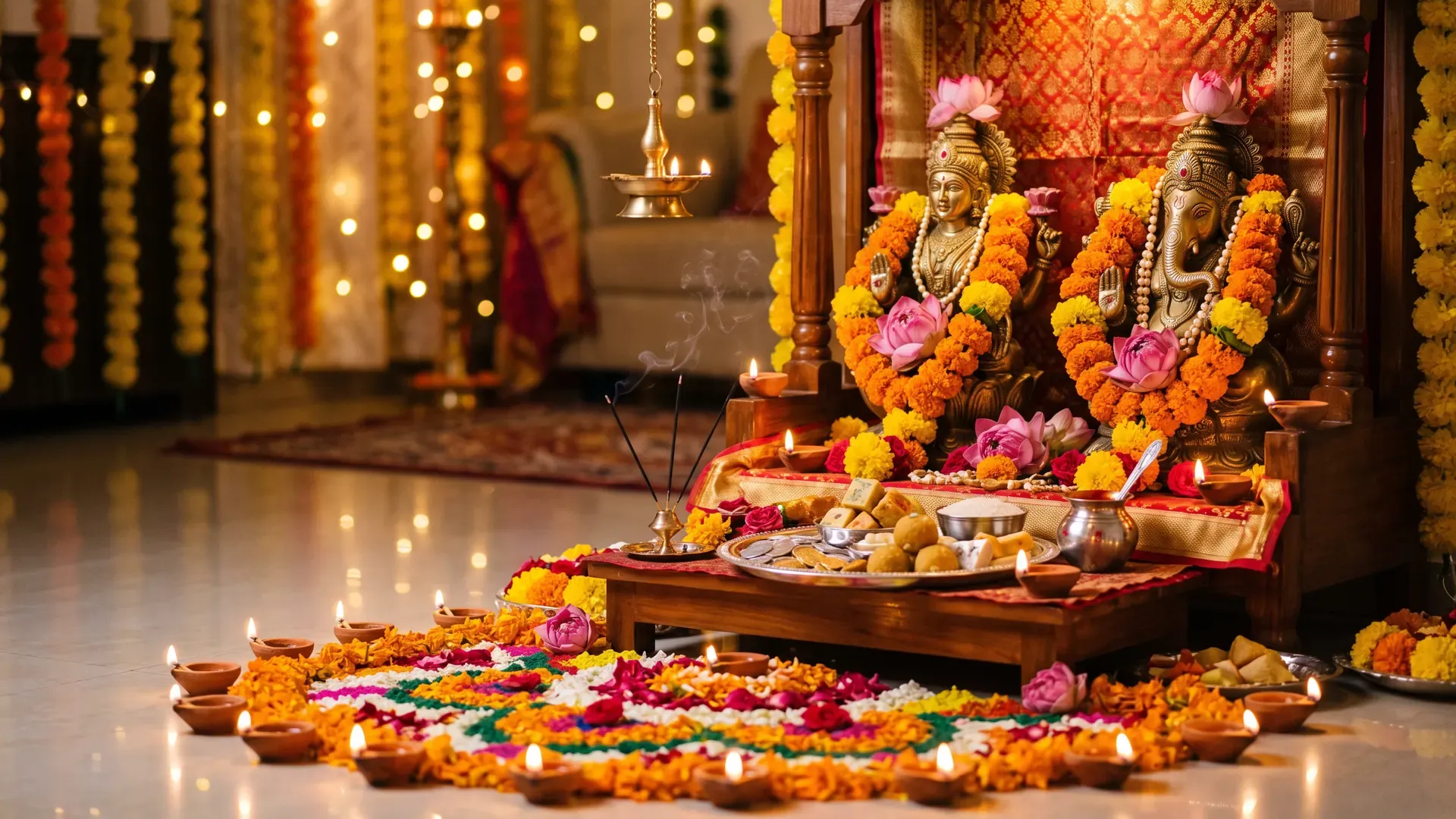
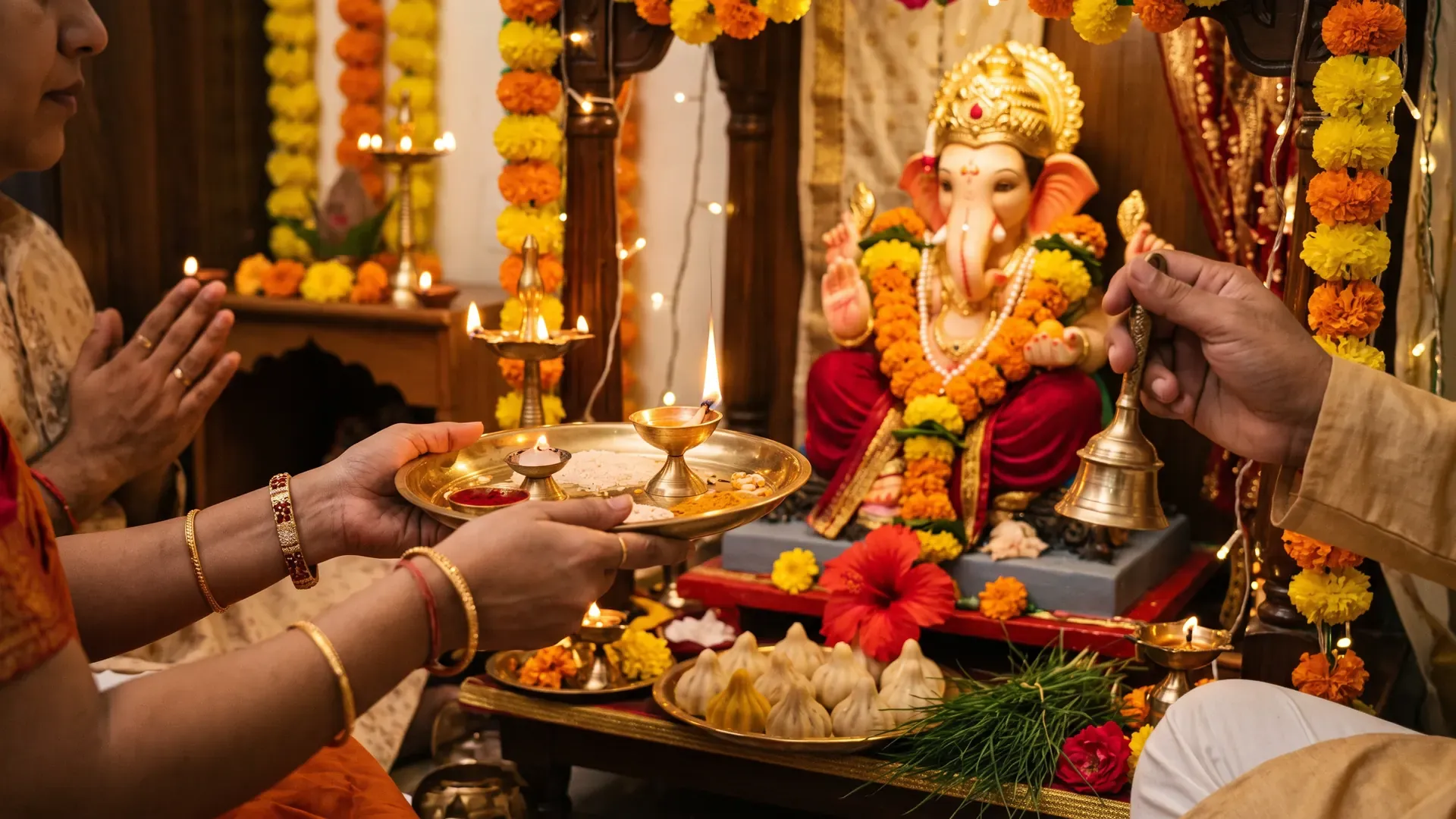
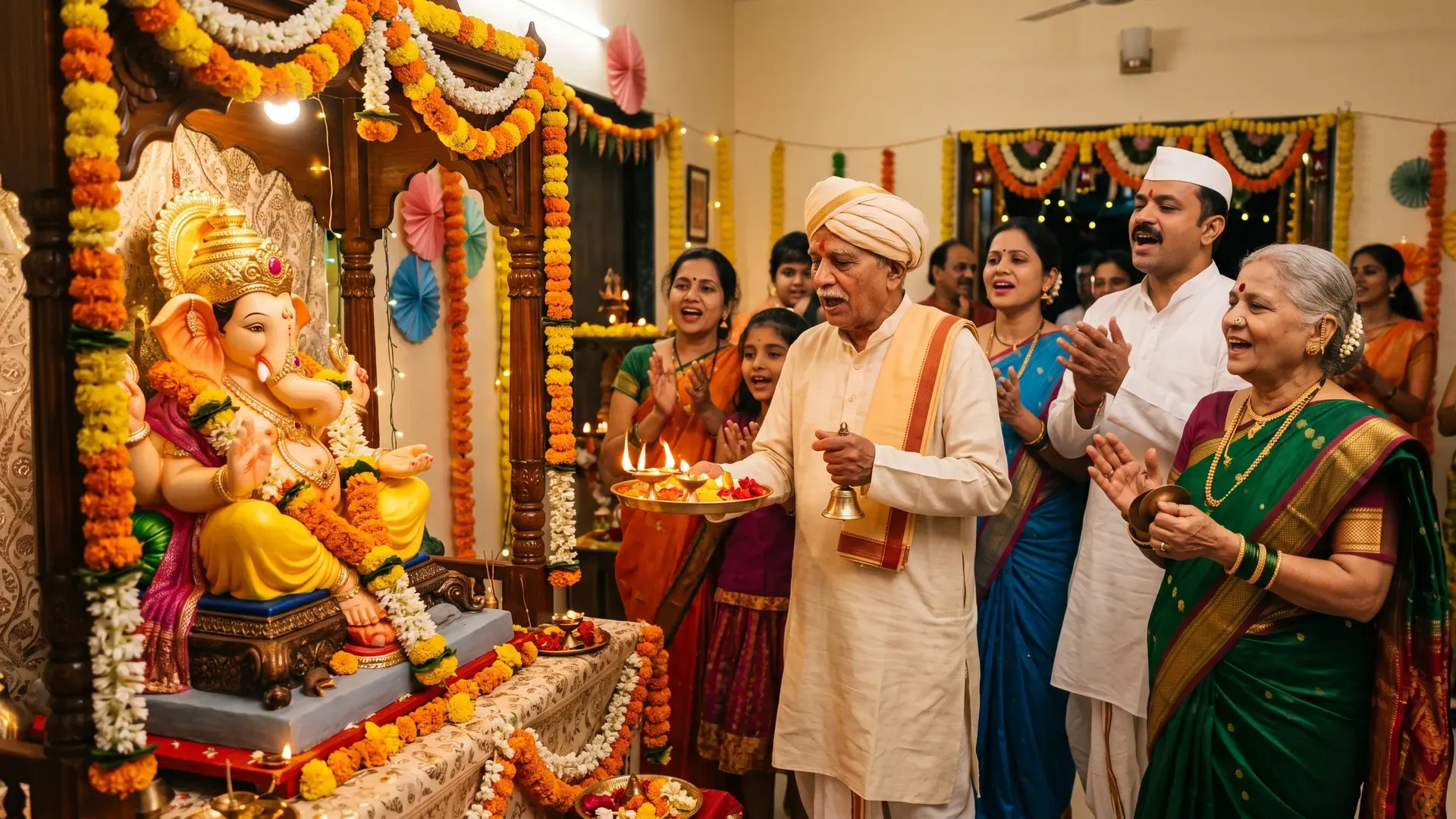
Worship of Ganesha
Ganesha: Aarti, Chalisa, Mantra and Namavali, each on its own page
Frequently asked questions
Who are Ganesha’s parents?
Shiva and Parvati. According to the Shiva Purana, Parvati created him from her ubtan (bathing paste).
How did Ganesha get an elephant’s head?
According to the Shiva Purana (Rudra Samhita, Kumara Khanda), after his head was cut off in a fight with Shiva, Shiva restored him to life by joining an elephant’s head to his body. The Brahmavaivarta Purana tells the story of Shani’s gaze.
Why is Ganesha worshipped first in every puja?
Shiva made him leader of the ganas and granted the boon that he would be worshipped first in every puja (Shiva Purana). He is regarded as the remover of obstacles, so every auspicious undertaking begins with him.
What is Ganesha’s mount?
Mushaka (the mouse).
When is Ganesh Chaturthi celebrated?
On Bhadrapada Shukla Chaturthi. The Krishna Chaturthi of every month is called Sankashti Chaturthi, and it too is dedicated to Ganesha.
Sources
Checked against sources- Shiva Purana, Rudra Samhita, Kumara Khanda
- Brahmavaivarta Purana, Ganapati Khanda
- Rigveda 2.23.1
- Ganapati Atharvashirsha
- Ganesha Purana
- Mahabharata, Adi Parva 1