Advertisement
Download the Shri Ram Stuti PDF
Advertisement
Meaning, sources and more prayers: sanatanbodh.in/en/prayers/shri-ramchandra-kripalu/
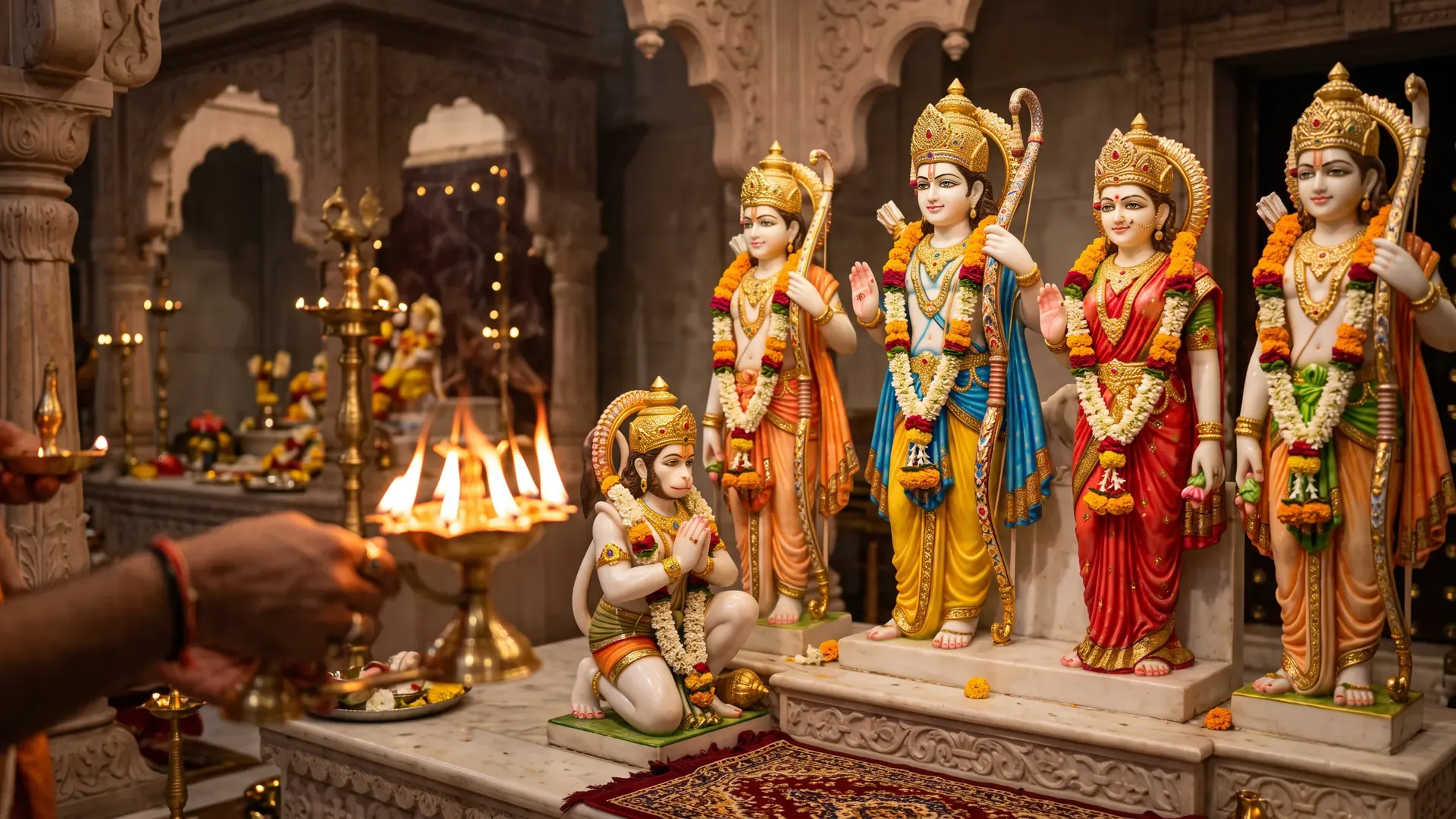
“Shri Ramchandra Kripalu Bhaju Man” is pad 45 of Goswami Tulsidas’s Vinay Patrika (in the Gita Press numbering), set in Raag Gauri. In five verses it describes Shri Ram’s form, virtues and valour, and urges the mind to worship him. It is sung as a Ram stuti and as Ram’s aarti on Dussehra, Diwali and Ram Navami, and at the close of Ramayan recitations.
The text given here follows the Gita Press edition of the Vinay Patrika (pad 45). Some editions read ‘nav neel neeraj’ for ‘navneel-neerad’ and ‘karu’ for ‘kuru’, and singers usually pronounce ‘bhaju man’ as ‘bhajman’. In popular singing it is often followed by the chhand ‘Manu jahin rachyeu milihi so baru sahaj sundar saanvaro’ and the sortha ‘Jaani Gauri anukool Siy hiy harashu na jaai kahi’. Those lines are not from the Vinay Patrika but from the Bal Kand of the Ramcharitmanas (doha 236), where Gauri (Parvati) blesses Sita.
Each morning the tithi, Rahu Kaal and coming festivals, in one short WhatsApp message.Follow the channel
Frequently asked questions
Who wrote this stuti, and which book is it in?
Goswami Tulsidas. It is pad 45 of his Vinay Patrika (in the Gita Press numbering), set in Raag Gauri. His name appears in the fifth verse, in the words ‘iti vadati Tulsidas’.
Why is it sung on Dussehra and Diwali?
Dussehra is observed as the remembrance of Shri Ram’s victory over Ravana, and Diwali of his return to Ayodhya. On these occasions this stuti is often sung as Ram’s aarti at Ram puja and at Ramlila, and it also praises him as the destroyer of the demon clans and the victor over Khara and Dushana.
Are the lines “Manu jahin rachyeu milihi so baru” part of this stuti?
No. They come from the Bal Kand of the Ramcharitmanas (doha 236), where Gauri (Parvati) blesses Sita in Janakpur that she will win the husband her heart has chosen. Popular renditions add them after this stuti.
What language is this stuti in?
The Vinay Patrika is in Braj Bhasha. This pad is rich in Sanskrit words, and its lines end in Sanskrit forms such as ‘darunam’ and ‘sundaram’, so it sounds like a Sanskrit stotra.
How many verses does it have?
Five verses of two lines each. The poet’s name appears in the last verse.
Sources
- Goswami Tulsidas, Vinay Patrika, pad 45 (Raag Gauri), Gita Press
- Lines sung after it: Ramcharitmanas, Bal Kand, doha 236
Something wrong? Report a mistake
Text checked against: archive.org, sanskritdocuments.org, kavitakosh.org, bhaktibharat.com, sanskritdocuments.org