Advertisement
Download the Sukhkarta Dukhharta PDF
Advertisement
Meaning, sources and more prayers: sanatanbodh.in/en/prayers/sukhkarta-dukhharta/
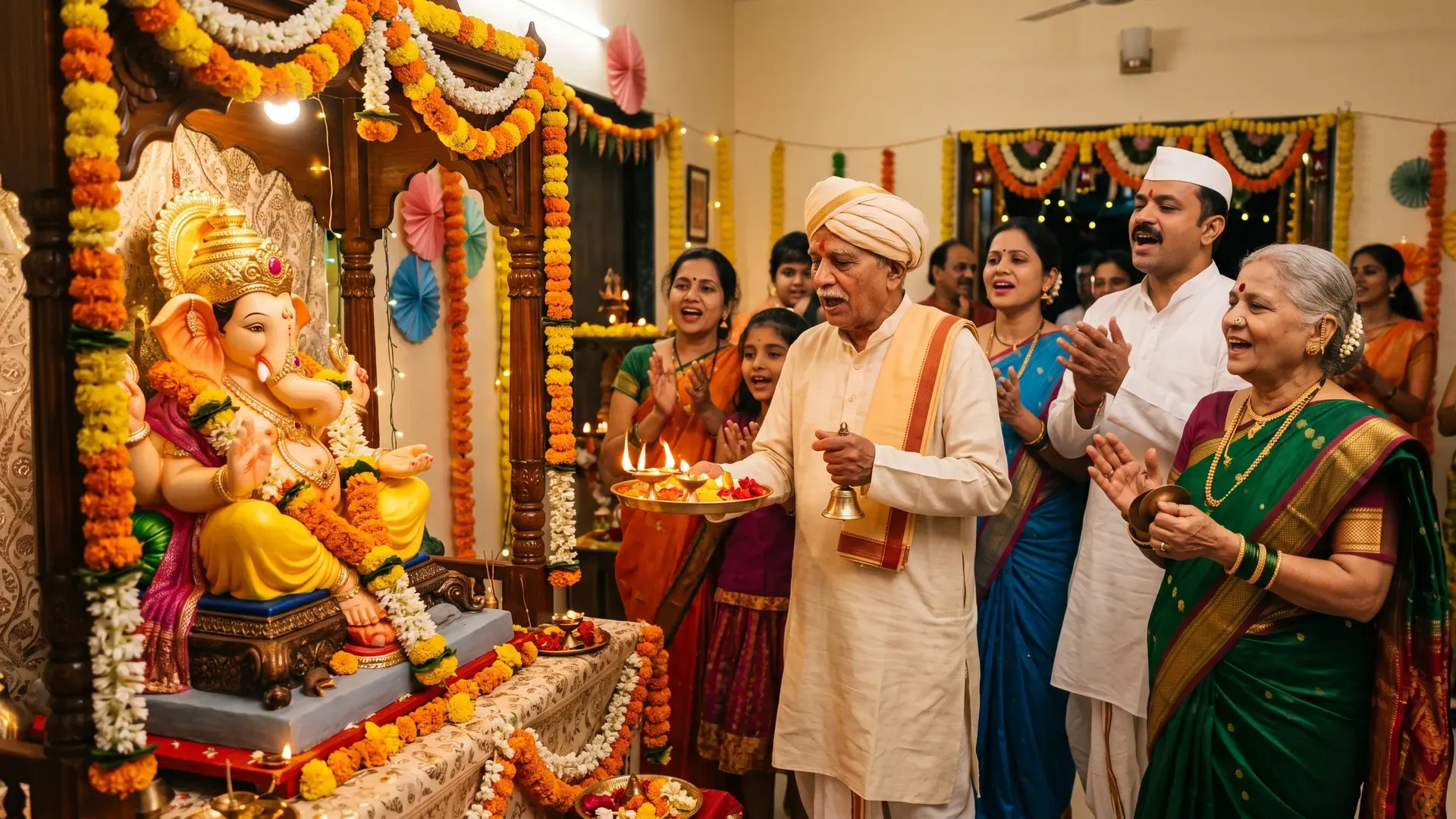
“Sukhkarta Dukhharta Varta Vighnachi” is the best-known Marathi aarti of Ganpati, attributed by tradition to Sant Samarth Ramdas (1608 to 1682). In Maharashtra it is usually the first of the aartis sung at the end of worship. It is sung in homes during Ganeshotsav, from Ganesh Chaturthi to Anant Chaturdashi, and in daily worship.
This aarti is in Marathi, and its original Marathi text is given here. Sources differ slightly in spelling, for example ‘duhkharta’, ‘vighnanchi’, ‘uti’ (short i), ‘kumkum keshara’, ‘hire jadit’, ‘phanivar bandhana’ and, in the refrain, ‘man kamana poorti’. According to Marathi Wikipedia, ‘nuravi’ is often wrongly read as ‘nurvi’. In the last verse, the words ‘das Ramacha’ (servant of Ram) are taken as Ramdas’s signature, and according to Marathi Wikipedia it is believed that the sight of the Mayureshwar Ganpati at Morgaon inspired him to compose this aarti. In Maharashtra the refrain ‘Jai dev jai dev jai Mangalmurti’ is sung after every verse; here it is given once, after the first verse.
After the aarti, most homes recite: कर्पूरगौरं करुणावतारं संसारसारं भुजगेन्द्रहारम्।
Each morning the tithi, Rahu Kaal and coming festivals, in one short WhatsApp message.Follow the channel
Frequently asked questions
Who wrote the Sukhkarta Dukhharta aarti?
By tradition, Sant Samarth Ramdas (1608 to 1682), the Marathi saint-poet of the time of Chhatrapati Shivaji Maharaj. The words ‘das Ramacha’ in the last verse are taken as his signature.
What language is this aarti in?
Marathi. It is also widely sung during Ganeshotsav outside Maharashtra, so the original Marathi text is given here with a Hindi meaning.
What does ‘varta vighnachi nuravi’ mean?
‘Varta’ means talk or mention, ‘vighnachi’ means of obstacles, and ‘nuravi’ means leaves nothing remaining. The sense is that Ganpati does not let even the mention of obstacles remain.
When is this aarti sung?
Morning and evening during Ganeshotsav from Ganesh Chaturthi to Anant Chaturdashi, in daily worship, and in Maharashtra usually first in the sequence of aartis at the end of any puja.
Is this different from ‘Jai Ganesh Deva’?
Yes. ‘Jai Ganesh Jai Ganesh Deva’ is a Hindi aarti, while ‘Sukhkarta Dukhharta’ is a Marathi aarti linked to Samarth Ramdas.
Sources
- Traditional Marathi aarti text
- Attributed to Samarth Ramdas (by tradition)
Something wrong? Report a mistake
Text checked against: drikpanchang.com, mr.wikipedia.org, marathi.webdunia.com, amit.chakradeo.net