Advertisement
Advertisement
Meaning, sources and more prayers: sanatanbodh.in/en/prayers/ganga-aarti/
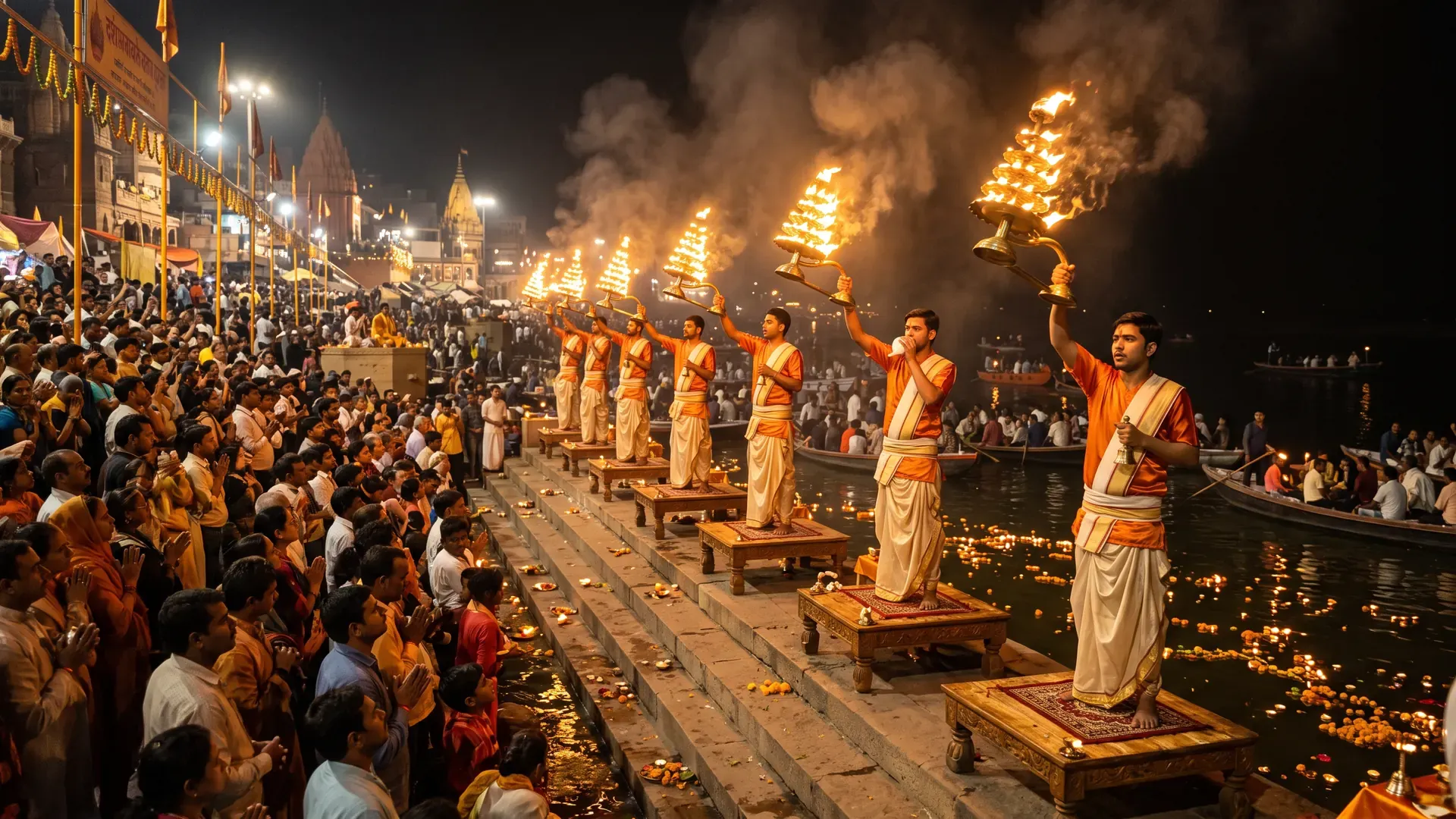
“Om Jai Gange Mata” is the most widely sung Hindi aarti of the goddess Ganga. It praises her pure waters, her deliverance of the sons of King Sagara, and her power to free those who seek her shelter from the fear of Yama. It is sung on Kartik Purnima, Ganga Dussehra and Ganga Saptami, after bathing in the Ganga, and at aartis on her banks. Its author is not known.
Some versions differ slightly, for example ‘Shri jai Gange Mata’ in the refrain, ‘chandra si jot tumhari’ in verse 2, ‘kripa drishti tumhari’ in verse 3, ‘ek hi baar jo teri, sharanagati aata’ in verse 4, and ‘aarti maat tumhari, jo jan nitya gata; daas vahi sahaj mein, mukti ko pata’ in verse 5. In some places the aarti begins with the call ‘Har Har Gange, Jai Maa Gange’. When sung, the first line (the refrain) is repeated after every verse.
After the aarti, most homes recite: कर्पूरगौरं करुणावतारं संसारसारं भुजगेन्द्रहारम्।
Each morning the tithi, Rahu Kaal and coming festivals, in one short WhatsApp message.Follow the channel
Frequently asked questions
When is the Ganga aarti sung?
On Kartik Purnima during the holy bath and the offering of lamps, on Jyeshtha Shukla Dashami (Ganga Dussehra) and Vaishakh Shukla Saptami (Ganga Saptami), and at the evening aartis on the Ganga’s banks.
What is the story behind “putra Sagar ke tare”?
According to the Valmiki Ramayana (Bala Kanda), the sixty thousand sons of King Sagara were burnt to ashes by the wrath of the sage Kapila. Through the austerities of their descendant Bhagiratha, the Ganga came down to earth, and her waters delivered them.
Is ‘Jai Jai Bhagirathnandini’ also a Ganga aarti?
‘Jai Jai Bhagirathnandini’ is a hymn to the Ganga from Goswami Tulsidas’s Vinay Patrika, which is sung as an aarti in many places. ‘Om Jai Gange Mata’ is a separate, simpler Hindi aarti.
Who wrote this aarti?
The author is not known. No verse carries any poet’s name.
Sources
- Traditional aarti text
- The sons of Sagara and the descent of the Ganga: Valmiki Ramayana, Bala Kanda
Something wrong? Report a mistake
Text checked against: drikpanchang.com, hindi.webdunia.com, bhaktibharat.com