Advertisement
Download the Lakshmi Aarti PDF
Advertisement
Meaning, sources and more prayers: sanatanbodh.in/en/prayers/lakshmi-aarti/
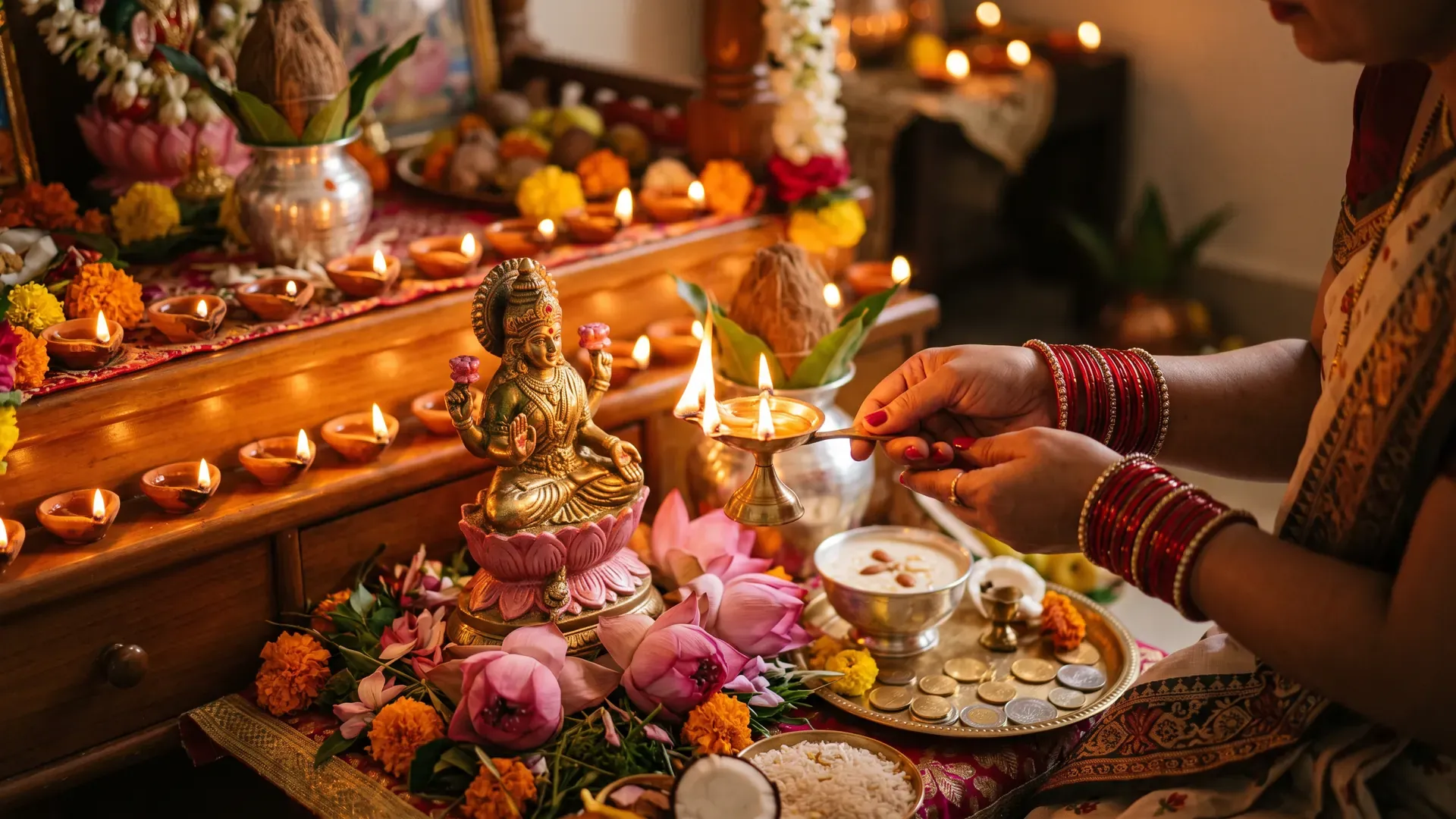
“Om Jai Lakshmi Mata” is the most widely sung aarti of Goddess Lakshmi. It remembers her as the mother of the world, the giver of happiness and wealth, and the Goddess who rose from the ocean of milk. It is sung at the Diwali Lakshmi Puja, on Fridays and during the Vaibhav Lakshmi vrat, and in daily worship. The name of its author is not known.
Some versions differ slightly, for example ‘Hari Vishnu Vidhata’ or ‘Har-Vishnu-Dhata’ in place of ‘Har Vishnu Vidhata’ in the first verse, and ‘paap shaman ho jata’ in place of ‘paap utar jata’ in the last. Some people recite the shloka ‘Mahalakshmi namastubhyam’ before the aarti. When sung, the first line (the refrain) is repeated after every verse.
After the aarti, most homes recite: कर्पूरगौरं करुणावतारं संसारसारं भुजगेन्द्रहारम्।
Each morning the tithi, Rahu Kaal and coming festivals, in one short WhatsApp message.Follow the channel
Frequently asked questions
When is this Lakshmi aarti sung?
At the Lakshmi Puja on Diwali, on Fridays and during the Vaibhav Lakshmi vrat, on Sharad Purnima (Kojagari), and at the end of daily worship.
Who wrote this aarti?
The author is not known. Its last verse does not carry any poet’s name.
What does “Har Vishnu Vidhata” mean?
Har is Shiva, then Vishnu, and Vidhata is Brahma. The aarti says that even these three gods worship Lakshmi. Some texts read ‘Hari Vishnu Vidhata’.
What are the “fourteen jewels” (ratna chaturdash)?
The fourteen treasures that came out of the churning of the ocean. According to the Puranas, Lakshmi also rose from the ocean of milk during this churning, which is why she is called ‘Kshirodadhi-jata’.
Sources
- Traditional aarti text
Something wrong? Report a mistake
Text checked against: drikpanchang.com, bhaktibharat.com, hindi.webdunia.com