Advertisement
Download the Karpur Gauram Karunavataram PDF
Advertisement
Meaning, sources and more prayers: sanatanbodh.in/en/prayers/karpur-gauram/
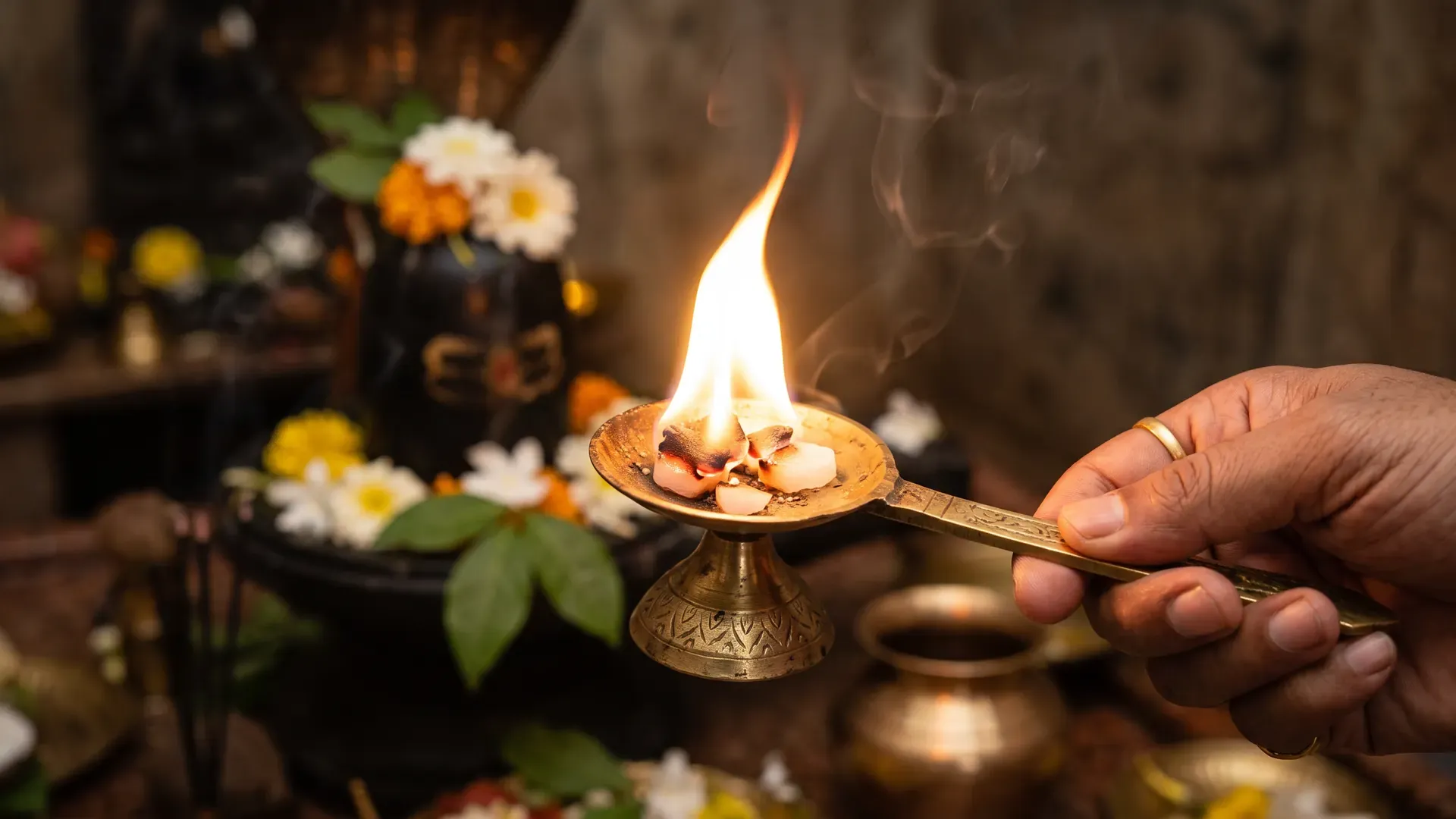
“Karpur Gauram Karunavataram” is a Sanskrit verse in praise of Lord Shiva that bows to Shiva together with Bhavani (Parvati). In many North Indian homes and temples it is recited right after the aarti, whichever deity the aarti was for. It is also recited in the worship of Shiva, on Mondays and in the month of Sawan.
On the source: popular websites and books often say this verse comes from the Yajurveda or call it the ‘Shiva Yajur mantra’, but they do not name any Samhita, chapter or mantra number. The verse is not found in the forty chapters of the Shukla Yajurveda (Vajasaneyi Madhyandina Samhita). Its metre is Upajati (the first two quarters in Indravajra, the last two in Upendravajra), a metre of classical Sanskrit poetry. The verse is found in later ritual manuals as a meditation verse (dhyana shloka) for Shiva, for example in Jivanatha Sharma’s tantric manual ‘Dikshaprakasha’, which reads ‘sada ramantam’ in the third quarter. Its original text and author cannot be established from reliable evidence. The common reading is ‘sada vasantam’; ‘sada basantam’ is also seen in print.
Each morning the tithi, Rahu Kaal and coming festivals, in one short WhatsApp message.Follow the channel
Frequently asked questions
Which scripture is “Karpur Gauram Karunavataram” from?
Its original source is not reliably known. It is often said to be from the Yajurveda, but no Samhita, chapter or mantra number is given, and it is not found in the Vajasaneyi Samhita of the Shukla Yajurveda. It appears in later ritual manuals as a meditation verse for Shiva, for example in the ‘Dikshaprakasha’.
How does the verse describe Shiva?
As fair as camphor, compassion incarnate, the essence of worldly existence, wearing the king of serpents as a garland and dwelling in the lotus of the heart. At the end he is saluted together with Bhavani (Parvati).
When is this verse recited?
In North India many people recite it after the aarti of any deity. It is also recited in the worship of Shiva, on Mondays, in the month of Sawan and on Mahashivratri.
What metre is this verse in?
Upajati. Its first two quarters are in Indravajra and the last two in Upendravajra, with eleven syllables in each quarter. It is a metre of classical Sanskrit poetry.
Sources
- Traditional text
- Quoted in: Dikshaprakasha (Jivanatha Sharma), Sanskrit Wikisource
- Checked: Shukla Yajurveda, Vajasaneyi Madhyandina Samhita, chapters 1 to 40 (Sanskrit Wikisource)
Something wrong? Report a mistake
Text checked against: bhaktibharat.com, kavitakosh.org, sa.wikisource.org, sa.wikisource.org