Advertisement
Download the Govardhan Aarti PDF
Advertisement
Meaning, sources and more prayers: sanatanbodh.in/en/prayers/govardhan-aarti/
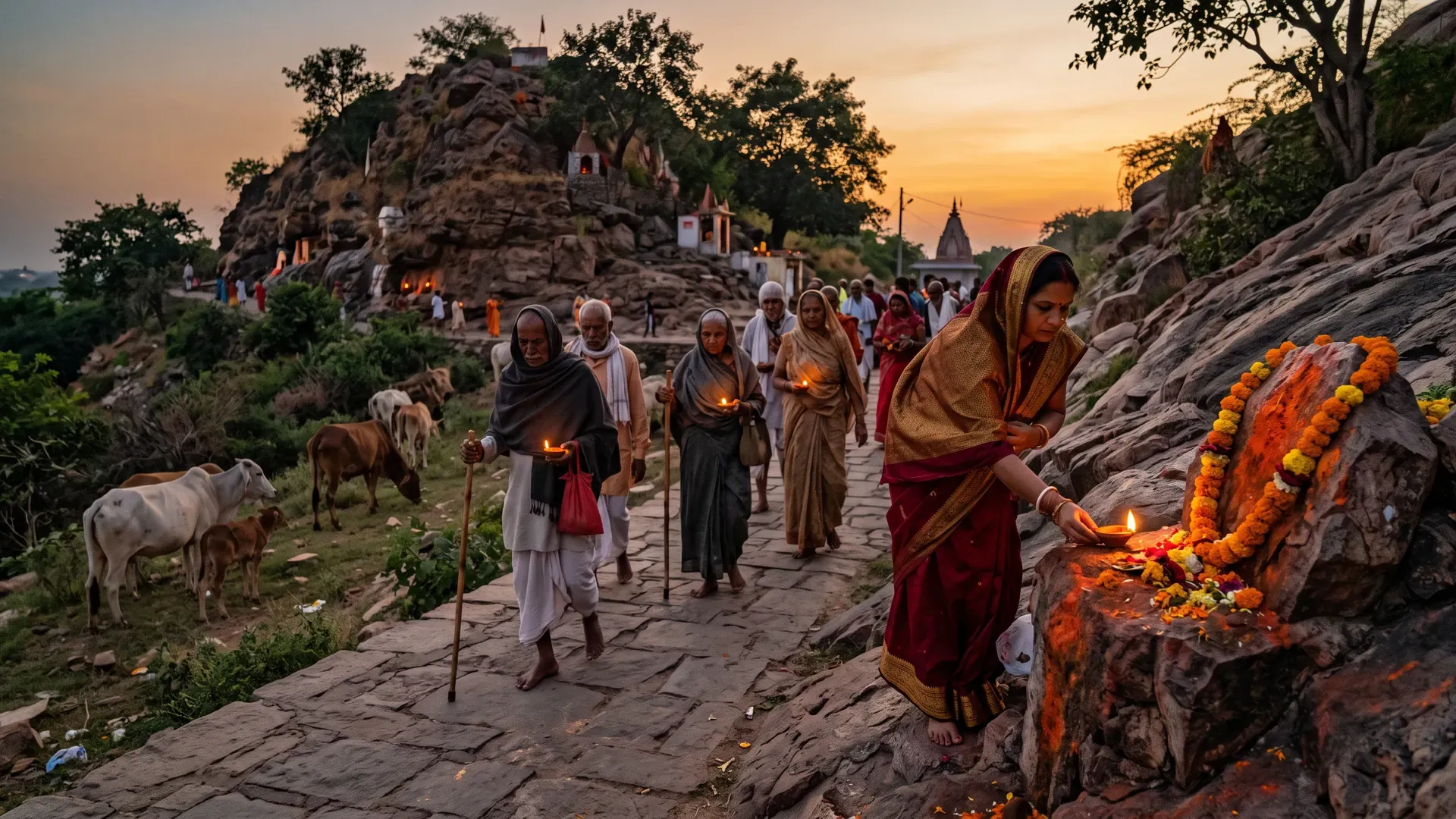
“Shri Govardhan Maharaj, tere mathe mukut viraj raheo” is a folk aarti of Govardhan ji (Giriraj), sung in Braj. It describes the betel leaves, flowers and stream of milk offered to Mount Govardhan, its adornment, and the seven-kos circuit around it. It is sung on the day of Govardhan Puja and Annakut, and while walking the Govardhan parikrama. The name of its author is not known.
This is a folk aarti of Braj, so the order of verses and some words vary between versions. In many versions the ‘saat kos ki parikamma’ verse comes after the ‘kanan kundal’ verse; some read ‘parikrama’, ‘aur Chakleshwar vishram’, ‘kantha saj raheo’ and ‘Giriraj dharan’, and ‘raheo’ is also spelt ‘rahyo’ in Braj. When sung, ‘tere mathe mukut viraj raheo’ and then the first lines (the refrain) are repeated after every verse.
After the aarti, most homes recite: कर्पूरगौरं करुणावतारं संसारसारं भुजगेन्द्रहारम्।
Each morning the tithi, Rahu Kaal and coming festivals, in one short WhatsApp message.Follow the channel
Frequently asked questions
When is the Govardhan aarti sung?
On Kartik Shukla Pratipada at Govardhan Puja and Annakut, after worship of the Govardhan shaped from cow dung, and while walking the parikrama of Mount Govardhan.
Why is Mount Govardhan worshipped?
In the Bhagavata Purana (10.24), Krishna has the people of Braj worship Mount Govardhan, the cows and the brahmins in place of Indra’s sacrifice, and himself takes a huge form, saying ‘I am the mountain’, to accept the offerings. In the next chapter (10.25) he lifts this very mountain to shelter Braj from Indra’s rains.
What is the seven-kos parikrama?
A circuit of about 21 kilometres around Mount Govardhan that devotees complete on foot. The aarti calls Chakleshwar its resting place; the temple of Chakleshwar Mahadev stands by the Manasi Ganga.
What do ‘tope’ and ‘viraj raheo’ mean?
‘Tope’ is Braj for ‘on you’, and ‘viraj raheo’ means ‘is shining, is seated in glory’. It is also often written ‘rahyo’.
Sources
- Traditional (Braj) aarti text
- Govardhan Puja and the lifting of Govardhan: Bhagavata Purana 10.24 and 10.25
Something wrong? Report a mistake
Text checked against: drikpanchang.com, bhaktibharat.com, aajtak.in, srimandir.com