AartiKubera

Kuber Aarti: Om Jai Yaksh Kuber Hare

Edited by the SanatanBodh editorial teamLast updated: 3 sourcesDrafted with AI, checked against sourcesReport a mistake
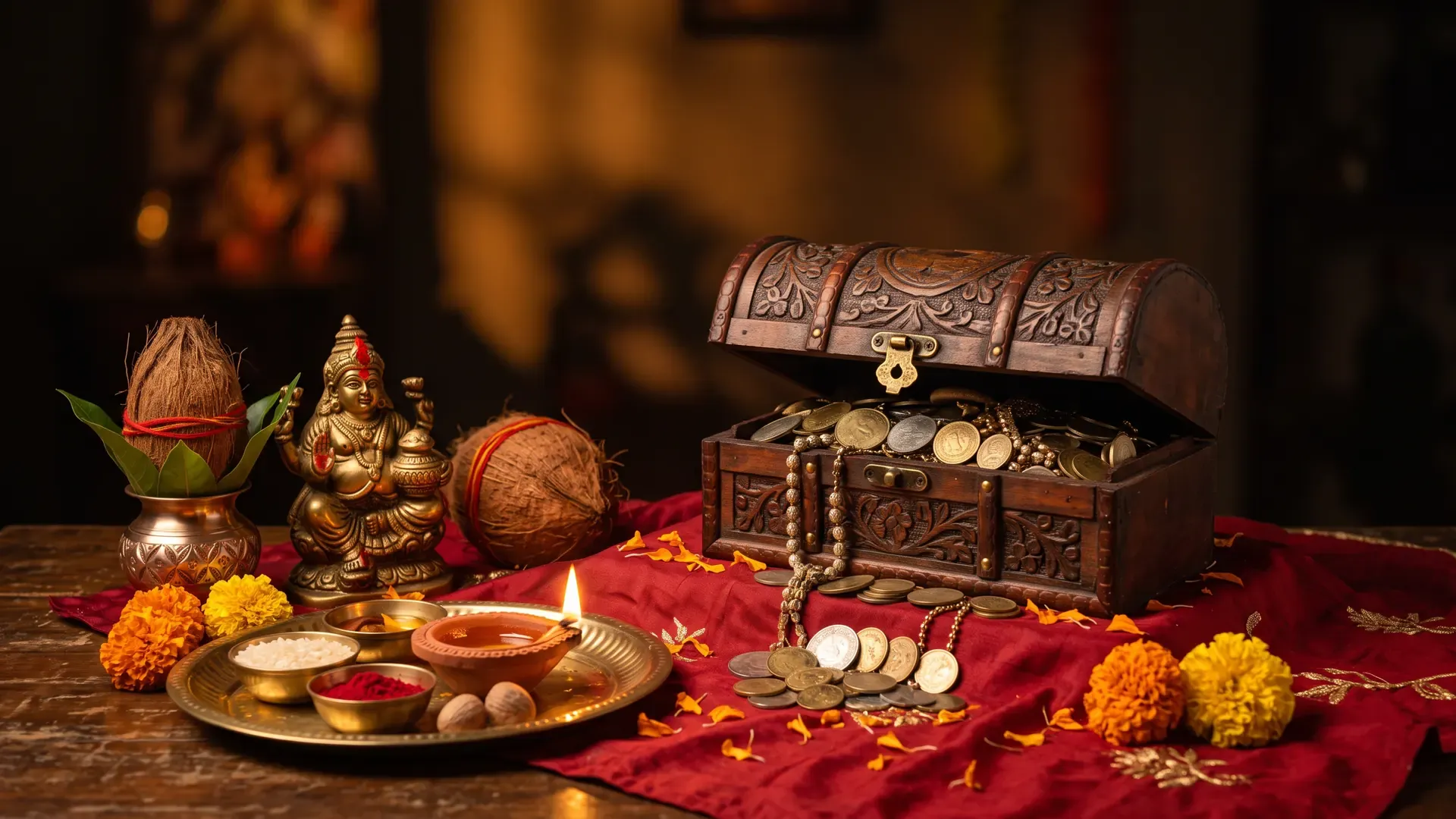
Kuber puja: a wooden chest of coins, a brass Kuber murti, a kalash and a lamp
Image: made with AI
Download PDF

Advertisement

  1. Verse 1

    ॐ जै यक्ष कुबेर हरे, स्वामी जै यक्ष जै यक्ष कुबेर हरे। शरण पड़े भगतों के, भण्डार कुबेर भरे॥

    Om jai yaksha kuber hare, svami jai yaksha jai yaksha kuber hare. Sharan pade bhagton ke, bhandar kuber bhare ||

    Victory to you, Kubera, lord of the yakshas (‘jai’ means victory). Kubera fills the storehouses of the devotees who come to his shelter.

  2. Verse 2

    शिव भक्तों में भक्त कुबेर बड़े, स्वामी भक्त कुबेर बड़े। दैत्य दानव मानव से, कई-कई युद्ध लड़े॥

    Shiv bhakton mein bhakta kuber bade, svami bhakta kuber bade. Daitya danav manav se, kaee-kaee yuddha lade ||

    Among the devotees of Shiva, Kubera is one of the greatest. The aarti says he fought many battles against daityas, danavas and humans.

  3. Verse 3

    स्वर्ण सिंहासन बैठे, सिर पर छत्र फिरे, स्वामी सिर पर छत्र फिरे। योगिनी मंगल गावैं, सब जय जय कार करैं॥

    Svarna sinhasan baithe, sir par chhatra phire, svami sir par chhatra phire. Yogini mangal gavain, sab jay jay kar karain ||

    You sit on a golden throne with a royal parasol held over your head. The yoginis sing auspicious songs, and everyone hails your victory.

  4. Verse 4

    गदा त्रिशूल हाथ में, शस्त्र बहुत धरे, स्वामी शस्त्र बहुत धरे। दुख भय संकट मोचन, धनुष टंकार करें॥

    Gada trishool haath mein, shastra bahut dhare, svami shastra bahut dhare. Dukh bhay sankat mochan, dhanush tankar karein ||

    In your hands are the mace, the trident and many other weapons. Freeing devotees from sorrow, fear and trouble, you sound the twang of your bow.

  5. Verse 5

    भाँति भाँति के व्यंजन बहुत बने, स्वामी व्यंजन बहुत बने। मोहन भोग लगावैं, साथ में उड़द चने॥

    Bhanti bhanti ke vyanjan bahut bane, svami vyanjan bahut bane. Mohan bhog lagavain, saath mein udad chane ||

    Many kinds of dishes have been prepared for you. Mohanbhog (a sweet offering) is offered to you, along with urad and chana (black gram and chickpeas).

  6. Verse 6

    बल बुद्धि विद्या दाता, हम तेरी शरण पड़े, स्वामी हम तेरी शरण पड़े। अपने भक्त जनों के, सारे काम संवारे॥

    Bal buddhi vidya data, ham teri sharan pade, svami ham teri sharan pade. Apne bhakta janon ke, saare kaam sanvare ||

    O giver of strength, wisdom and learning, we have come to your shelter. You set right all the work of your devotees.

  7. Verse 7

    मुकुट मणी की शोभा, मोतियन हार गले, स्वामी मोतियन हार गले। अगर कपूर की बाती, घी की जोत जले॥

    Mukut mani ki shobha, motiyan har gale, svami motiyan har gale. Agar kapoor ki bati, ghi ki jot jale ||

    A jewel shines in your crown and a string of pearls hangs at your neck. Agarwood and camphor burn, and a lamp of ghee is lit (for the aarti).

  8. Verse 8

    यक्ष कुबेर जी की आरती, जो कोई नर गावे, स्वामी जो कोई नर गावे। कहत प्रेमपाल स्वामी, मनवांछित फल पावे॥

    Yaksha kuber ji ki aarti, jo koee nar gave, svami jo koee nar gave. Kahat prempal svami, manvanchhit phal pave ||

    Prempal Swami says: whoever sings this aarti of Kubera, lord of the yakshas, receives the fruit their heart desires.

Download the Kuber Aarti PDF

Advertisement

Meaning, sources and more prayers: sanatanbodh.in/en/prayers/kuber-aarti/

In short

“Om Jai Yaksh Kuber Hare” is the aarti of Kubera, lord of wealth and king of the yakshas. It calls Kubera a great devotee of Shiva, one who fills the storehouses of those who seek his shelter, and a giver of strength, wisdom and learning. It is sung on the evening of Dhanteras and at the Diwali Lakshmi Puja, after Kubera is worshipped along with Lakshmi and Ganesh.

This text is the same across many sources. The text uses the folk spelling ‘जै’ for ‘जय’ (jai, victory), and many copies print ‘ऊँ’ for ‘ॐ’. The tune and the shape of the refrain are like those of “Om Jai Jagdish Hare”. The last verse carries the name ‘Prempal Swami’, but no reliable information about him is available. Another aarti of Kubera, “Jai Kuber Swami, Prabhu Jai Kuber Swami”, is also sung and is a separate text. When sung, the first verse (the refrain) is repeated after every verse.

After the aarti, most homes recite: कर्पूरगौरं करुणावतारं संसारसारं भुजगेन्द्रहारम्।

Frequently asked questions

When is the Kuber aarti sung?

On the evening of Dhanteras after the worship of Lakshmi, Ganesh and Kubera, and at the Diwali Lakshmi Puja. It can be sung at any worship of Kubera.

Who is Kubera?

Kubera is regarded as the lord of wealth, king of the yakshas and guardian of the northern direction. According to the Uttara Kanda of the Valmiki Ramayana, he was the son of the sage Vishrava and the elder half-brother of Ravana. Lanka and the Pushpaka vimana were first his; Ravana seized them, and Kubera then went to Kailash.

Why does the aarti call Kubera a devotee of Shiva?

By tradition Kubera is Shiva’s devotee and friend. The Amarakosha gives ‘Tryambakasakha’ (friend of Shiva) as one of Kubera’s names, and the Uttara Kanda of the Valmiki Ramayana tells how Shiva made him his friend.

Who wrote this aarti?

The last verse says ‘kahat Prempal Swami’. No reliable information about him is available.

Is there any other Kuber aarti?

Yes, another aarti beginning “Jai Kuber Swami, Prabhu Jai Kuber Swami” is also sung. The one given here, “Om Jai Yaksh Kuber Hare”, is the most widely printed.

Sources

  1. Traditional aarti text
  2. About Kubera: Valmiki Ramayana, Uttara Kanda
  3. Kubera’s name ‘Tryambakasakha’: Amarakosha

Something wrong? Report a mistake

Text checked against: drikpanchang.com, bhaktibharat.com, srimandir.com, poojaaarti.com