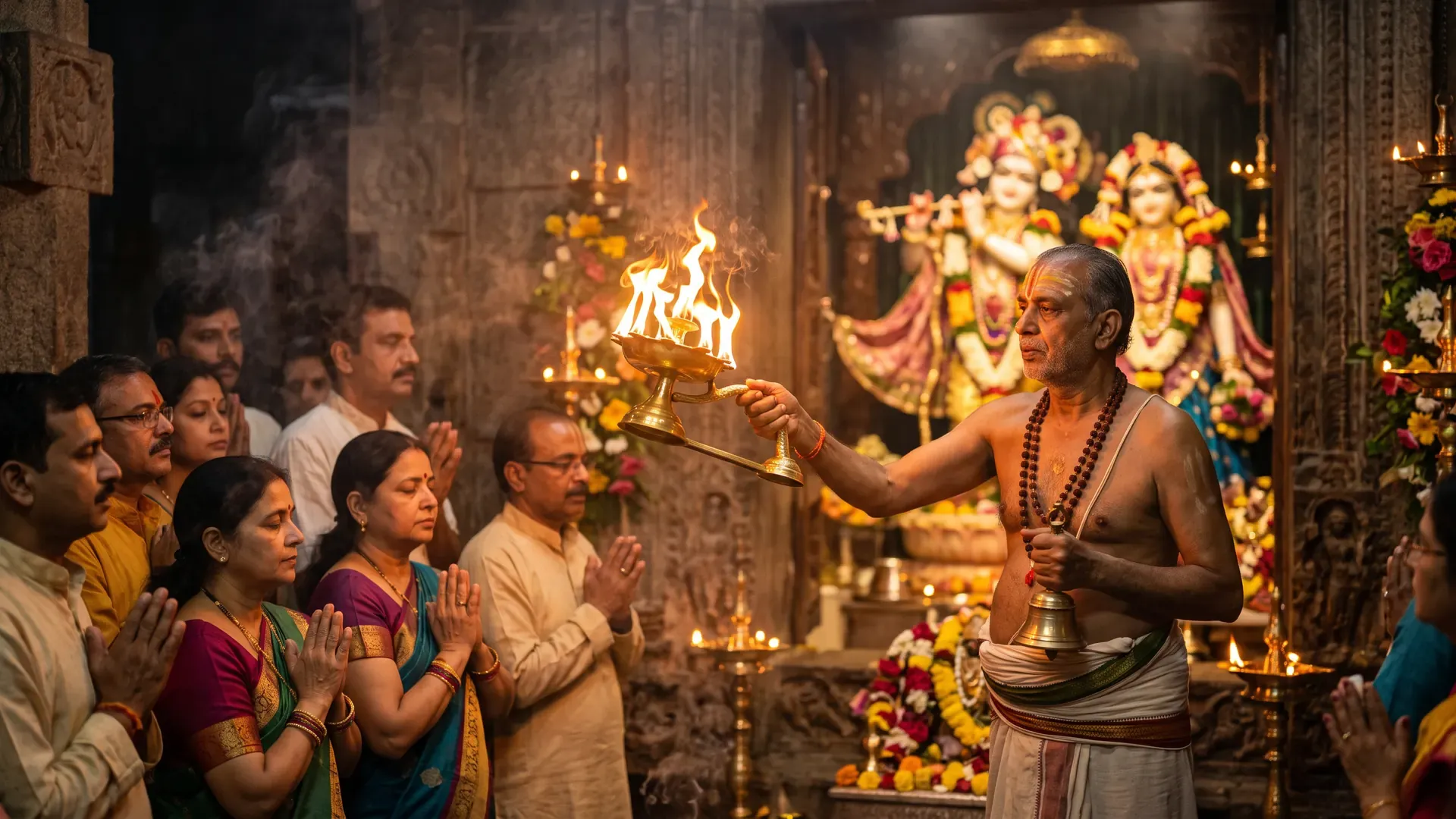
- Doha
गणपति गिरजा पुत्र को सुमिरूँ बारम्बार।
हाथ जोड़ विनती करूँ शारद नाम आधार॥
Ganapti girja putra ko sumiroon barambar.
Haath jod vinti karoon sharad naam aadhar ||
Again and again I remember Ganapati, son of Girija (Parvati). With folded hands I make my prayer, taking the name of Sharada (Saraswati) as my support.
- Chaupai 1
जय जय गोरखनाथ अविनाशी।
कृपा करो गुरुदेव प्रकाशी॥
Jay jay gorakhnath avinashi.
Kripa karo gurudev prakashi ||
Victory to Gorakhnath, the imperishable. O radiant Gurudev, be gracious to me.
- Chaupai 2
जय जय जय गोरख गुण ज्ञानी।
इच्छा रूप योगी वरदानी॥
Jay jay jay gorakh gun gyani.
Ichchha roop yogi vardani ||
Victory to Gorakh, who knows all virtues. You are the yogi who takes any form at will, and the giver of boons.
- Chaupai 3
अलख निरंजन तुम्हरो नामा।
सदा करो भक्तन हित कामा॥
Alakh niranjan tumharo nama.
Sada karo bhaktan hit kama ||
Your name is ‘Alakh Niranjan’: the one who cannot be seen and who is without stain. You always work for the good of your devotees.
- Chaupai 4
नाम तुम्हारा जो कोई गावे।
जन्म जन्म के दुःख मिट जावे॥
Naam tumhara jo koee gave.
Janma janma ke duhkh mit jave ||
The text says that whoever sings your name is freed from the sorrows of birth after birth.
- Chaupai 5
जो कोई गोरख नाम सुनावे।
भूत पिशाच निकट नहीं आवे॥
Jo koee gorakh naam sunave.
Bhoot pishach nikat nahin aave ||
The text says that ghosts and evil spirits do not come near anyone who recites the name of Gorakh.
- Chaupai 6
ज्ञान तुम्हारा योग से पावे।
रूप तुम्हारा लख्या न जावे॥
Gyaan tumhara yog se pave.
Roop tumhara lakhya na jave ||
Knowledge of you is gained only through yoga. Your form cannot be seen with the eyes.
- Chaupai 7
निराकार तुम हो निर्वाणी।
महिमा तुम्हारी वेद न जानी॥
Nirakar tum ho nirvani.
Mahima tumhari ved na jani ||
You are formless and have attained nirvana (liberation). Even the Vedas have not fully known your glory.
- Chaupai 8
घट घट के तुम अन्तर्यामी।
सिद्ध चौरासी करे प्रणामी॥
Ghat ghat ke tum antaryami.
Siddha chaurasi kare pranami ||
You dwell within every body and know every heart. The eighty-four Siddhas bow to you.
- Chaupai 9
भस्म अंग गल नाद विराजे।
जटा शीश अति सुन्दर साजे॥
Bhasma ang gal nad viraje.
Jata shish ati sundar saje ||
Sacred ash covers your limbs and the nad hangs at your throat. Matted locks adorn your head beautifully. (By tradition, Nath yogis wear a small whistle, the ‘singi nad’, on a thread around the neck.)
- Chaupai 10
तुम बिन देव और नहीं दूजा।
देव मुनि जन करते पूजा॥
Tum bin dev aur nahin dooja.
Dev muni jan karte pooja ||
There is no other god besides you. Gods, sages and all people worship you.
- Chaupai 11
चिदानन्द सन्तन हितकारी।
मंगल करण अमंगल हारी॥
Chidananda santan hitkari.
Mangal karan amangal hari ||
You are pure consciousness and bliss (Chidanand), the benefactor of saints. You bring what is auspicious and remove what is inauspicious.
- Chaupai 12
पूर्ण ब्रह्म सकल घट वासी।
गोरखनाथ सकल प्रकाशी॥
Poorna brahma sakal ghat vasi.
Gorakhnath sakal prakashi ||
You are the complete Brahman, dwelling in every body. Gorakhnath gives light to all.
- Chaupai 13
गोरख गोरख जो कोई ध्यावे।
ब्रह्म रूप के दर्शन पावे॥
Gorakh gorakh jo koee dhyave.
Brahma roop ke darshan pave ||
The text says that whoever meditates repeating ‘Gorakh, Gorakh’ beholds the form of Brahman.
- Chaupai 14
शंकर रूप धर डमरू बाजे।
कानन कुण्डल सुन्दर साजे॥
Shankar roop dhar damroo baje.
Kanan kundal sundar saje ||
You take the form of Shankar and the damru sounds. Beautiful rings adorn your ears. (By tradition, Nath yogis wear large earrings, which is why they are also called ‘Kanphata’, split-eared.)
- Chaupai 15
नित्यानन्द है नाम तुम्हारा।
असुर मार भक्तन रखवारा॥
Nityananda hai naam tumhara.
Asur mar bhaktan rakhvara ||
Your name is Nityanand, ever in bliss. You strike down the demons and protect your devotees.
- Chaupai 16
अति विशाल है रूप तुम्हारा।
सुर नर मुनि जन पावें न पारा॥
Ati vishal hai roop tumhara.
Sur nar muni jan paven na para ||
Your form is vast beyond measure. Gods, humans and sages cannot find its end.
- Chaupai 17
दीन बन्धु दीनन हितकारी।
हरो पाप हम शरण तुम्हारी॥
Din bandhu dinan hitkari.
Haro pap ham sharan tumhari ||
You are the friend of the poor and the helpless, and their benefactor. Take away our sins: we are in your refuge.
- Chaupai 18
योग युक्ति में हो प्रकाशा।
सदा करो सन्तन तन वासा॥
Yog yukti mein ho prakasha.
Sada karo santan tan vasa ||
You are the light within the practice of yoga. You always dwell in the bodies (the hearts) of the saints.
- Chaupai 19
प्रातःकाल ले नाम तुम्हारा।
सिद्धि बढ़े अरु योग प्रचारा॥
Pratahkal le naam tumhara.
Siddhi badhe aru yog prachara ||
The text says that for one who takes your name in the early morning, spiritual attainment grows and yoga spreads.
- Chaupai 20
हठ हठ हठ गोरक्ष हठीले।
मार मार वैरी के कीले॥
Hath hath hath goraksha hathile.
Mar mar vairi ke kile ||
O resolute Goraksh, firm of will, strike the enemies and pin them down so they can do no harm.
- Chaupai 21
चल चल चल गोरख विकराला।
दुश्मन मार करो बेहाला॥
Chal chal chal gorakh vikrala.
Dushman mar karo behala ||
Come, come, O Gorakh of fearsome form. Strike the foe and leave him powerless.
- Chaupai 22
जय जय जय गोरख अविनाशी।
अपने जन की हरो चौरासी॥
Jay jay jay gorakh avinashi.
Apne jan ki haro chaurasi ||
Victory to Gorakh, the imperishable. Free your devotee from the round of the eighty-four (lakh births).
- Chaupai 23
अचल अगम है गोरख योगी।
सिद्धि देवो हरो रस भोगी॥
Achal agam hai gorakh yogi.
Siddhi devo haro ras bhogi ||
Gorakh the yogi is unshakeable and hard to reach. Grant me attainment, and take away my craving for sensual pleasure.
- Chaupai 24
काटो मार्ग यम को तुम आई।
तुम बिन मेरा कौन सहाई॥
Kato marga yam ko tum aaee.
Tum bin mera kaun sahaee ||
Come and cut off the road to Yama for me. Without you, who is there to help me?
- Chaupai 25
अजर अमर है तुम्हरी देहा।
सनकादिक सब जोरहिं नेहा॥
Ajar amar hai tumhari deha.
Sankadik sab jorhin neha ||
Your body neither ages nor dies. Sanaka and all the other sages bind their love to you.
- Chaupai 26
कोटिन रवि सम तेज तुम्हारा।
है प्रसिद्ध जगत उजियारा॥
Kotin ravi sam tej tumhara.
Hai prasiddha jagat ujiyara ||
Your radiance equals that of millions of suns. Your light is renowned throughout the world.
- Chaupai 27
योगी लखे तुम्हारी माया।
पार ब्रह्म से ध्यान लगाया॥
Yogi lakhe tumhari maya.
Par brahma se dhyaan lagaya ||
The yogis see through your maya and fix their meditation on the supreme Brahman.
- Chaupai 28
ध्यान तुम्हारा जो कोई लावे।
अष्टसिद्धि नव निधि घर पावे॥
Dhyaan tumhara jo koee lave.
Ashtasiddhi nav nidhi ghar pave ||
The text says that whoever meditates on you receives the eight siddhis and the nine nidhis (treasures) at home.
- Chaupai 29
शिव गोरख है नाम तुम्हारा।
पापी दुष्ट अधम को तारा॥
Shiv gorakh hai naam tumhara.
Papi dushta adham ko tara ||
Your name is ‘Shiv Gorakh’. You have carried across even sinners, the wicked and the lowly.
- Chaupai 30
अगम अगोचर निर्भय नाथा।
सदा रहो सन्तन के साथा॥
Agam agochar nirbhay natha.
Sada raho santan ke satha ||
You are the fearless Lord, beyond reach and beyond the senses. You are always with the saints.
- Chaupai 31
शंकर रूप अवतार तुम्हारा।
गोपीचन्द भरथरी को तारा॥
Shankar roop avtar tumhara.
Gopichanda bharathri ko tara ||
Your incarnation is Shankar’s own form. You carried Gopichand and Bharthari across. (In folk tradition, Bharthari was a king of Ujjain and Gopichand a king of Bengal, and both gave up their thrones for the path of yoga.)
- Chaupai 32
सुन लीजो प्रभु अरज हमारी।
कृपासिन्धु योगी ब्रह्मचारी॥
Sun lijo prabhu araj hamari.
Kripasindhu yogi brahmachari ||
O Lord, hear our plea. You are an ocean of compassion, a yogi and a brahmachari.
- Chaupai 33
पूर्ण आस दास की कीजे।
सेवक जान ज्ञान को दीजे॥
Poorna aas das ki kije.
Sevak jan gyaan ko dije ||
Fulfil the hope of this servant. Knowing me as your own, grant me knowledge.
- Chaupai 34
पतित पावन अधम अधारा।
तिनके हेतु तुम लेत अवतारा॥
Patit pavan adham adhara.
Tinke hetu tum let avtara ||
You purify the fallen and support the lowly. It is for their sake that you take birth in the world.
- Chaupai 35
अलख निरंजन नाम तुम्हारा।
अगम पन्थ जिन योग प्रचारा॥
Alakh niranjan naam tumhara.
Agam pantha jin yog prachara ||
Your name is Alakh Niranjan. It is you who spread yoga, the path that is hard to walk.
- Chaupai 36
जय जय जय गोरख भगवाना।
सदा करो भक्तन कल्याना॥
Jay jay jay gorakh bhagvana.
Sada karo bhaktan kalyana ||
Victory to Lord Gorakh. You always bring about the welfare of your devotees.
- Chaupai 37
जय जय जय गोरख अविनाशी।
सेवा करें सिद्ध चौरासी॥
Jay jay jay gorakh avinashi.
Seva karein siddha chaurasi ||
Victory to Gorakh, the imperishable. The eighty-four Siddhas serve you.
- Chaupai 38
जो ये पढ़हि गोरख चालीसा।
होय सिद्ध साक्षी जगदीशा॥
Jo ye padhhi gorakh chalisa.
Hoy siddha sakshi jagdisha ||
The text says that whoever reads this Gorakh Chalisa becomes perfected, with the Lord of the world as witness.
- Chaupai 39
हाथ जोड़कर ध्यान लगावे।
और श्रद्धा से भेंट चढ़ावे॥
Haath jodkar dhyaan lagave.
Aur shraddha se bhent chadhave ||
Let the reader fold their hands and meditate, and make an offering with faith.
- Chaupai 40
बारह पाठ पढ़े नित जोई।
मनोकामना पूर्ण होई॥
Barah path padhe nit joee.
Manokamna poorna hoee ||
The text says that whoever reads it twelve times every day has the wishes of their heart fulfilled.
- Closing Doha 1
सुने सुनावे प्रेम वश पूजे अपने हाथ।
मन इच्छा सब कामना पूरे गोरखनाथ॥
Sune sunave prem vash pooje apne haath.
Man ichchha sab kamna poore gorakhnath ||
The text says that for one who hears and recites this with love and worships with their own hands, Gorakhnath fulfils every wish of the heart.
- Closing Doha 2
अगम अगोचर नाथ तुम पारब्रह्म अवतार।
कानन कुण्डल सिर जटा अंग विभूति अपार॥
Agam agochar nath tum parabrahma avtar.
Kanan kundal sir jata ang vibhooti apar ||
O Lord, you are beyond reach and beyond the senses, an incarnation of the supreme Brahman. Rings are in your ears, matted locks on your head, and sacred ash in plenty on your body.
- Closing Doha 3
सिद्ध पुरुष योगेश्वरो दो मुझको उपदेश।
हर समय सेवा करूँ सुबह शाम आदेश॥
Siddha purush yogeshvaro do mujhko updesh.
Har samay seva karoon subah sham aadesh ||
O perfected one, lord of yogis, give me your teaching. May I serve you at all times and greet you morning and evening with ‘Adesh’. (By tradition, Nath yogis greet one another with the word ‘Adesh’.)
This is the text of Randhir Prakashan, Haridwar, ‘51 Chalisa Sangrah’ (2004, pp. 95 to 99), checked against Drik Panchang and the website of the Gorakhnath Temple, Gorakhpur. The book spells the word both ‘avinasi’ and ‘avinashi’; here it is ‘avinashi’ throughout. In chaupai 17 the book reads ‘haro paap Har sharan tumhari’; Drik Panchang and the Gorakhnath Temple text read ‘ham sharan’ (we are in your refuge), which is taken here. In closing doha 2 the book prints ‘agar agochar’, a misprint; the other sources read ‘agam agochar’. The Gorakhnath Temple text (‘Shri Goraksh Chalisa’) differs in several places: the name is mostly ‘Goraksh’; the doha has ‘Girija’, ‘simrun’ and ‘adhar’; chaupai 1 ‘jai jai jai Gorakh avinashi’; chaupai 4 ‘janm janm ke dukh nashave’; chaupai 7 ‘mahima tumhri Ved bakhani’ (the Vedas proclaim your glory); chaupai 11 ‘mangal kare’; chaupai 25 ‘tumhro deha’ and ‘johahin neha’; chaupai 31 ‘Gopichand Bhartrihari’; chaupai 32 ‘sun lijo guru’. The temple text also orders the ending differently: ‘barah path padhe nitya joi’ comes first, followed by ‘aur shraddha se rot chadhave, haath jodkar dhyan lagave’, with ‘rot’ (a thick sweet bread offered to the deity) in place of ‘bhent’ (offering).