Advertisement
Download the Chitragupta Aarti PDF
Advertisement
Meaning, sources and more prayers: sanatanbodh.in/en/prayers/chitragupta-aarti/
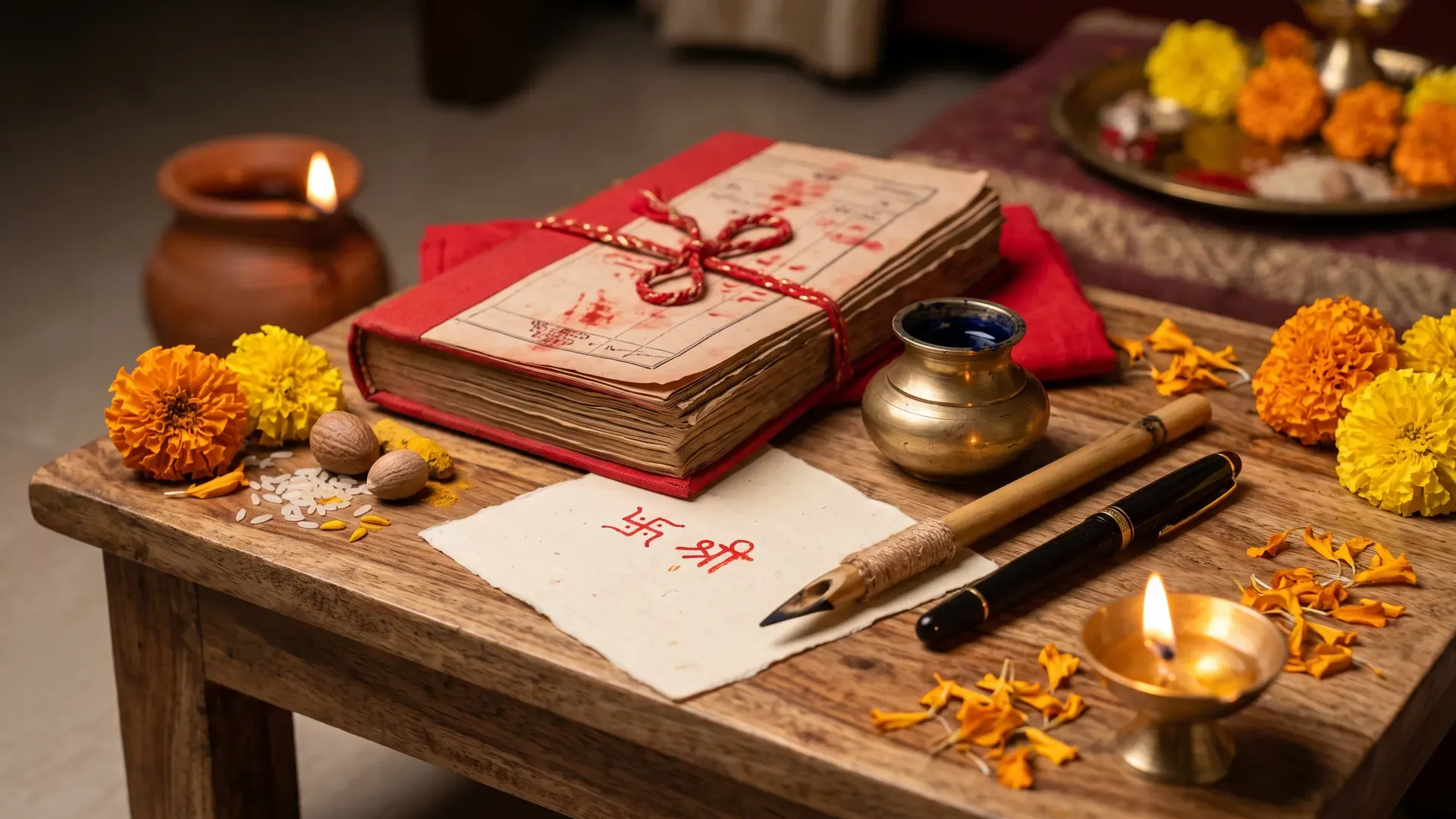
“Om Jai Chitragupt Hare” is the aarti of Lord Chitragupta, who by tradition keeps the record of the deeds of all beings in Yama’s court. The Kayastha community worships him as its own deity. The aarti is sung at the Chitragupta Puja and the worship of pen and inkpot on Kartik Shukla Dwitiya (Bhai Dooj, Yama Dwitiya). The name of its author is not known.
This is the text found in most sources. Some versions differ, for example ‘kasht nivarak, dusht sanharak’, ‘srishti samharan’ (who looks after creation), ‘vishva nyay ka karya sambhala’, ‘koti koti devta tumhare’, ‘nrip Sudas aru Bhishma Pitamah’ and ‘veg, vilamb na kinhaun’; some read ‘talwar’ (sword) in place of ‘shankh’ (conch), and ‘chaurasi ke chhootain bandhan’ in place of ‘chaurasi se nishchit chhootain’. The word ‘swasth’ in verse 8 appears in this form in every source checked, but from the context it means self-interest. The aarti is sung in the metre and tune of ‘Om Jai Jagdish Hare’. When sung, the first line (the refrain) is repeated after every verse.
After the aarti, most homes recite: कर्पूरगौरं करुणावतारं संसारसारं भुजगेन्द्रहारम्।
Each morning the tithi, Rahu Kaal and coming festivals, in one short WhatsApp message.Follow the channel
Frequently asked questions
When is the Chitragupta aarti sung?
At the Chitragupta Puja on Kartik Shukla Dwitiya, that is Bhai Dooj (Yama Dwitiya), when Kayastha families worship the pen and inkpot. In South India, Chitragupta is also worshipped on Chitra Pournami.
Who is Chitragupta?
By tradition, Chitragupta is the god who keeps the record of the good and bad deeds of all beings in Yama’s court. The Kayastha community worships him as its own deity. The pen, inkpot and ledger in his hands, described in the aarti, belong to this role.
Why do some lines sound like ‘Om Jai Jagdish Hare’?
It is sung in the same metre and tune. The lines of verse 9 (‘Bandhu, pita tum swami, sharan gahoon kiski...’) appear almost word for word in the third verse of ‘Om Jai Jagdish Hare’.
Who wrote this aarti?
The author is not known. No verse carries any poet’s name.
Sources
- Traditional aarti text
Something wrong? Report a mistake
Text checked against: drikpanchang.com, kayasthasamaj.in, bhaktibharat.com