Dhanvantari Aarti: Jai Dhanvantari Deva

Edited by the SanatanBodh editorial teamLast updated: 2 sourcesDrafted with AI, checked against sourcesReport a mistake
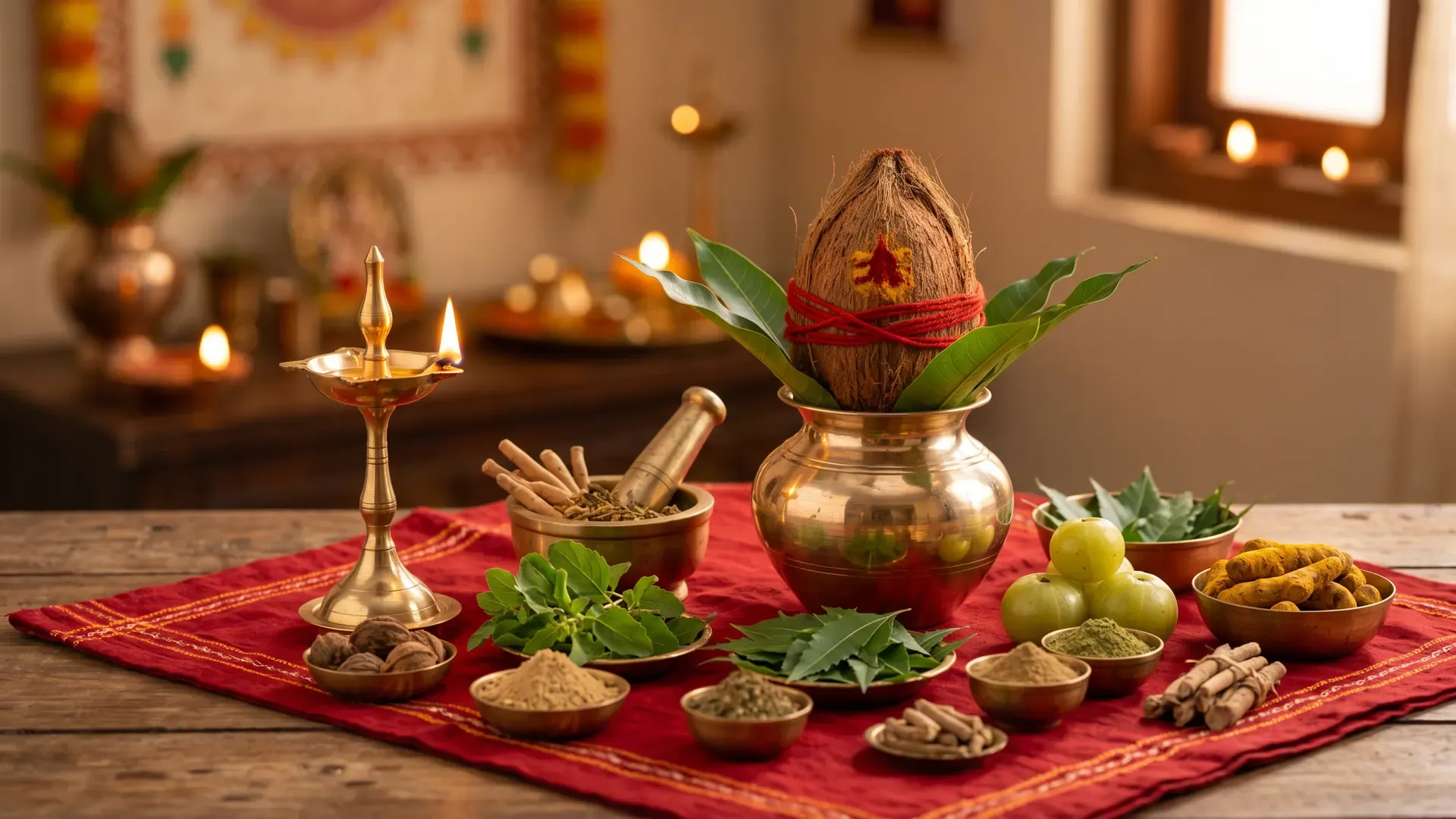
Dhanvantari puja on Dhanteras: a kalash of amrit with tulsi, neem, turmeric, amla and a mortar and pestle
Image: made with AI
Download PDF

Advertisement

  1. Verse 1

    जय धन्वंतरि देवा, जय धन्वंतरि जी देवा। जरा-रोग से पीड़ित, जन-जन सुख देवा॥

    Jay dhanvantari deva, jay dhanvantari ji deva. Jara-rog se pidit, jan-jan sukh deva ||

    Victory to you, Lord Dhanvantari. You bring comfort to every person troubled by old age and illness.

  2. Verse 2

    तुम समुद्र से निकले, अमृत कलश लिए। देवासुर के संकट, आकर दूर किए॥

    Tum samudra se nikle, amrit kalash liye. Devasur ke sankat, aakar door kiye ||

    You rose from the ocean (at its churning) holding the pot of amrit, and came to end the trouble of the devas and the asuras. This is the churning of the ocean told in the Bhagavata Purana (Book 8).

  3. Verse 3

    आयुर्वेद बनाया, जग में फैलाया। सदा स्वस्थ रहने का, साधन बतलाया॥

    Aayurved banaya, jag mein phailaya. Sada svastha rahne ka, sadhan batlaya ||

    You created Ayurveda and spread it through the world, and you taught the way to stay healthy always.

  4. Verse 4

    भुजा चार अति सुंदर, शंख सुधा धारी। आयुर्वेद वनस्पति से, शोभा भारी॥

    Bhuja chaar ati sundar, shankh sudha dhari. Aayurved vanaspati se, shobha bhari ||

    Your four arms are very beautiful, and you hold the conch and the nectar (sudha). The healing plants of Ayurveda add greatly to your splendour.

  5. Verse 5

    तुम को जो नित ध्यावे, रोग नहीं आवे। असाध्य रोग भी उसका, निश्चय मिट जावे॥

    Tum ko jo nit dhyave, rog nahin aave. Asadhya rog bhi uska, nishchay mit jave ||

    The aarti says that whoever meditates on you daily is not touched by illness, and even an incurable illness surely goes away.

  6. Verse 6

    हाथ जोड़कर प्रभुजी, दास खड़ा तेरा। वैद्य-समाज तुम्हारे, चरणों का घेरा॥

    Haath jodkar prabhuji, das khada tera. Vaidya-samaj tumhare, charnon ka ghera ||

    O Lord, your servant stands before you with folded hands. The community of healers (vaidyas) gathers around your feet.

  7. Verse 7

    धन्वंतरिजी की आरती, जो कोई नर गावे। रोग-शोक न आए, सुख-समृद्धि पावे॥

    Dhanvantariji ki aarti, jo koee nar gave. Rog-shok na aae, sukh-samriddhi pave ||

    The aarti says that whoever sings this aarti of Dhanvantari ji is kept from illness and grief and gains happiness and prosperity.

Download the Dhanvantari Aarti PDF

Advertisement

Meaning, sources and more prayers: sanatanbodh.in/en/prayers/dhanvantari-aarti/

In short

“Jai Dhanvantari Deva” is the aarti of Lord Dhanvantari, the deity of Ayurveda. According to the Bhagavata Purana, Dhanvantari rose from the churning of the ocean holding the pot of amrit, and the aarti recalls this episode. It is sung at the end of the Dhanvantari puja on Dhanteras, which is also called Dhanvantari Jayanti. The name of its author is not known.

This text is almost the same across many sources. Some spell ‘Dhanvantari’ with a half ‘n’ in Devanagari, and one version reads the second line of verse 4 as ‘Ayurved vanaspati se, hai shobha bhari’. In some places the refrain is sung as ‘Jai Dhanvantari Deva, jai jai Dhanvantari Deva’. When sung, the first verse (the refrain) is repeated after every verse.

After the aarti, most homes recite: कर्पूरगौरं करुणावतारं संसारसारं भुजगेन्द्रहारम्।

Frequently asked questions

When is the Dhanvantari aarti sung?

On Dhanteras (Kartik Krishna Trayodashi), which is also Dhanvantari Jayanti, at the end of the Dhanvantari puja. It can be sung at any worship of Dhanvantari.

Who is Lord Dhanvantari?

He is regarded as the deity of Ayurveda and a partial avatar of Vishnu. According to the Bhagavata Purana (8.8) he rose from the churning of the ocean holding the pot of amrit. Tradition regards Dhanteras as the day he appeared.

Is this aarti a cure for illness?

No. The aarti is a devotional song, and it speaks of illness going away as an expression of the devotee’s faith. In illness, the advice and treatment of a qualified doctor are essential.

Who wrote this aarti?

The author is not known; the last verse does not carry any poet’s name.

Sources

  1. Traditional aarti text
  2. Dhanvantari rising from the churning of the ocean: Bhagavata Purana, Book 8, Chapter 8

Something wrong? Report a mistake

Text checked against: drikpanchang.com, hindi.webdunia.com, hindi.news24online.com, bhaktvatsal.com