Advertisement
Download the Durge Durghat Bhari PDF
Advertisement
Meaning, sources and more prayers: sanatanbodh.in/en/prayers/durge-durghat-bhari/
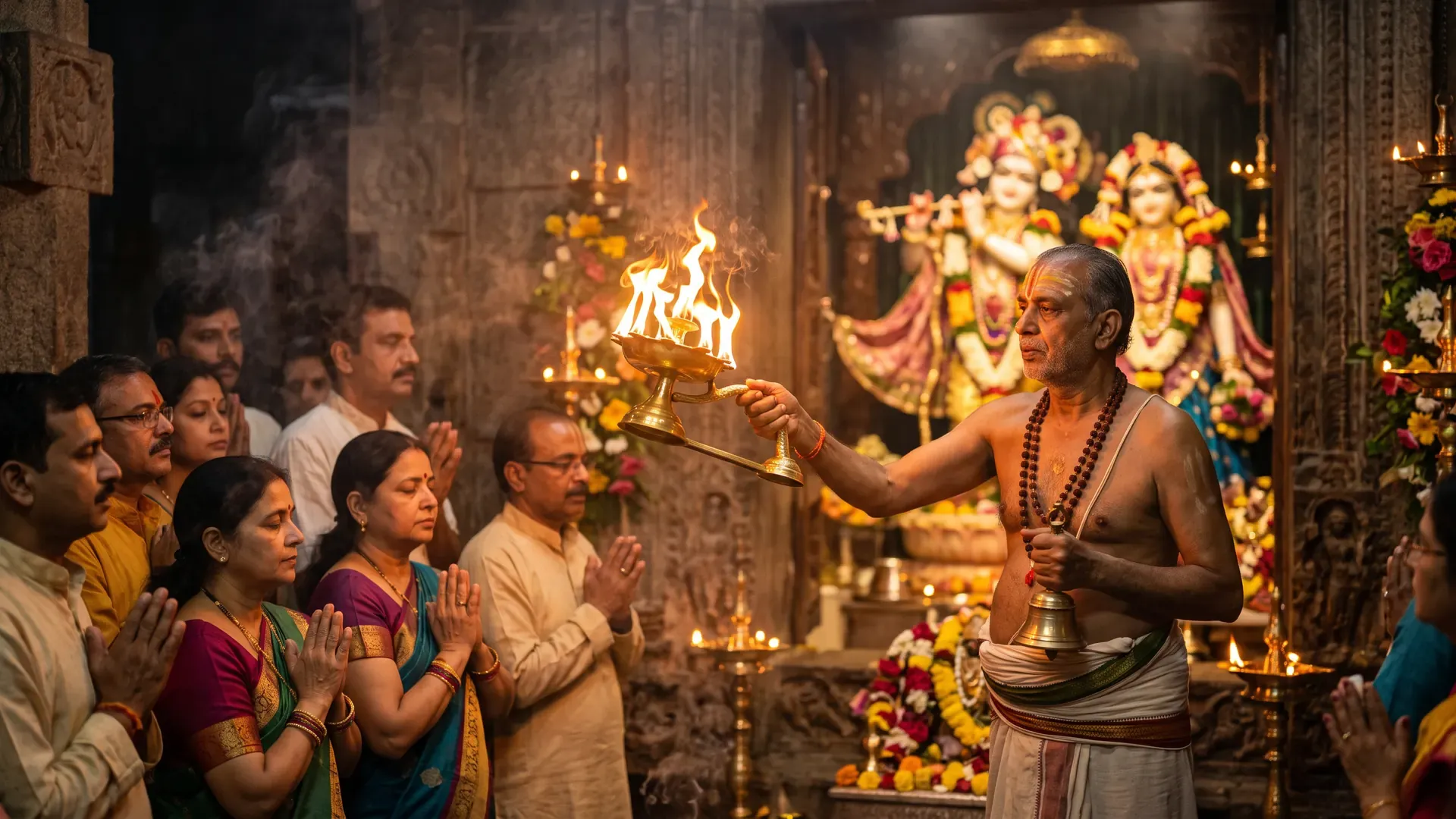
“Durge Durghat Bhari Tujvin Sansari” is one of the best-known Marathi aartis of Goddess Durga. Its refrain is “Jai Devi Jai Devi Mahishasuramathini”. In Maharashtra it is sung by tradition during the days of Navratri and at the end of the worship of the Goddess. In it the devotee says that this world is hard to cross without the Goddess, and asks her for compassion and protection.
This aarti is in Marathi, and its original Marathi text is given here. The five sources agree line for line; a few words vary: in the refrain ‘Mahishasuramardini’ instead of ‘Mahishasuramathini’ (same meaning), and in some ‘Jai Devi Jai Devi jai Mahishasur…’; in verse 2 ‘tujvin bhuvani pahata tuj aise nahi’, ‘na bolave’ and ‘padilo pravahi’; in verse 3 ‘hoti nijdasa’ and ‘sodi todi’; in verse 1 ‘sankat nevari’. Sources do not agree on the author: according to Marathi Wikipedia the aarti came to Samarth Ramdas during his darshan of Bhavani Mata at Tuljapur, while the Marathi aarti collection on sanskritdocuments.org gives it to Sant Narahari Sonar. The name ‘Narahari’ appears in the last line of the aarti. In Maharashtra the refrain ‘Jai Devi Jai Devi’ is sung after every verse; here it is given once, after the first verse.
After the aarti, most homes recite: कर्पूरगौरं करुणावतारं संसारसारं भुजगेन्द्रहारम्।
Each morning the tithi, Rahu Kaal and coming festivals, in one short WhatsApp message.Follow the channel
Frequently asked questions
Who wrote the ‘Durge Durghat Bhari’ aarti?
Sources do not agree. Marathi Wikipedia links it to Samarth Ramdas, saying the aarti came to him during his darshan of Bhavani Mata at Tuljapur. The Marathi aarti collection on sanskritdocuments.org gives it to Sant Narahari Sonar. The name ‘Narahari’ appears in the last line of the aarti.
What language is this aarti in?
Marathi. That is why the original Marathi text is given here with a simple Hindi meaning and an English translation of each verse.
What does ‘Durge durghat bhari tujvin sansari’ mean?
‘Durghat’ means hard to get through, ‘bhari’ means very, ‘tujvin’ means without you, and ‘sansari’ means in this world. The sense is: O Durga, without you this world is very hard.
What does ‘Mahishasuramathini’ mean?
The one who crushed Mahishasura. Chapters 2 and 3 of the Durga Saptashati tell how the Goddess slew Mahishasura. Some books print ‘Mahishasuramardini’ here; the meaning is the same.
When is this aarti sung?
In Maharashtra, by tradition, during the days of Navratri, at the end of the worship of the Goddess and in the home aarti.
Sources
- Traditional Marathi aarti text (compared across five sources)
- Author: Samarth Ramdas (Marathi Wikipedia) or Sant Narahari Sonar (sanskritdocuments.org); sources do not agree
Something wrong? Report a mistake
Text checked against: drikpanchang.com, mr.wikipedia.org, mr.wikipedia.org, sanskritdocuments.org, archive.org, archive.org, archive.org