AartiDurga

Jay Adya Shakti: Gujarati Amba Aarti

Composed by: Shivanand Swami (Shivanand Pandya) of Surat (by tradition)

Edited by the SanatanBodh editorial teamLast updated: 6 sourcesDrafted with AI, checked against sourcesReport a mistake
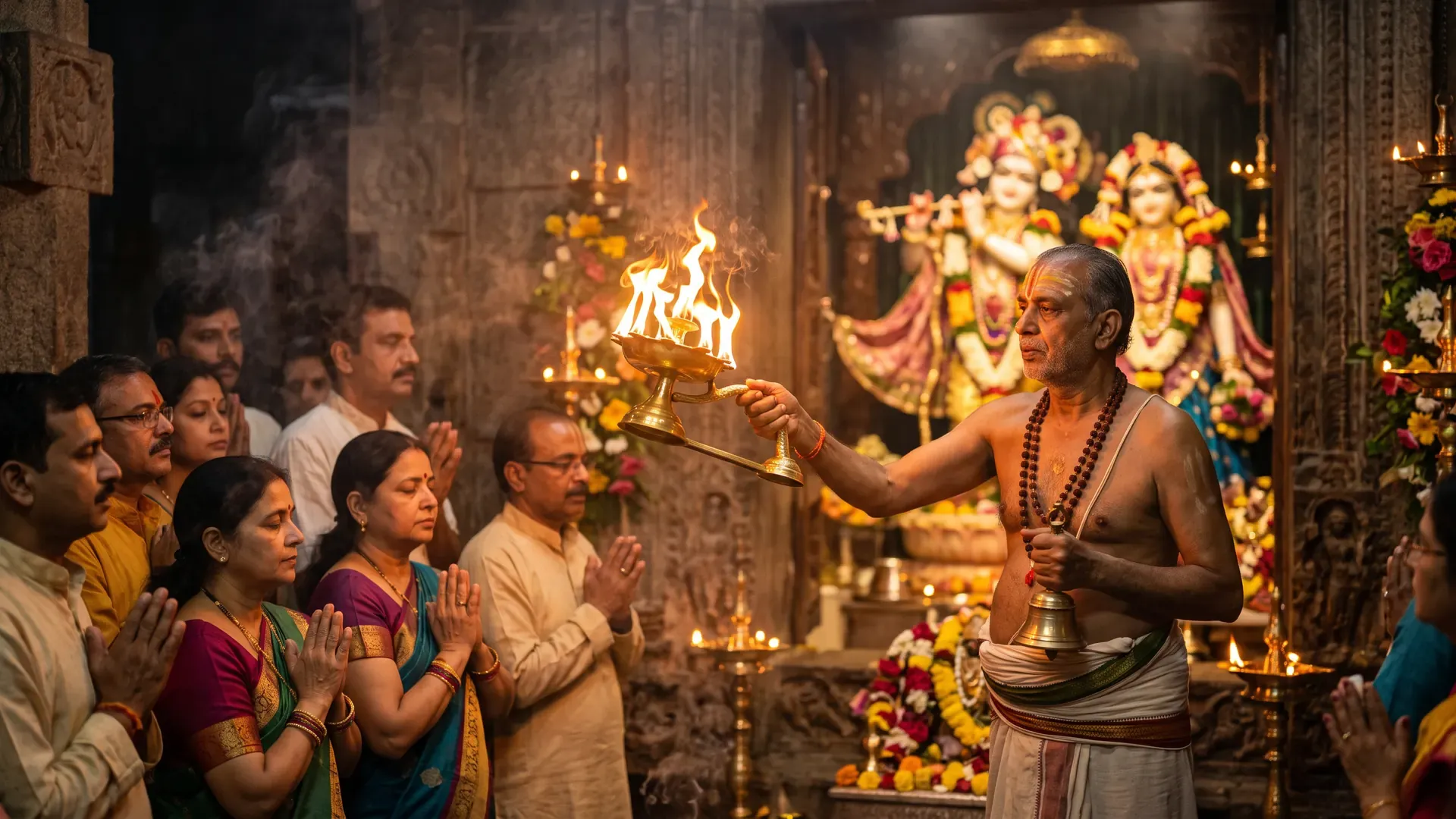
Evening aarti in a temple: a priest holds a five-wick brass lamp before the decorated deities, with devotees’ hands folded
Image: made with AI
Download PDF

Advertisement

  1. Refrain

    जय आद्या शक्ति मा, जय आद्या शक्ति। जयो जयो मा जगदंबे॥

    Jay aadya shakti ma, jay aadya shakti. Jayo jayo ma jagdambe ||

    Victory to you, Mother, the Adya Shakti, the first and primal power. Victory, victory to you, Jagadamba, Mother of the world. This refrain is sung after every verse.

  2. Verse 1

    अखंड ब्रह्मांड निपाव्या, पडवे पंडे मा॥

    Akhand brahmand nipavya, padve pande ma ||

    Mother, you brought forth the whole, unbroken universe. On Padvo, the first lunar day, you appeared yourself.

  3. Verse 2

    द्वितीया बे स्वरूप, शिवशक्ति जाणुं। ब्रह्मा गणपति गाये, हर गाये हर मा॥

    Dvitiya be svaroop, shivshakti janun. Brahma ganapti gaye, har gaye har ma ||

    On the second day: you have two forms, which I know as Shiva and Shakti. Brahma and Ganapati sing your praise, and Hara (Shiva) sings it too.

  4. Verse 3

    तृतीया त्रण स्वरूप, त्रिभुवनमां बेठां। त्रय थकी तरवेणी, तुं तरवेणी मा॥

    Tritiya tran svaroop, tribhuvanman bethan. Tray thaki tarveni, tun tarveni ma ||

    On the third day: in three forms you are seated in the three worlds. From the three comes a Triveni, a meeting of three streams; Mother, you are that Triveni. The words of this line differ a little from book to book.

  5. Verse 4

    चोथे चतुरा महालक्ष्मी, मा सचराचर व्याप्यां। चार भुजा चौदिशा, प्रगट्यां दक्षिणमां॥

    Chothe chatura mahalakshmi, ma sachrachar vyapyan. Chaar bhuja chaudisha, pragatyan dakshinman ||

    On the fourth day: you are the wise Mahalakshmi, pervading everything that moves and does not move. Four-armed, you are in all four directions, and you appeared in the south.

  6. Verse 5

    पंचमी पंच ऋषि, पंचमी गुण पद्मा। पंच सहस्त्र त्यां सोहिये, पंचे तत्त्वोमां॥

    Panchami panch rishi, panchami gun padma. Panch sahastra tyan sohiye, panche tattvoman ||

    On the fifth day: the verse names five sages and Padma (Lakshmi), rich in virtues. Five thousand shine there, and you are in all five elements. The exact sense of some words in this verse is not clear, and commentators explain it in different ways.

  7. Verse 6

    षष्ठी तुं नारायणी, महिषासुर मार्यो। नरनारीना रूपे, व्याप्यां सघळे मा॥

    Shashthi tun narayni, mahishasur maryo. Narnarina roope, vyapyan saghle ma ||

    On the sixth day: you are Narayani, who slew Mahishasura. Mother, in the form of man and woman you pervade everything.

  8. Verse 7

    सप्तमी सप्त पाताळ, संध्या सावित्री। गौ गंगा गायत्री, गौरी गीता मा॥

    Saptami sapta patal, sandhya savitri. Gau ganga gayatri, gauri Gita ma ||

    On the seventh day: the seven netherworlds are yours, and you are Sandhya and Savitri. Mother, you are also the cow, the Ganga, Gayatri, Gauri and the Gita.

  9. Verse 8

    अष्टमी अष्ट भुजा, आई आनंदा। सुरनर मुनिवर जन्म्या, देव दैत्यो मा॥

    Ashtami ashta bhuja, aaee aananda. Surnar munivar janmya, dev daityo ma ||

    On the eighth day: you are the eight-armed Mother (Aai) who gives joy. Mother, gods and humans, great sages, devas and daityas were all born from you.

  10. Verse 9

    नवमी नवकुळ नाग, सेवे नवदुर्गा। नवरात्रिनां पूजन, शिवरात्रिनां अर्चन, कीधां हर ब्रह्मा॥

    Navmi navkul nag, seve navdurga. Navratrinan poojan, shivratrinan archan, kidhan har Brahma ||

    On the ninth day: the serpents of the nine clans serve you, the Navadurga. Hara (Shiva) and Brahma worshipped you at Navratri and offered you worship at Shivaratri.

  11. Verse 10

    दशमी दश अवतार, जय विजयादशमी। रामे राम रमाड्या, रावण रोळ्यो मा॥

    Dashmi dash avtar, jay Vijayadashami. Rame Ram ramadya, ravan rolyo ma ||

    On the tenth day: the ten avatars are remembered, and victory is yours on Vijayadashami. Mother, Ram played out the battle and crushed Ravana. The editor of a 1925 edition thought ‘Ramae Ram ramadya’ a better reading here.

  12. Verse 11

    एकादशी अगियारस, कात्यायनी कामा। कामदुर्गा कालिका, श्यामा ने रामा॥

    Ekadshi agiyaras, katyayni kama. Kamdurga kalika, shyama ne rama ||

    On the eleventh day, Agiyaras: you are Katyayani, who fulfils wishes. You are Kamadurga, Kalika, Shyama and Rama.

  13. Verse 12

    बारसे बाळारूप, बहुचरी अंबा मा। बटुक भैरव सोहिये, काळ भैरव सोहिये, तारा छे तुज मा॥

    Barse balaroop, bahuchri amba ma. Batuk bhairav sohiye, kal bhairav sohiye, tara chhe tuj ma ||

    On the twelfth day, Baras: Mother, you are Bahuchari and Amba in the form of a young girl. Batuk Bhairav and Kal Bhairav shine there; Mother, they are yours.

  14. Verse 13

    तेरसे तुळजारूप, तुं तारुणी माता। ब्रह्मा विष्णु सदाशिव, गुण तारा गाता॥

    Terse tuljaroop, tun taruni mata. Brahma Vishnu sadashiv, gun tara gata ||

    On the thirteenth day: you are Mother Taruni in the form of Tulja (Bhavani). Brahma, Vishnu and Sadashiva sing your virtues.

  15. Verse 14

    चौदशे चौदा रूप, चंडी चामुंडा। भाव भक्ति कंई आपो, चतुराई कंई आपो, सिंहवाहिनी माता॥

    Chaudshe chauda roop, chandi chamunda. Bhav bhakti kanee aapo, chaturaee kanee aapo, sinhavahini mata ||

    On the fourteenth day: you have fourteen forms, you are Chandi and Chamunda. Mother who rides the lion, give us some devotion and feeling, give us some wisdom.

  16. Verse 15

    पूनमे कुंभ भर्यो, सांभळजो करुणा। वसिष्ठ देवे वखाण्या, मार्कंड देवे वखाण्या, गाई शुभ कविता॥

    Poonme kumbh bharyo, sambhaljo karuna. Vasishtha deve vakhanya, markand deve vakhanya, gaee shubh kavita ||

    On Punam, the full-moon day: the kalash (sacred pot) has been filled; in your compassion, hear us. Vasishtha and Markandeya praised you and sang auspicious verses to you.

  17. Verse 16

    संवत सोळ सत्तावन, सोळसे बावीस मा। संवत सोळे प्रगट्यां, रेवाने तीरे॥

    Sanvat sol sattavan, solse bavis ma. Sanvat sole pragatyan, revane tire ||

    This verse names the years samvat sixteen hundred fifty-seven and sixteen hundred twenty-two, and the aarti says that in samvat sixteen hundred the Mother appeared on the bank of the Reva (Narmada). Sources do not agree on what these years refer to; one commentary takes them as the years in which the poet’s spiritual practice began and was completed.

  18. Verse 17

    त्रंबावटी नगरी, मा रूपावटी नगरी, मा मंछावटी नगरी। सोळ सहस्त्र त्यां सोहिये, क्षमा करो गौरी, मा दया करो गौरी॥

    Trambavti nagri, ma roopavti nagri, ma manchhavti nagri. Sol sahastra tyan sohiye, kshama karo gauri, ma daya karo gauri ||

    This verse names the towns of Trambavati, Rupavati and Manchhavati, where sixteen thousand (devotees) shine. O Gauri, forgive us; Mother, have mercy.

  19. Verse 18

    शिवशक्तिनी आरती जे कोई गाशे, मा जे भावे गाशे। भणे शिवानंद स्वामी, सुख संपति थाशे, हर कैलासे जाशे, मा अंबा दुःख हरशे॥

    Shivshaktini aarti je koee gashe, ma je bhave gashe. Bhane shivanand svami, sukh sampati thashe, Har kailase jashe, ma amba duhkh harshe ||

    Shivanand Swami says that whoever sings this aarti of Shiva and Shakti, whoever sings it with devotion, will have happiness and prosperity, will go to Hara’s Kailash, and Mother Amba will take away their sorrow. This is the aarti’s statement of the fruit of singing it (phalashruti).

Download the Jay Adya Shakti PDF

Advertisement

Meaning, sources and more prayers: sanatanbodh.in/en/prayers/jay-adya-shakti/

In short

“Jay Adya Shakti Ma” is a Gujarati aarti of Mother Amba. In Gujarat it is sung during Navratri garba and in the worship of the Goddess. Its verses follow the lunar days in order, from Pratipada (Padvo) to Punam, and the last verse carries the signature ‘bhane Shivanand Swami’. The Gujarati text is given here in Devanagari script, with a simple meaning for every verse.

This aarti is in Gujarati; its original Gujarati text is given here letter for letter in Devanagari script (for example ળ is written ळ). The text was chosen by comparing seven printed books, from 1919 to 2019, and one web text, taking the reading of most sources at each word. Main variants: in the first verse the older books read ‘nipavya’ (created), while ‘dipavya’ (lit up) is what is mostly sung today; instead of ‘padve pande ma’ some books print ‘padve pandit ma’ or ‘padve pragat thayan’; ‘bey/beu svarup’, ‘daya thaki tarveni’, ‘panch tattva tyan sohiye’, ‘Savitri Sandhya’ and ‘tarini mata’ are also found. The refrain ‘Jayo jayo Ma Jagadambe’ is sung after every verse, and many people sing it as ‘Om jayo jayo Ma Jagadambe’. In singing, the first line of each verse is repeated; the repeats are not written here. Several books print further verses after the last one, such as ‘Ekme ek svarup, antar nav dharsho’, ‘Bhav na janun bhakti na janun’ and ‘Mano mandap lal gulal’; two sources say these were added later, so they are not given here. Some old books also have a different, shorter form of verses 14 to 16.

After the aarti, most homes recite: कर्पूरगौरं करुणावतारं संसारसारं भुजगेन्द्रहारम्।

Frequently asked questions

Who wrote the “Jay Adya Shakti” aarti?

By tradition, Shivanand Swami (Shivanand Pandya) of Surat. The last verse carries his signature, ‘bhane Shivanand Swami’ (says Shivanand Swami). Sources do not agree on when he lived.

What language is this aarti in, and when is it sung?

It is in Gujarati. In Gujarat it is sung during Navratri garba, in the worship of Mother Amba and at other festivals of the Goddess. Its Gujarati text is given here in Devanagari script.

How many verses does this aarti have?

Most of the books compared have 18 verses along with the refrain: the first fifteen go one lunar day at a time from Pratipada (Padvo) to Punam, followed by the samvat verse, the verse of the three towns, and finally the verse with Shivanand Swami’s signature. Some books add further verses after these.

Is it ‘padve pandit ma’ or ‘padve pande ma’?

Both readings are found in print, as is ‘padve pragat thayan’. The 1925 book published by the Bahucharaji Devsthan Samiti reads ‘padve pande thayan’, meaning that on Pratipada the Mother appeared herself. This page gives ‘padve pande ma’.

What does ‘Jayo jayo Ma Jagadambe’ mean?

‘Jayo’ means ‘may there be victory’. The whole refrain means: victory, victory to you, Jagadamba, Mother of the world. It is sung after every verse.

Sources

  1. Traditional Gujarati aarti text; attributed to Shivanand Swami (by tradition)
  2. Harichand Lakshmichand Mehta, “Kashmirthi Nepal” (1919), pp. 219–220, “Jagadambani Aarti”
  3. “Balatripura Sundari Bahucharamba”, Bahucharaji Devsthan Samiti (1925), pp. 65–67, “Adya Shaktini Aarti”
  4. “Bhagavat Bhajan Manjari”, Pandit Himatiram Chhotalal Sharma (1941), pada 47 “Devini Aarti”
  5. “Sandhya Path”, Sadhu Karsandasji, Ishwar Ashram, Vandhay; “Umiya Mataji Darshan”, Umiya Mataji Sansthan, Unjha (2007)
  6. “Navdurga”, discourses of Swami Brahmavedantji (2019), commentary on the aarti

Something wrong? Report a mistake

Text checked against: archive.org, archive.org, archive.org, archive.org, archive.org, archive.org, archive.org, archive.org, archive.org, archive.org