Advertisement
Advertisement
Meaning, sources and more prayers: sanatanbodh.in/en/prayers/tulsi-aarti/
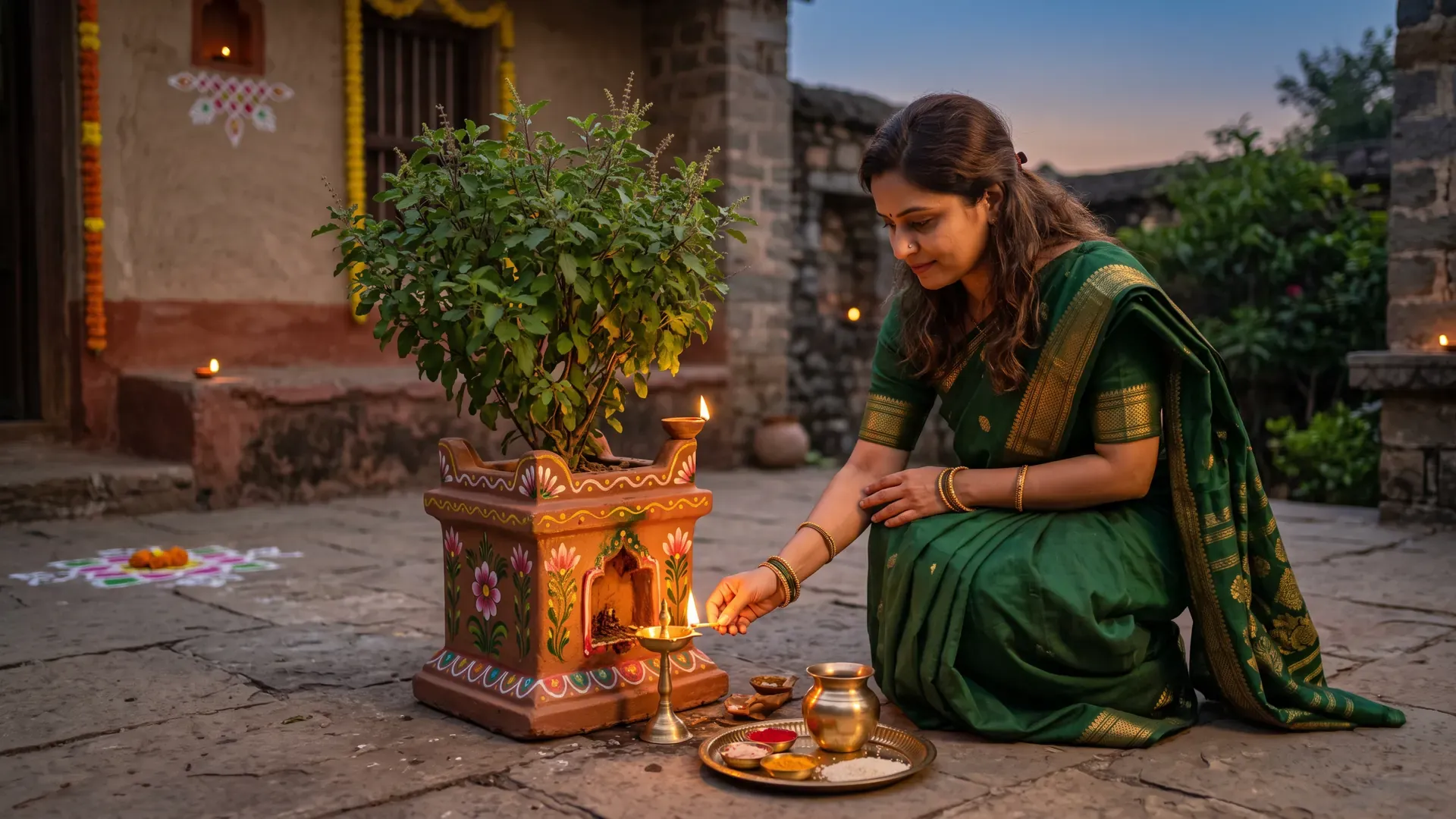
“Jai Jai Tulsi Mata” is a widely sung aarti of the goddess Tulsi. It remembers her as the one who gives joy and boons to all, who rests on Hari’s head, and who is most dear to Vishnu. It is sung through the month of Kartik, on Dev Uthani Ekadashi and at Tulsi Vivah, and in the daily worship of tulsi at home. Its author is not known.
The wording of this aarti varies considerably between sources; the text given here is the one found in most of them. Some examples of the differences: a shorter refrain, ‘Jai jai Tulsi Mata, sabki sukhdata var mata’; in verse 2, ‘sab yogon se upar’, ‘sab bhogon ke upar’ and ‘raj se raksh karke, sabki bhav trata’; in verse 3, ‘bahu putri’, ‘soor balli/valli’ and ‘Vishnupriya jo nar tumko seve’; in verse 6, ‘prem ajab hai Shri Hari ka tum se nata’. Some versions add the line ‘hamari vipad haro tum, kripa karo mata’ at the end. When sung, the first lines (the refrain) are repeated after every verse.
After the aarti, most homes recite: कर्पूरगौरं करुणावतारं संसारसारं भुजगेन्द्रहारम्।
Each morning the tithi, Rahu Kaal and coming festivals, in one short WhatsApp message.Follow the channel
Frequently asked questions
When is the Tulsi aarti sung?
Every evening through the month of Kartik, with a lamp lit beside the tulsi plant; on Dev Uthani Ekadashi and at Tulsi Vivah; and in the daily worship of tulsi at home.
Why does the aarti say Tulsi rests on Hari’s head?
Offering tulsi leaves is considered essential in the worship of Vishnu and Krishna, and a tulsi leaf is placed on food offered to them too. That is why the aarti says Tulsi rests on Hari’s head.
What is Tulsi Vivah?
Between Kartik Shukla Ekadashi and Purnima, most often on Dev Uthani Ekadashi or Dwadashi, Tulsi is ceremonially married to Vishnu in his Shaligram form. In the story in the Brahmavaivarta Purana (Prakriti Khanda), Tulsi is the beloved of Vishnu as Shaligram.
Are the words of this aarti the same everywhere?
No. Several lines differ between sources, especially in the third verse. The main differences are listed in the note above.
Sources
- Traditional aarti text
- Story of Tulsi and Shaligram: Brahmavaivarta Purana, Prakriti Khanda
Something wrong? Report a mistake
Text checked against: drikpanchang.com, bhaktibharat.com, hindi.webdunia.com, srimandir.com